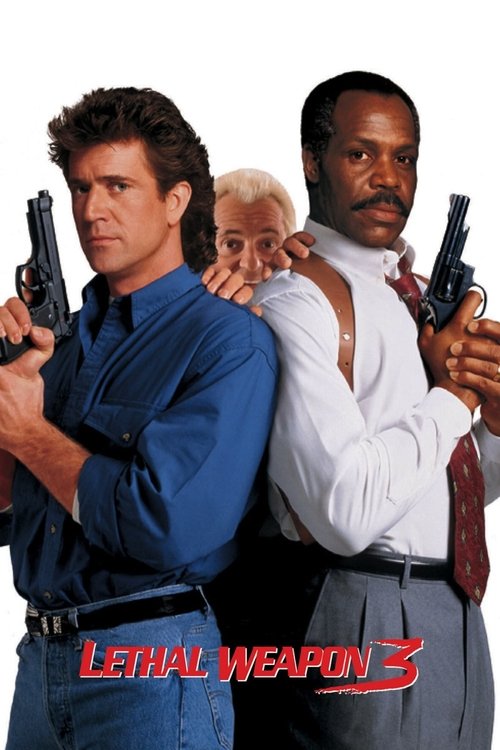
Lethal Weapon 3
1992 · Directed by Richard Donner
Woke Score
CriticCritic Score
Audience
Ultra Based
Critics rated this 32 points above its woke score. Among Ultra Based films, this critic score ranks #1353 of 1469.
Representation Casting
Score: 35/100
The film features Danny Glover as a co-lead in an integrated buddy cop dynamic, which was progressive for mainstream Hollywood in 1992. However, this casting choice functions as narrative convention rather than as an explicit statement about representation or diversity.
LGBTQ+ Themes
Score: 0/100
No LGBTQ+ themes, characters, or representation are present in the film. The narrative shows no awareness of or interest in sexual orientation or gender identity.
Feminist Agenda
Score: 5/100
Female characters exist primarily as romantic interests or minor supporting roles. Rene Russo's character is a romantic interest and potential love interest, but the film shows no feminist consciousness or agenda regarding gender dynamics.
Racial Consciousness
Score: 15/100
While the film features an interracial buddy cop partnership, it does not engage in any explicit examination of racial dynamics, systemic racism, or racial consciousness. The partnership is treated as a given rather than as commentary.
Climate Crusade
Score: 0/100
Climate change and environmental concerns are completely absent from the film's narrative and thematic concerns.
Eat the Rich
Score: 10/100
The plot involves illegal weapons trafficking and institutional corruption, which could be read as critique of criminal capitalism, but the film does not develop any coherent anti-capitalist or anti-corporate message.
Body Positivity
Score: 0/100
Body positivity discourse is entirely absent. The film presents conventionally attractive action heroes without any commentary on body diversity or acceptance.
Neurodivergence
Score: 0/100
No representation of or engagement with neurodivergence, mental health conditions, or cognitive diversity appears in the film.
Revisionist History
Score: 0/100
The film contains no historical narrative or revisionist historical elements. It is a contemporary crime thriller set in the present day.
Lecture Energy
Score: 0/100
The film makes no attempt to educate its audience about social issues or deliver explicit messages about progressive values. It prioritizes entertainment and spectacle over preachiness.


Synopsis
Riggs and Murtaugh pursue a former officer who uses his knowledge of police procedure and policies to steal and sell confiscated guns and ammunition to local street gangs.
Consciousness Assessment
Lethal Weapon 3 occupies an interesting position in the genealogy of action cinema: it features an integrated buddy cop dynamic that, by the standards of 1980s Hollywood, represented a kind of progressive casting choice, yet it remains fundamentally a product of pre-woke sensibilities. The partnership between Riggs and Murtaugh is never framed as a statement about racial harmony or social consciousness. It simply exists as the premise of the franchise, a narrative device that allows for banter and mutual exasperation. The film treats its Black co-lead as a fully realized character with his own agency, humor, and emotional complexity, which is commendable for 1992, but this is not the same as pursuing any broader social agenda regarding representation or systemic critique.
The plot itself, centered on illegal gun trafficking to street gangs, touches upon issues of urban violence and institutional corruption. However, the film approaches these subjects as generic crime drama material rather than as opportunities for examining structural inequality or systemic racism. The villain is a corrupt white cop, which might suggest some commentary on institutional violence, but the narrative does not develop this theme into anything resembling modern progressive social consciousness. The film is content to function as spectacle and entertainment without interrogating the deeper questions its premise raises.
Throughout its runtime, Lethal Weapon 3 maintains a commitment to conventional action movie values: fast cars, explosions, witty one-liners, and the triumph of individual heroism over bureaucratic incompetence. There is no lecture energy, no explicit messaging about systemic change, no body positivity discourse, no climate consciousness, and certainly no revisionist history. The film's gender politics are entirely conventional for its era, with female characters existing primarily as romantic interests or supporting players. This is not a film that aspires to educate or challenge its audience on matters of social justice. It is a film that wants to entertain, and it pursues that goal with admirable directness and uncomplicated sincerity.
Analysis generated by our Consciousness Algorithm
Critic Reviews
“There are elements in the movie that make it worth seeing, and that set it aside from the routine movies in this genre.”
“A nonstop action picture with a fair amount of laughs, car chases and exploding buildings. [15 May 1992]”
“This colossus may be mechanized, but it's gloriously efficient. The stakes get higher with each installment, and Donner knows how to corral the show-stopping mayhem into a polished, antiseptically entertaining package. [15 May 1992, p.3]”
“Lethal Weapon 3 offends on all levels. With its empty-headed direction and lazy acting, the film deserves to be ignored. [14 May 1992]”
Consciousness Markers
The film features Danny Glover as a co-lead in an integrated buddy cop dynamic, which was progressive for mainstream Hollywood in 1992. However, this casting choice functions as narrative convention rather than as an explicit statement about representation or diversity.
No LGBTQ+ themes, characters, or representation are present in the film. The narrative shows no awareness of or interest in sexual orientation or gender identity.
Female characters exist primarily as romantic interests or minor supporting roles. Rene Russo's character is a romantic interest and potential love interest, but the film shows no feminist consciousness or agenda regarding gender dynamics.
While the film features an interracial buddy cop partnership, it does not engage in any explicit examination of racial dynamics, systemic racism, or racial consciousness. The partnership is treated as a given rather than as commentary.
Climate change and environmental concerns are completely absent from the film's narrative and thematic concerns.
The plot involves illegal weapons trafficking and institutional corruption, which could be read as critique of criminal capitalism, but the film does not develop any coherent anti-capitalist or anti-corporate message.
Body positivity discourse is entirely absent. The film presents conventionally attractive action heroes without any commentary on body diversity or acceptance.
No representation of or engagement with neurodivergence, mental health conditions, or cognitive diversity appears in the film.
The film contains no historical narrative or revisionist historical elements. It is a contemporary crime thriller set in the present day.
The film makes no attempt to educate its audience about social issues or deliver explicit messages about progressive values. It prioritizes entertainment and spectacle over preachiness.