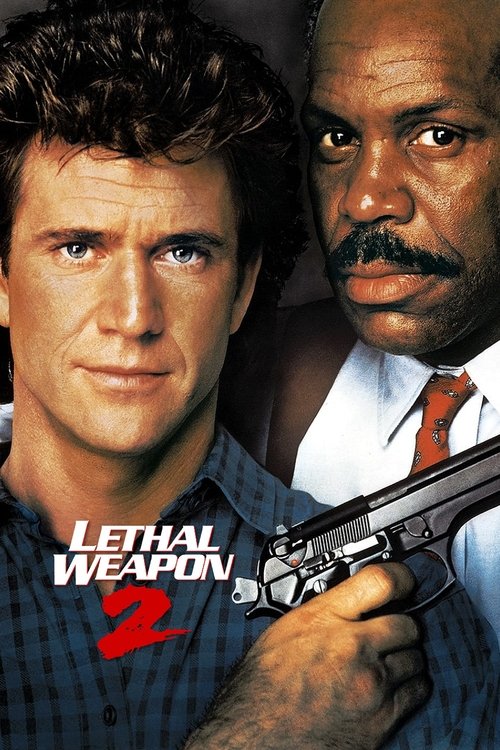
Lethal Weapon 2
1989 · Directed by Richard Donner
Woke Score
CriticCritic Score
Audience
Ultra Based
Critics rated this 52 points above its woke score. Among Ultra Based films, this critic score ranks #635 of 1469.
Representation Casting
Score: 35/100
Danny Glover appears as a lead in an action film, sharing equal billing with Mel Gibson. However, the partnership trades on comedic contrast rather than genuine parity, with Glover often positioned as the cautious counterpoint to Gibson's recklessness.
LGBTQ+ Themes
Score: 0/100
No LGBTQ+ themes, representation, or subtext present in the film. The narrative focuses entirely on heterosexual relationships and male bonding.
Feminist Agenda
Score: 5/100
The film contains minimal female characters and treats them as peripheral to the narrative. Murtaugh's wife exists as a domestic presence, and female characters generally serve supporting functions.
Racial Consciousness
Score: 25/100
The South African apartheid government provides the villainous framework, indicating awareness that apartheid is wrong. However, this recognition remains shallow and never interrogates systemic racism or structural oppression.
Climate Crusade
Score: 0/100
No climate-related themes, messaging, or environmental consciousness appears in the film. The narrative shows no concern for ecological impact.
Eat the Rich
Score: 0/100
The film presents no critique of capitalism or wealth inequality. The villains are criminals, not symbols of economic systems, and the narrative does not question capitalist structures.
Body Positivity
Score: 0/100
No body positivity themes are present. The film features conventionally attractive action stars and presents no commentary on body diversity or acceptance.
Neurodivergence
Score: 0/100
No representation of neurodivergence or disability. The film contains no characters coded as neurodivergent and makes no commentary on neurological difference.
Revisionist History
Score: 10/100
The film uses apartheid South Africa as a backdrop but does not attempt to reframe or reinterpret historical events. It treats the apartheid government as straightforwardly villainous without engaging with historical complexity.
Lecture Energy
Score: 15/100
The film contains minimal exposition or preachy messaging about its political backdrop. Characters do not explain apartheid or its implications, treating it as established fact rather than a subject for discussion.


Synopsis
Riggs and Murtaugh are on the trail of South African diplomats using their immunity to engage in criminal activities.
Consciousness Assessment
Lethal Weapon 2 exists in that peculiar space where a film engages with real-world political evil without actually engaging with it. The South African diplomatic antagonists serve as convenient villains, their apartheid-era brutality providing moral clarity to what is otherwise a standard buddy cop vehicle. The film gestures toward the seriousness of the historical moment, but this gesture remains exactly that: a gesture, a framing device for explosions and quippy dialogue. We are asked to understand that apartheid is bad, which requires approximately zero cultural consciousness on the part of the filmmakers or audience.
The casting of Danny Glover alongside Mel Gibson does present an integrated police partnership in 1989, which was not unremarkable for action cinema at the time. However, Glover's character exists primarily as a foil to Gibson's volatile protagonist. The partnership functions more as a comedic contrast between a reckless white cop and a cautious, by-the-book Black cop, a dynamic that was becoming pleasantly familiar in mainstream action films. Glover's character has a family, which grounds him in domestic concerns, but this too serves the plot mechanics rather than any deeper exploration of identity or experience.
The film's engagement with South Africa amounts to a surface-level acknowledgment that the government is committing crimes. There is no interrogation of systemic structures, no examination of complicity, no sense that the filmmakers believe their audience should think about anything beyond the immediate narrative. This is not a moral failing in the way that ignoring genuine atrocities might be, but rather a reflection of the film's commitment to entertainment over consciousness. Lethal Weapon 2 is competent in its genre, but it remains a relic of an era when progressive sensibilities meant little more than casting a Black actor in a position of authority and assuming the work was complete.
Analysis generated by our Consciousness Algorithm
Critic Reviews
“But no, Lethal Weapon 2 is no artless, autopiloted waste of precious movie-theater air conditioning. It's fun stuff -- crackling, playfully escapist summer fare that doesn't make you feel taken advantage of later.”
“Lethal Weapon 2 is that rarity - a sequel with most of the same qualities as the original. I walked into the movie with a certain dread. But this is a film with the same off-center invention and wild energy as the original.”
“In the wake of Lethal Weapon, producers across Hollywood had started running the buddy-cop concept into the ground, which made 1989’s Lethal Weapon 2 a reminder of how to do this schtick right, with just as much emphasis on loose character interaction as on violent action.”
“That first movie raised the craft of torture to a low art. Expect no less in LW2, directed by Richard Donner and written by Jeffrey Boam. This installment features a surfboard decapitation, death by carpenter's nail gun, a bomb wired to a very sensitive seat ( and reduction of the Afrikaaner diaspora by about one-half. (24July 1989, p.53)”
Consciousness Markers
Danny Glover appears as a lead in an action film, sharing equal billing with Mel Gibson. However, the partnership trades on comedic contrast rather than genuine parity, with Glover often positioned as the cautious counterpoint to Gibson's recklessness.
No LGBTQ+ themes, representation, or subtext present in the film. The narrative focuses entirely on heterosexual relationships and male bonding.
The film contains minimal female characters and treats them as peripheral to the narrative. Murtaugh's wife exists as a domestic presence, and female characters generally serve supporting functions.
The South African apartheid government provides the villainous framework, indicating awareness that apartheid is wrong. However, this recognition remains shallow and never interrogates systemic racism or structural oppression.
No climate-related themes, messaging, or environmental consciousness appears in the film. The narrative shows no concern for ecological impact.
The film presents no critique of capitalism or wealth inequality. The villains are criminals, not symbols of economic systems, and the narrative does not question capitalist structures.
No body positivity themes are present. The film features conventionally attractive action stars and presents no commentary on body diversity or acceptance.
No representation of neurodivergence or disability. The film contains no characters coded as neurodivergent and makes no commentary on neurological difference.
The film uses apartheid South Africa as a backdrop but does not attempt to reframe or reinterpret historical events. It treats the apartheid government as straightforwardly villainous without engaging with historical complexity.
The film contains minimal exposition or preachy messaging about its political backdrop. Characters do not explain apartheid or its implications, treating it as established fact rather than a subject for discussion.