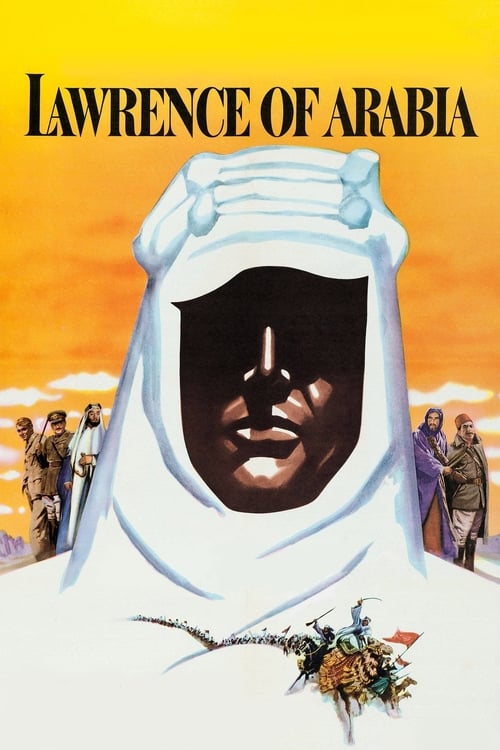
Lawrence of Arabia
1962 · Directed by David Lean
Woke Score
CriticCritic Score
Audience
Ultra Based
Critics rated this 92 points above its woke score. Among Ultra Based films, this critic score ranks #5 of 1469.
Representation Casting
Score: 25/100
Cast includes Arab actors (Omar Sharif, Anthony Quinn) alongside British leads, but casting reflects 1962 conventions where major roles went to Western stars regardless of authenticity.
LGBTQ+ Themes
Score: 0/100
No LGBTQ+ themes or characters present. The film is entirely heteronormative in its narrative concerns.
Feminist Agenda
Score: 5/100
Virtually no female characters of substance. Women appear only briefly and peripherally to the male-centered narrative.
Racial Consciousness
Score: 15/100
The film presents Arab characters as complex individuals but does not interrogate colonial power dynamics or British imperial ambitions. Racial consciousness in the modern sense is absent.
Climate Crusade
Score: 0/100
Climate concerns are entirely absent from this 1962 war epic. Environmental issues play no role whatsoever in the narrative.
Eat the Rich
Score: 0/100
No critique of capitalism or wealth inequality. The film is concerned with military strategy and personal morality, not economic systems.
Body Positivity
Score: 0/100
Body positivity is a concept entirely foreign to this 1962 military epic. Physical appearance is never discussed in terms of contemporary body acceptance frameworks.
Neurodivergence
Score: 10/100
Lawrence's psychological trauma and mental deterioration could be read as exploring mental health, but the film does not frame this in terms of neurodivergence or modern psychological discourse.
Revisionist History
Score: 20/100
The film takes significant liberties with historical fact in service of narrative drama, but this is artistic interpretation rather than deliberate revisionism in the contemporary sense.
Lecture Energy
Score: 5/100
The film trusts its audience to understand complex political situations without exposition. Dialogue is minimal. There is no preachy lecturing about moral positions.


Synopsis
During World War I, English officer Thomas Edward 'T.E.' Lawrence sets out to unite and lead the diverse, often warring, Arab tribes to fight the Turks.
Consciousness Assessment
Lawrence of Arabia stands as a towering achievement in cinema, a film so devoted to spectacle and the interior life of its protagonist that it has little interest in the social consciousness frameworks that would emerge decades later. David Lean's epic treats the Arab characters with the orientalist lens typical of 1962 British filmmaking. They function primarily as a backdrop for Lawrence's psychological unraveling, noble in their way but ultimately subordinate to the white Englishman's moral crisis. The casting of Omar Sharif and Alec Guinness as Arabs, alongside authentic Arab actors, reflects the era's casual attitudes toward authenticity in representation.
The film's fundamental concern is with Lawrence's individual torment, not with the colonial dynamics at play or the exploitation inherent in the Great Game. We are invited to marvel at his tactical genius and to recoil from his trauma, but the film offers no interrogation of British imperial ambitions. The Arabs are granted agency within the narrative but not dignity within the frame. They exist to serve the story of one man's descent into moral ambiguity.
What makes the film resistant to contemporary progressive analysis is precisely what makes it artistically uncompromising. Lean refuses sentimentality or moral simplification. He shows us neither the noble savage nor the grateful native, but rather complex tribal politics and the collision of cultures. This refusal to provide easy moral answers is admirable from a storytelling perspective, but it also means the film offers no contemporary cultural awareness about its own complicity in perpetuating imperial narratives. For a 1962 film, this is entirely unremarkable. By 2024 standards, it registers as historically important but culturally unexamined.
Analysis generated by our Consciousness Algorithm
Critic Reviews
“In short, they don't make 'em like this one anymore. Viewing it is like taking a time machine to a movie age that was more naive than our own in some ways, more sophisticated and ambitious in others.”
“What a bold, mad act of genius it was, to make Lawrence of Arabia, or even think that it could be made.”
“It's perhaps only because it can't be seen in its full glory on television that "Lawrence" isn't ranked more highly on some recent all-time "best film" lists. But it belongs near the very top. It's an astonishing, unrepeatable epic.”
“The movie manages both senses of scale—the intimate and the expansive—with equal majesty, merging them into something moving, mesmerizing, and poetic, in a way only Lean movies could really manage.”
Consciousness Markers
Cast includes Arab actors (Omar Sharif, Anthony Quinn) alongside British leads, but casting reflects 1962 conventions where major roles went to Western stars regardless of authenticity.
No LGBTQ+ themes or characters present. The film is entirely heteronormative in its narrative concerns.
Virtually no female characters of substance. Women appear only briefly and peripherally to the male-centered narrative.
The film presents Arab characters as complex individuals but does not interrogate colonial power dynamics or British imperial ambitions. Racial consciousness in the modern sense is absent.
Climate concerns are entirely absent from this 1962 war epic. Environmental issues play no role whatsoever in the narrative.
No critique of capitalism or wealth inequality. The film is concerned with military strategy and personal morality, not economic systems.
Body positivity is a concept entirely foreign to this 1962 military epic. Physical appearance is never discussed in terms of contemporary body acceptance frameworks.
Lawrence's psychological trauma and mental deterioration could be read as exploring mental health, but the film does not frame this in terms of neurodivergence or modern psychological discourse.
The film takes significant liberties with historical fact in service of narrative drama, but this is artistic interpretation rather than deliberate revisionism in the contemporary sense.
The film trusts its audience to understand complex political situations without exposition. Dialogue is minimal. There is no preachy lecturing about moral positions.