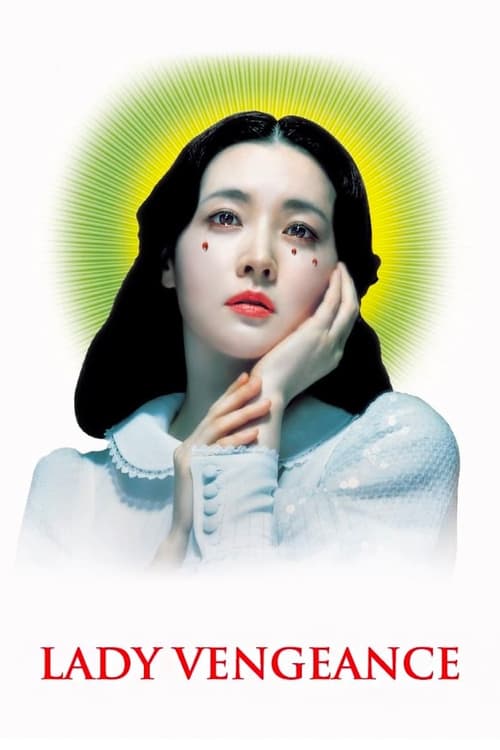
Lady Vengeance
2005 · Directed by Park Chan-wook
Woke Score
CriticCritic Score
Audience
Ultra Based
Critics rated this 67 points above its woke score. Among Ultra Based films, this critic score ranks #479 of 1469.
Representation Casting
Score: 30/100
Female protagonist in a position of agency and intelligence, though the supporting cast remains predominantly male and gender is not a thematic focus of the narrative.
LGBTQ+ Themes
Score: 0/100
No LGBTQ+ themes, characters, or representation present in the film.
Feminist Agenda
Score: 25/100
While the film has attracted feminist critical analysis, it does not foreground gender as a thematic concern or explicitly engage with feminist ideology. The female protagonist is complex but not framed as a commentary on patriarchal systems.
Racial Consciousness
Score: 0/100
No explicit racial consciousness or commentary on racial systems present in the film.
Climate Crusade
Score: 0/100
No climate-related themes or environmental messaging present in the film.
Eat the Rich
Score: 0/100
While the film contains covert political allegory related to Korean historical trauma, it contains no explicit anti-capitalist messaging or 'eat the rich' commentary.
Body Positivity
Score: 0/100
No body positivity themes, commentary on body diversity, or related messaging present in the film.
Neurodivergence
Score: 0/100
No representation of or commentary on neurodivergence present in the film.
Revisionist History
Score: 0/100
While the film engages with Korean cultural memory and trauma, it does not engage in revisionist reframing of historical events in the manner of contemporary woke historiography.
Lecture Energy
Score: 5/100
The film is deliberately ambiguous and philosophical rather than preachy. There are minimal moments where characters explicitly state moral lessons, though the ending does carry some thematic weight.


Synopsis
Released after being wrongfully convicted and imprisoned for 13 years, a woman begins executing her elaborate plan of retribution.
Consciousness Assessment
Lady Vengeance occupies a curious position in the history of cinema. It features a female protagonist in a revenge narrative at a time when such vehicles were rare, and it has attracted considerable feminist critical attention in retrospect. Yet the film remains fundamentally a meditation on the philosophical emptiness of vengeance itself, not a tract on gender representation or social justice. Park Chan-wook's protagonist is neither a symbol nor a lesson; she is a fully realized character whose gender is incidental to her arc. The film's sparse engagement with its own social dimensions reflects its 2005 vintage, when such explicit messaging was neither fashionable nor expected from art cinema.
The production features a female lead in a position of agency and intelligence, which distinguishes it from many thriller conventions of its era. However, this choice appears driven by artistic ambition rather than ideological commitment. The supporting cast is predominantly male, and the narrative does not foreground gender as a lens for understanding either the crime or the revenge. The film's political undertones relate instead to Korean cultural trauma and historical memory, concerns that operate at a remove from the progressive social consciousness markers of the 2020s. One searches the film in vain for explicit commentary on systemic inequality, representation, or any of the other hallmarks of contemporary cultural awareness.
Where the film might accumulate points in a modern assessment is its refusal to moralize or sentimentalize its female protagonist's journey. She is allowed to be complicit, calculating, and ultimately undone by her own design. This refusal of easy redemption or victimhood narratives could read as subversive to contemporary sensibilities, yet it operates according to its own artistic logic rather than in service of any social agenda. The film remains what it was conceived to be: a masterwork of pure cinema in the service of philosophical inquiry.
Analysis generated by our Consciousness Algorithm
Critic Reviews
“It concludes Park's trilogy on a dual note of circular tragedy and fragile hope, while working equally well as an introduction to his universe of retribution and repentance or as a stand-alone thriller with a darkly feminist twist.”
“Unlike the previous two installments, Lady Vengeance generates on odd feeling: hope.”
“"Old Boy's" vivid star Choi Min-sik plays a terrible schoolteacher -- yet another damned soul in Park's inflammatory, inimitable movie inventory of hell on earth.”
“A convoluted hodge-podge of time frames, subplots and bit player back stories.”
Consciousness Markers
Female protagonist in a position of agency and intelligence, though the supporting cast remains predominantly male and gender is not a thematic focus of the narrative.
No LGBTQ+ themes, characters, or representation present in the film.
While the film has attracted feminist critical analysis, it does not foreground gender as a thematic concern or explicitly engage with feminist ideology. The female protagonist is complex but not framed as a commentary on patriarchal systems.
No explicit racial consciousness or commentary on racial systems present in the film.
No climate-related themes or environmental messaging present in the film.
While the film contains covert political allegory related to Korean historical trauma, it contains no explicit anti-capitalist messaging or 'eat the rich' commentary.
No body positivity themes, commentary on body diversity, or related messaging present in the film.
No representation of or commentary on neurodivergence present in the film.
While the film engages with Korean cultural memory and trauma, it does not engage in revisionist reframing of historical events in the manner of contemporary woke historiography.
The film is deliberately ambiguous and philosophical rather than preachy. There are minimal moments where characters explicitly state moral lessons, though the ending does carry some thematic weight.