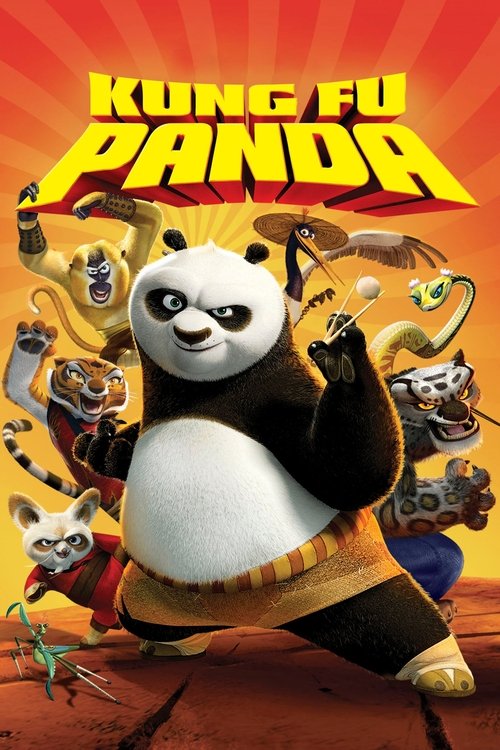
Kung Fu Panda
2008 · Directed by Mark Osborne
Woke Score
CriticCritic Score
Audience
Based
Critics rated this 52 points above its woke score. Among Based films, this critic score ranks #125 of 345.
Representation Casting
Score: 35/100
Asian voice actors cast in supporting roles (Jackie Chan, Lucy Liu, James Hong), but in a fantasy setting divorced from actual cultural context. The diversity is primarily aesthetic rather than substantive.
LGBTQ+ Themes
Score: 0/100
No LGBTQ+ themes or representation present in the film. The narrative contains no romantic subplots or queer coding of any significance.
Feminist Agenda
Score: 15/100
The Furious Five includes female characters (Angelina Jolie's Tigress), but they lack individual development and agency. They function primarily as supporting martial artists in an ensemble.
Racial Consciousness
Score: 20/100
The film engages with Asian aesthetics and martial arts traditions, but treats them as decorative rather than exploring genuine cultural specificity or racial themes.
Climate Crusade
Score: 0/100
No climate-related themes or environmental consciousness present. The film is purely focused on personal achievement within a martial arts framework.
Eat the Rich
Score: 0/100
No anti-capitalist sentiment or critique of wealth structures. The narrative is apolitical regarding economic systems.
Body Positivity
Score: 55/100
Po's character, an overweight panda who becomes a hero, represents a genuine departure from typical animated protagonist archetypes. His success is not contingent on physical transformation.
Neurodivergence
Score: 10/100
Po's clumsiness and social awkwardness could be read as neurodivergent coding, though the film does not explicitly engage with such themes or terminology.
Revisionist History
Score: 0/100
The film contains no historical content to revise. It is a pure fantasy narrative set in a fictional martial arts world.
Lecture Energy
Score: 5/100
The film maintains a light comedic tone throughout. Master Shifu's teachings are delivered within the narrative context rather than as preachy lectures to the audience.


Synopsis
Chosen by prophecy but doubted by all, Po is an unlikely Dragon Warrior—a clumsy panda thrust into the world of kung fu as a deadly enemy threatens the Valley of Peace. Under reluctant guidance by Master Shifu and the Furious Five, Po must embrace who he is to unlock the power that no scroll can teach.
Consciousness Assessment
Kung Fu Panda arrives as a family film of considerable craft, though its progressive credentials rest primarily on the accidental rather than the intentional. The central conceit, that an overweight panda can become a martial arts master through self-acceptance and effort, possesses a certain body-positive undertone. Po's journey functions as an implicit rejection of the chosen-one narrative, a subversion that feels more accidentally democratic than deliberately so. The film makes no speeches about this matter. It simply shows a fat character succeeding through determination and inner strength, which is perhaps the most insidious form of progressivism: the kind that doesn't announce itself.
The ensemble cast includes several Asian actors (Jackie Chan, Lucy Liu, James Hong) in voice roles, though their characters exist in a fantasy martial arts universe that bears only decorative relationship to actual Chinese culture. This is animation's great escape clause: one can claim diversity while simultaneously rendering it as pure aesthetic. The film treats its Asian-inspired setting as a playground for kung fu choreography and comedic business rather than as a source of cultural specificity. The Furious Five, a diverse group of animal warriors, represent a mild nod toward ensemble representation without any meaningful exploration of their individual identities or perspectives.
The narrative contains no overt feminist agenda, no LGBTQ+ themes, no climate consciousness, no anti-capitalist rhetoric, and certainly no revisionist history. It is, in essence, a perfectly serviceable children's film from 2008, a time when such considerations barely registered in mainstream animation. That it has become a beloved property speaks more to its technical excellence and charm than to any particular cultural awareness. We are scoring a film that predates the modern discourse it is being evaluated against, which grants it a certain mercy.
Analysis generated by our Consciousness Algorithm
Critic Reviews
“Light and goofy, yet the fight scenes, which are the heart of the film, are lickety-split mad fun.”
“Yet another celebrity-voiced animal adventure, but it stands out from the crowd of similar films with its lightning wit and whirlwind brio.”
“The stroke of genius is, of course, the film's hero -- the big, lovable bear that is the Chinese panda.”
“It's impressive enough to look at, and the voice talent – especially Black and Hoffman - doesn't disappoint, but all the CGI wankery and high-end talent only barely allows Kung Fu Panda to rise above cliché.”
Consciousness Markers
Asian voice actors cast in supporting roles (Jackie Chan, Lucy Liu, James Hong), but in a fantasy setting divorced from actual cultural context. The diversity is primarily aesthetic rather than substantive.
No LGBTQ+ themes or representation present in the film. The narrative contains no romantic subplots or queer coding of any significance.
The Furious Five includes female characters (Angelina Jolie's Tigress), but they lack individual development and agency. They function primarily as supporting martial artists in an ensemble.
The film engages with Asian aesthetics and martial arts traditions, but treats them as decorative rather than exploring genuine cultural specificity or racial themes.
No climate-related themes or environmental consciousness present. The film is purely focused on personal achievement within a martial arts framework.
No anti-capitalist sentiment or critique of wealth structures. The narrative is apolitical regarding economic systems.
Po's character, an overweight panda who becomes a hero, represents a genuine departure from typical animated protagonist archetypes. His success is not contingent on physical transformation.
Po's clumsiness and social awkwardness could be read as neurodivergent coding, though the film does not explicitly engage with such themes or terminology.
The film contains no historical content to revise. It is a pure fantasy narrative set in a fictional martial arts world.
The film maintains a light comedic tone throughout. Master Shifu's teachings are delivered within the narrative context rather than as preachy lectures to the audience.