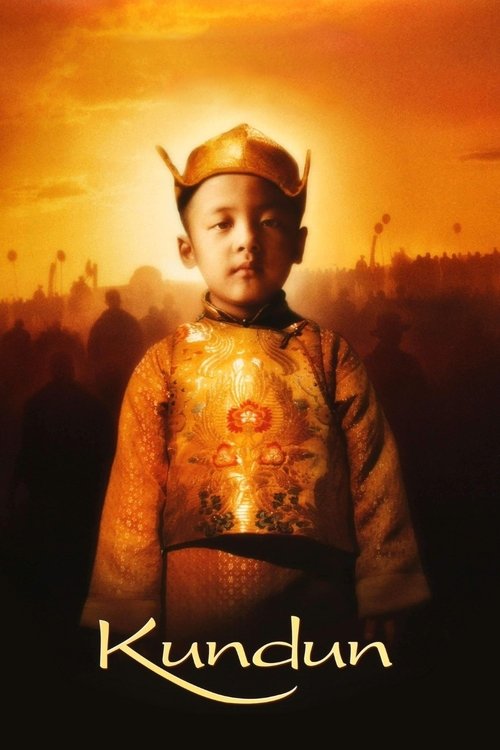
Kundun
1997 · Directed by Martin Scorsese
Woke Score
CriticCritic Score
Audience
Based
Critics rated this 36 points above its woke score. Among Based films, this critic score ranks #127 of 345.
Representation Casting
Score: 70/100
The film employs actual Tibetan actors and non-professional performers from the Tibetan diaspora, demonstrating authentic representation. However, this choice prioritizes cultural authenticity over modern diversity initiatives.
LGBTQ+ Themes
Score: 0/100
No LGBTQ+ themes, characters, or content present in the film.
Feminist Agenda
Score: 15/100
The narrative centers on male religious authority and male-dominated institutional structures. Female characters appear peripherally without meaningful feminist commentary or agency.
Racial Consciousness
Score: 60/100
The film addresses Chinese colonialism and oppression of Tibetan people as unjust, but frames this through geopolitical and spiritual lenses rather than modern racial consciousness frameworks or systemic analysis.
Climate Crusade
Score: 0/100
No environmental themes, climate concerns, or ecological messaging present in the narrative.
Eat the Rich
Score: 0/100
While depicting communist oppression, the film makes no critique of capitalism itself and does not advance anti-capitalist ideology.
Body Positivity
Score: 0/100
No content related to body diversity, body acceptance, or body positivity messaging.
Neurodivergence
Score: 0/100
No representation of neurodivergent characters or exploration of neurodivergence themes.
Revisionist History
Score: 15/100
The film presents the Dalai Lama's perspective sympathetically and is based on his writings, but does not engage in revisionist reframing of historical events or modern identity-based historical reinterpretation.
Lecture Energy
Score: 20/100
The film privileges contemplation and visual storytelling over preachy exposition. While spiritual teaching appears, the overall tone avoids the preachy or pedagogical quality common in contemporary socially conscious cinema.
Synopsis
The Tibetans refer to the Dalai Lama as 'Kundun', which means 'The Presence'. He was forced to escape from his native home, Tibet, when communist China invaded and enforced an oppressive regime upon the peaceful nation. The Dalai Lama escaped to India in 1959 and has been living in exile in Dharamsala ever since.
Consciousness Assessment
Martin Scorsese's "Kundun" arrives as a meditation on spiritual resistance rather than a manifesto of modern progressive sensibilities. The film employs Tibetan actors and non-professional performers from the diaspora, a choice that prioritizes authenticity over the contemporary casting frameworks we now associate with cultural representation. The result feels genuinely grounded, even if this commitment to casting truth predates our current moment of conscious diversity metrics by nearly two decades.
The film's engagement with political oppression is real and morally serious, yet it operates within a different register than contemporary social consciousness cinema. Scorsese presents Chinese colonialism as an injustice, but the argument is fundamentally spiritual and humanistic rather than rooted in modern identity politics or systemic analysis. The Dalai Lama's struggle in "Kundun" emerges from religious conviction and personal integrity, not from the language of intersectionality or structural critique that defines present-day progressive filmmaking.
What remains most striking about "Kundun" is how thoroughly it avoids the pedagogical tone that characterizes so much culturally aware cinema today. Scorsese allows silence, contemplation, and visual poetry to carry meaning. The film trusts its audience to understand oppression without being lectured about it. This restraint, paradoxically, may be why the film remains more artistically coherent than many contemporary works that wear their consciousness more visibly. "Kundun" is a serious work about serious subjects, but it speaks in the language of 1997, not 2024.
Analysis generated by our Consciousness Algorithm
Critic Reviews
“Throughout the film cause and effect, the mainspring of most narratives, is replaced by a sense of spiritual synchronicity. ”
“At once spectacular and inert -- a mosaic impersonating a movie; an empty-shell epic.”
Consciousness Markers
The film employs actual Tibetan actors and non-professional performers from the Tibetan diaspora, demonstrating authentic representation. However, this choice prioritizes cultural authenticity over modern diversity initiatives.
No LGBTQ+ themes, characters, or content present in the film.
The narrative centers on male religious authority and male-dominated institutional structures. Female characters appear peripherally without meaningful feminist commentary or agency.
The film addresses Chinese colonialism and oppression of Tibetan people as unjust, but frames this through geopolitical and spiritual lenses rather than modern racial consciousness frameworks or systemic analysis.
No environmental themes, climate concerns, or ecological messaging present in the narrative.
While depicting communist oppression, the film makes no critique of capitalism itself and does not advance anti-capitalist ideology.
No content related to body diversity, body acceptance, or body positivity messaging.
No representation of neurodivergent characters or exploration of neurodivergence themes.
The film presents the Dalai Lama's perspective sympathetically and is based on his writings, but does not engage in revisionist reframing of historical events or modern identity-based historical reinterpretation.
The film privileges contemplation and visual storytelling over preachy exposition. While spiritual teaching appears, the overall tone avoids the preachy or pedagogical quality common in contemporary socially conscious cinema.