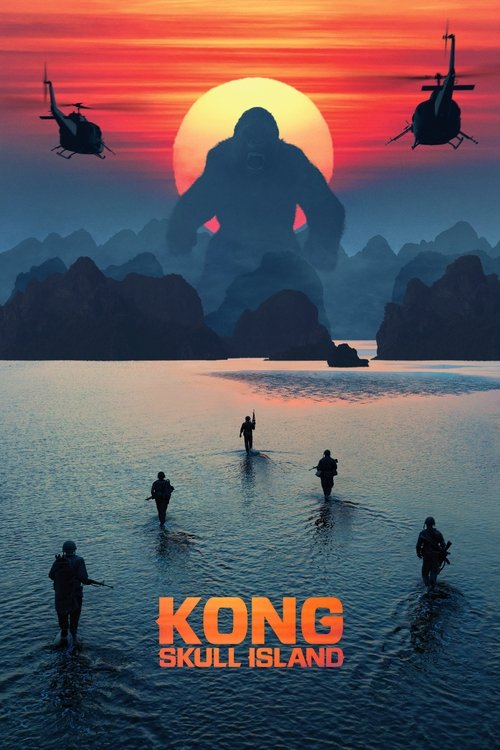
Kong: Skull Island
2017 · Directed by Jordan Vogt-Roberts
Woke Score
CriticCritic Score
Audience
Based
Critics rated this 40 points above its woke score. Among Based films, this critic score ranks #223 of 345.
Representation Casting
Score: 45/100
The ensemble cast includes Black actors (Samuel L. Jackson, Corey Hawkins, Jason Mitchell) and an Asian actress (Jing Tian) in substantive roles. However, this appears to reflect natural contemporary casting rather than a deliberate progressive initiative, and female representation remains limited beyond Brie Larson's lead role.
LGBTQ+ Themes
Score: 0/100
No LGBTQ+ themes, characters, or representation are evident in the film.
Feminist Agenda
Score: 35/100
Brie Larson's character Mason Weaver is a capable photojournalist with agency and meaningful character development. She is competent and resourceful without being fetishized. However, she remains the only significant female character, representing limited overall gender diversity in the ensemble.
Racial Consciousness
Score: 20/100
While Samuel L. Jackson's character leads the military expedition and the narrative engages with post-Vietnam War themes, the film does not present explicit racial consciousness or commentary. The Vietnam War elements serve as backdrop rather than focused social critique.
Climate Crusade
Score: 0/100
No climate change messaging or environmental crusade themes are present in the film.
Eat the Rich
Score: 0/100
The film contains no anti-capitalist messaging or critique of wealth inequality.
Body Positivity
Score: 0/100
No body positivity themes or representation of non-traditional body types are evident in the film.
Neurodivergence
Score: 0/100
No neurodivergent characters or representation are present in the film.
Revisionist History
Score: 15/100
The film uses the Vietnam War as thematic material, depicting American militarism and obsessive victory-seeking as destructive forces. However, this is conventional war allegory rather than revisionist history reframing established narratives.
Lecture Energy
Score: 0/100
The film prioritizes action spectacle and adventure narrative over preachy messaging or overt preaching about social issues.


Synopsis
Explore the mysterious and dangerous home of the king of the apes as a team of explorers ventures deep inside the treacherous, primordial island.
Consciousness Assessment
Kong: Skull Island arrives as a competently assembled monster spectacle that mistakes casting diversity for progressive sensibility. The film assembles an ensemble of capable actors across racial lines and grants its female lead, photojournalist Mason Weaver, a degree of agency that would have been unthinkable in earlier King Kong iterations. Yet these choices feel less like deliberate cultural positioning and more like the baseline professionalism of contemporary blockbuster casting. Brie Larson's character is genuinely well-written, resourceful without winking at the audience, though she remains the sole woman of consequence in an otherwise male-dominated narrative landscape.
The film's engagement with Vietnam War mythology offers the closest approximation to cultural commentary the film manages to muster. Samuel L. Jackson's obsessive military commander embodies the destructive hubris of American interventionism, and the narrative suggests that some enemies cannot be defeated through force of will. Yet this operates at the level of familiar war movie tropes rather than any sustained interrogation of American empire or militarism. The film knows these themes exist; it simply elects not to examine them with any real intensity, preferring instead the rhythms of monster action sequences and Hendrix-scored set pieces.
What ultimately emerges is a film content to exist within the boundaries of mainstream entertainment, neither progressive nor regressive in its sensibilities. The production values are immense, the action coherently staged, and the ensemble likeable enough. Kong: Skull Island functions as a reminder that genuine diversity in casting need not correlate with meaningful engagement with the social consciousness of our moment. A well-made adventure film remains a well-made adventure film, regardless of the pigmentation of its supporting cast.
Analysis generated by our Consciousness Algorithm
Critic Reviews
“Any movie with the sense, the wit and the visual instincts to introduce Kong the way this one does is fine with me.”
“It also cannot be overstated what an asset [John C.] Reilly is. The moment he shows up, the movie feels enlivened and energized; his mere presence adds a tremendous amount of oddball charm and humor. ”
“Kong: Skull Island is an offering to the hungry mouths at the multiplex who want to cheer a movie that doesn't insult, or tax, their intelligence.”
“This fantastically muddled and exasperatingly dull quasi-update of the King Kong story looks like a zestless mashup of Jurassic Park, Apocalypse Now and a few exotic visual borrowings from Miss Saigon. It gets nowhere near the elemental power of the original King Kong or indeed Peter Jackson’s game remake; it’s something Ed Wood Jr might have made with a trillion dollars to do what he liked if he’d been given a trillion dollars – but minus the fun. ”
Consciousness Markers
The ensemble cast includes Black actors (Samuel L. Jackson, Corey Hawkins, Jason Mitchell) and an Asian actress (Jing Tian) in substantive roles. However, this appears to reflect natural contemporary casting rather than a deliberate progressive initiative, and female representation remains limited beyond Brie Larson's lead role.
No LGBTQ+ themes, characters, or representation are evident in the film.
Brie Larson's character Mason Weaver is a capable photojournalist with agency and meaningful character development. She is competent and resourceful without being fetishized. However, she remains the only significant female character, representing limited overall gender diversity in the ensemble.
While Samuel L. Jackson's character leads the military expedition and the narrative engages with post-Vietnam War themes, the film does not present explicit racial consciousness or commentary. The Vietnam War elements serve as backdrop rather than focused social critique.
No climate change messaging or environmental crusade themes are present in the film.
The film contains no anti-capitalist messaging or critique of wealth inequality.
No body positivity themes or representation of non-traditional body types are evident in the film.
No neurodivergent characters or representation are present in the film.
The film uses the Vietnam War as thematic material, depicting American militarism and obsessive victory-seeking as destructive forces. However, this is conventional war allegory rather than revisionist history reframing established narratives.
The film prioritizes action spectacle and adventure narrative over preachy messaging or overt preaching about social issues.