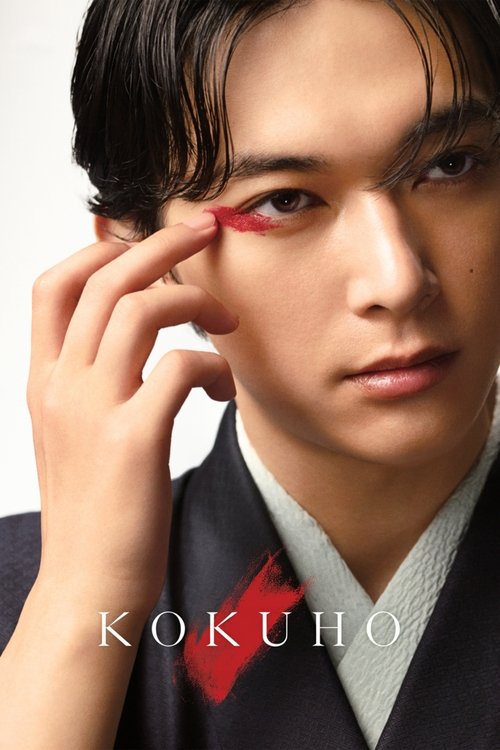
Kokuho
2025 · Directed by Sang-il Lee · $130.5M domestic
Woke Score
CriticCritic Score
Audience
Ultra Based
Critics rated this 76 points above its woke score. Among Ultra Based films, this critic score ranks #358 of 1469.
Representation Casting
Score: 5/100
The cast is entirely Japanese, which reflects demographic appropriateness for a film set in Japan about a traditional Japanese art form rather than deliberate progressive representation casting. No evidence of conscious diversity initiatives in the casting process.
LGBTQ+ Themes
Score: 15/100
While the onnagata tradition involves men performing female roles, this is presented as a historical theatrical convention rather than as commentary on contemporary gender identity or sexual orientation. No LGBTQ+ themes or storylines are apparent in available information about the film.
Feminist Agenda
Score: 5/100
The film does not appear to advance contemporary feminist narratives. Women characters exist within the traditional kabuki world, but the focus remains on male artistic achievement and rivalry rather than on gender critique or feminist consciousness.
Racial Consciousness
Score: 3/100
Set in post-war Japan with a Japanese cast and crew, the film does not engage with racial themes or consciousness. It is not designed to explore racial dynamics and contains no apparent racial commentary.
Climate Crusade
Score: 0/100
There is no evidence of climate-related themes, environmental messaging, or eco-consciousness in this historical drama focused on kabuki theater and artistic tradition.
Eat the Rich
Score: 5/100
While the film depicts a protagonist from a yakuza family, the anti-capitalist dimension is minimal. The narrative is about artistic dedication rather than systemic critique of economic structures or wealth inequality.
Body Positivity
Score: 0/100
The film does not address body positivity, body diversity, or contemporary discourse around physical acceptance. Kabuki performers are presented within the context of rigorous traditional training standards.
Neurodivergence
Score: 0/100
There is no evidence of neurodivergence representation, accommodation narratives, or commentary on neurodivergent experiences in this traditional drama.
Revisionist History
Score: 3/100
The film appears to present kabuki history and post-war Japan as a traditional historical narrative rather than offering revisionist interpretations of historical events or challenging established historical narratives.
Lecture Energy
Score: 8/100
The film is described as going into lavish detail on the art of kabuki performance and theatrical technique. This educational dimension about traditional arts could be read as carrying some pedagogical weight, though it serves the narrative rather than functioning as explicit ideological instruction.
Synopsis
Nagasaki, 1964: Following the death of his yakuza father, 15-year-old Kikuo is taken under the wing of a famous kabuki actor. Alongside Shunsuke, the actor's only son, he decides to dedicate himself to this traditional form of theatre. For decades, the two young men grow and evolve together – and one will become the greatest Japanese master of the art of kabuki.
Consciousness Assessment
Lee Sang-il's "Kokuho" stands as a remarkable achievement in the preservation and celebration of traditional Japanese kabuki theater, a three-hour epic that has resonated deeply with audiences in its home country and earned recognition on the international festival circuit. The film's primary concern is artistic mastery, the weight of tradition, and the complex friendship between two men navigating decades of professional rivalry within a highly codified cultural practice. It is a work of considerable technical ambition, featuring lavish attention to the details of kabuki performance, makeup application, and the ritualized nature of the theatrical form itself.
What becomes apparent upon examination is that "Kokuho" exists in a fundamentally different register from contemporary cinema preoccupied with modern progressive sensibilities. The film's engagement with gender, embodied through the onnagata tradition (men performing female roles), is presented as a historical and aesthetic phenomenon rather than as a vehicle for commentary on contemporary gender politics. The yakuza elements of the narrative frame the protagonist's journey from criminality into artistic transcendence, but this serves the story of personal transformation rather than any broader social critique. The film is comfortable with its status as a work of cultural preservation and artistic documentation.
The film's cultural moment is instructive. It functions as Japan's Oscar entry, a box office phenomenon in its home territory, and a genuine success in bringing classical kabuki to younger audiences without compromising the form's integrity. This represents a kind of cultural confidence that requires no external validation through contemporary progressive markers. "Kokuho" simply is what it is: a serious work about a serious art form, made with craftsmanship and respect for its subject matter. It asks nothing of the viewer except attention and a willingness to sit with beauty.
Analysis generated by our Consciousness Algorithm
Critic Reviews
“The gender questions are open-ended and the sacrifices of the artist’s life familiar ground, but Kokuho truly comes alive in the performance sequences that evoke the deep roots of theatre, and the semaphore of emotions represented in gestures, poses, strange movements and painted faces that evoke feelings beyond words.”
“Director Sang-il Lee’s feature is propelled by operatic intensity and visual poetry. It unfolds over three mostly riveting hours, with only occasional jagged lapses in narrative momentum. ”
“The pace moves from the hustle-bustle of daily business carried out over five decades to moments of stillness from the artform – the flick of a fan and a hand moving in gentle waves, for example. The actors bring the drama to life, without being overly dramatic.”
“Kokuho is a hearty melodrama with a little bit of everything — sex scandals, betrayals, unlikely comebacks, health scares — but the film’s gaudy plot twists (which shouldn’t be spoiled) belie the filmmaker’s unsentimental attitude regarding stardom’s perils.”
Consciousness Markers
The cast is entirely Japanese, which reflects demographic appropriateness for a film set in Japan about a traditional Japanese art form rather than deliberate progressive representation casting. No evidence of conscious diversity initiatives in the casting process.
While the onnagata tradition involves men performing female roles, this is presented as a historical theatrical convention rather than as commentary on contemporary gender identity or sexual orientation. No LGBTQ+ themes or storylines are apparent in available information about the film.
The film does not appear to advance contemporary feminist narratives. Women characters exist within the traditional kabuki world, but the focus remains on male artistic achievement and rivalry rather than on gender critique or feminist consciousness.
Set in post-war Japan with a Japanese cast and crew, the film does not engage with racial themes or consciousness. It is not designed to explore racial dynamics and contains no apparent racial commentary.
There is no evidence of climate-related themes, environmental messaging, or eco-consciousness in this historical drama focused on kabuki theater and artistic tradition.
While the film depicts a protagonist from a yakuza family, the anti-capitalist dimension is minimal. The narrative is about artistic dedication rather than systemic critique of economic structures or wealth inequality.
The film does not address body positivity, body diversity, or contemporary discourse around physical acceptance. Kabuki performers are presented within the context of rigorous traditional training standards.
There is no evidence of neurodivergence representation, accommodation narratives, or commentary on neurodivergent experiences in this traditional drama.
The film appears to present kabuki history and post-war Japan as a traditional historical narrative rather than offering revisionist interpretations of historical events or challenging established historical narratives.
The film is described as going into lavish detail on the art of kabuki performance and theatrical technique. This educational dimension about traditional arts could be read as carrying some pedagogical weight, though it serves the narrative rather than functioning as explicit ideological instruction.