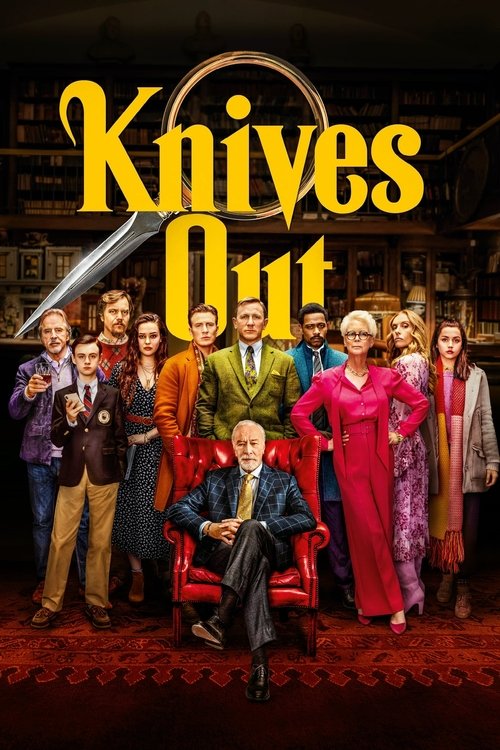
Knives Out
2019 · Directed by Rian Johnson
Woke Score
CriticCritic Score
Audience
Woke
Critics rated this 14 points above its woke score. Among Woke films, this critic score ranks #25 of 88.
Representation Casting
Score: 75/100
The ensemble features a diverse cast including Ana de Armas (Latina immigrant woman as moral protagonist), LaKeith Stanfield (Black detective), and other non-white characters in meaningful roles, though representation is somewhat performative and the Marta character embodies a particular kind of immigrant virtue narrative.
LGBTQ+ Themes
Score: 0/100
No LGBTQ+ themes, characters, or representation are present in the film. Sexual orientation and gender identity are not addressed or explored.
Feminist Agenda
Score: 30/100
While the protagonist is a woman and the family matriarch (Jamie Lee Curtis) wields some power, the film does not center feminist analysis. Marta's agency is limited and she succeeds through moral purity rather than active resistance or feminist consciousness.
Racial Consciousness
Score: 65/100
The film explicitly addresses class and immigrant identity through Marta's character, and there are moments of critique regarding how the wealthy family treats their immigrant staff. However, racial analysis remains surface-level and primarily serves the class narrative.
Climate Crusade
Score: 0/100
No climate-related themes, environmental consciousness, or climate crusade messaging appears in the film. Environmental concerns are entirely absent from the narrative.
Eat the Rich
Score: 82/100
The film's central thesis revolves around critiquing old money, inherited wealth, and capitalist hypocrisy. The wealthy family is systematically exposed as corrupt, self-serving, and morally bankrupt, with the narrative structure treating capitalism itself as fundamentally dishonest.
Body Positivity
Score: 0/100
No body positivity messaging, discussion of body image, or related themes are present. Bodies are treated as neutral narrative elements without commentary on appearance or acceptance.
Neurodivergence
Score: 0/100
No representation of neurodivergent characters or exploration of neurodivergence appears in the film. Mental health and cognitive differences are not addressed.
Revisionist History
Score: 0/100
The film is a contemporary mystery set in a modern mansion with no historical setting or revisionist historical narrative. No historical events or figures are reinterpreted.
Lecture Energy
Score: 60/100
Detective Blanc occasionally articulates the film's ideological positions with explicit directness, and certain scenes feel designed to communicate moral lessons about class and privilege. However, this remains relatively restrained compared to more preachy contemporary films.


Synopsis
When renowned crime novelist Harlan Thrombey is found dead at his estate just after his 85th birthday, the inquisitive and debonair Detective Benoit Blanc is mysteriously enlisted to investigate. From Harlan's dysfunctional family to his devoted staff, Blanc sifts through a web of red herrings and self-serving lies to uncover the truth behind Harlan's untimely death.
Consciousness Assessment
Rian Johnson's Knives Out announces itself as a modern mystery with a distinctly contemporary sensibility, one that treats class warfare and dynastic wealth not as backdrop but as moral architecture. The film's central inversion, in which a working-class immigrant woman emerges as the moral hero while the white American family members are revealed as variously venal, incompetent, or duplicitous, reflects a clear ideological commitment to progressive class consciousness. The detective himself, Daniel Craig's Benoit Blanc, operates as a kind of philosophical observer of this moral landscape, occasionally articulating the film's worldview with the directness of someone conducting a lecture in the guise of entertainment.
Yet the film's progressive credentials grow complicated upon closer examination. While the casting brings demographic diversity to the screen, the Marta character occupies an ambiguous position: she is sympathetic and virtuous, but also somewhat infantilized, defined primarily by her moral purity in contrast to the corrupt family around her. The film's anti-capitalist impulses are genuine but ultimately superficial, concerned with exposing the hypocrisy of the wealthy rather than interrogating the systems that produce them. The working-class immigrant protagonist, though framed as triumphant, remains fundamentally passive within the narrative machinery, rescued by circumstance rather than agency.
The film's satirical impulses toward conservative politics (particularly visible in Chris Evans's character) are broad and obvious, suggesting that ideological critique here operates at the level of caricature. Knives Out succeeds as entertainment and as a vehicle for contemporary anxieties about class and privilege, but it achieves this partly through a kind of progressive aesthetics that congratulates itself for awareness while remaining confined within genre conventions. The result is a film that scores points for cultural consciousness without necessarily interrogating its own complicity in the structures it purports to critique.
Analysis generated by our Consciousness Algorithm
Critic Reviews
“The genre maestro has his audience in good hands, “good” in this instance meaning both “skilled, capable, expert” and “decent, ethically sound.” He’s assembled a dazzling contraption that, if twisted in just the right way, pops open to reveal a nugget of wisdom crystallized by the cathartic final shot: we only really own what we earn. ”
“Beyond its waspish wit, a dastardly roll-call of suspects and Daniel Craig’s dapper efforts as our presiding sleuth, the film gives nothing away until the bitter end, thanks to a head-spinning tricksiness of plotting that even Agatha Christie might have conceded was rather ingenious.”
“Pound for pound, actor for actor, laugh for laugh, Knives Out may be the most entertaining movie of the year.”
“A production designed to within an inch of its life, Knives Out always seems on the brink of being cleverer than it is, never quite shaking off its cobwebs and entering the present tense.”
Consciousness Markers
The ensemble features a diverse cast including Ana de Armas (Latina immigrant woman as moral protagonist), LaKeith Stanfield (Black detective), and other non-white characters in meaningful roles, though representation is somewhat performative and the Marta character embodies a particular kind of immigrant virtue narrative.
No LGBTQ+ themes, characters, or representation are present in the film. Sexual orientation and gender identity are not addressed or explored.
While the protagonist is a woman and the family matriarch (Jamie Lee Curtis) wields some power, the film does not center feminist analysis. Marta's agency is limited and she succeeds through moral purity rather than active resistance or feminist consciousness.
The film explicitly addresses class and immigrant identity through Marta's character, and there are moments of critique regarding how the wealthy family treats their immigrant staff. However, racial analysis remains surface-level and primarily serves the class narrative.
No climate-related themes, environmental consciousness, or climate crusade messaging appears in the film. Environmental concerns are entirely absent from the narrative.
The film's central thesis revolves around critiquing old money, inherited wealth, and capitalist hypocrisy. The wealthy family is systematically exposed as corrupt, self-serving, and morally bankrupt, with the narrative structure treating capitalism itself as fundamentally dishonest.
No body positivity messaging, discussion of body image, or related themes are present. Bodies are treated as neutral narrative elements without commentary on appearance or acceptance.
No representation of neurodivergent characters or exploration of neurodivergence appears in the film. Mental health and cognitive differences are not addressed.
The film is a contemporary mystery set in a modern mansion with no historical setting or revisionist historical narrative. No historical events or figures are reinterpreted.
Detective Blanc occasionally articulates the film's ideological positions with explicit directness, and certain scenes feel designed to communicate moral lessons about class and privilege. However, this remains relatively restrained compared to more preachy contemporary films.