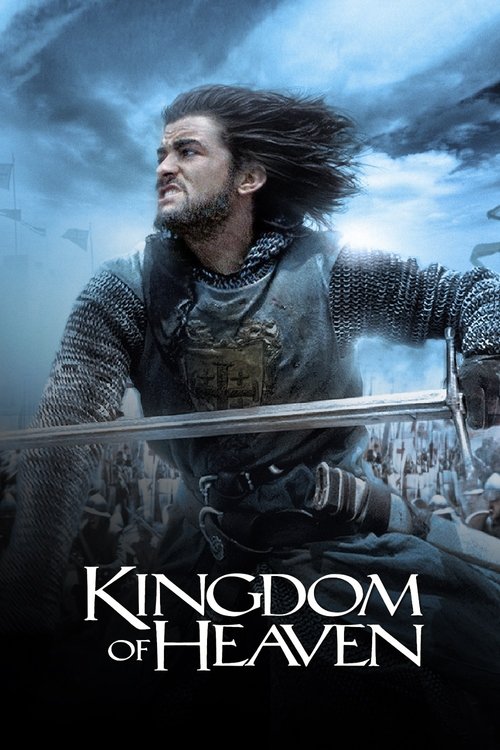
Kingdom of Heaven
2005 · Directed by Ridley Scott
Woke Score
CriticCritic Score
Audience
Ultra Based
Critics rated this 45 points above its woke score. Among Ultra Based films, this critic score ranks #821 of 1469.
Representation Casting
Score: 25/100
The film features Ghassan Massoud, a Syrian actor, in the prominent role of Saladin, providing some non-white representation. However, the protagonist is Orlando Bloom (white British actor) and the overall cast remains predominantly white.
LGBTQ+ Themes
Score: 0/100
No LGBTQ+ themes, characters, or relationships are present in the film.
Feminist Agenda
Score: 0/100
Female characters like Eva Green's noblewoman serve primarily as romantic interests and political pawns rather than active agents with their own narrative arcs.
Racial Consciousness
Score: 30/100
The film portrays Saladin and Muslim characters with dignity and moral complexity, avoiding stereotypes. However, this reflects historical fairness more than systematic racial consciousness as understood in contemporary terms.
Climate Crusade
Score: 0/100
No environmental or climate-related themes appear in the film.
Eat the Rich
Score: 0/100
The film contains no anti-capitalist messaging or critique of economic systems.
Body Positivity
Score: 0/100
No body positivity themes or non-normative body representation are present.
Neurodivergence
Score: 0/100
No neurodivergent characters or representation of neurodivergence appears in the film.
Revisionist History
Score: 20/100
The film presents a more balanced perspective on the Crusades with sympathy toward the Muslim perspective, though this reflects historical revisionism more than ideological cultural revisionism.
Lecture Energy
Score: 15/100
The film contains some preachy moments about tolerance and faith, particularly through dialogue about the nature of belief and honor, but lacks the overt pedagogical tone common in contemporary progressive cinema.


Synopsis
After his wife dies, a blacksmith named Balian is thrust into royalty, political intrigue and bloody holy wars during the Crusades.
Consciousness Assessment
Ridley Scott's "Kingdom of Heaven" arrives as a historical epic earnestly preoccupied with medieval geopolitics, religious tolerance, and the moral ambiguities of faith-driven warfare. The film distinguishes itself through its sympathetic portrayal of Saladin, rendered with considerable dignity by Syrian actor Ghassan Massoud, who emerges as the moral center of the narrative. This choice reflects a desire to complicate the traditional Western crusader narrative, presenting Muslims not as invading hordes but as principled adversaries governed by honor and strategic vision. Yet these are qualities we might attribute to any serious historical drama seeking intellectual credibility, not to the specific cultural markers of contemporary progressive sensibility.
The film's engagement with such themes, while commendable for 2005, does not constitute the kind of systematic cultural consciousness that has become fashionable in recent years. The ensemble cast remains predominantly white, with minority actors deployed in supporting roles. The female characters, particularly Eva Green's noblewoman, function primarily as romantic complications rather than active agents in the narrative. There is no interrogation of body standards, no celebration of neurodivergence, no climate messaging, and no anti-capitalist theorizing lurking beneath the battle sequences. What we encounter instead is a competent historical epic that treats its subject matter with gravitas and attempts to transcend simple religious antagonism, but without the ideological scaffolding that has come to define modern progressive cinema.
Scott's film remains a period piece concerned with its own era's preoccupations, not a vehicle for contemporary cultural messaging. The violence is substantial, the cinematography impressive, and the philosophical questions genuine. But the film exists in a pre-2015 cultural moment, when such efforts at balanced representation and moral complexity could be viewed as inherently progressive rather than as components of a larger cultural project. It is, in short, a serious film about serious subjects, which is not the same thing as being engaged with the specific sensibilities that have come to define the cultural moment we now inhabit.
Analysis generated by our Consciousness Algorithm
Critic Reviews
“A gargantuan epic, a historical adventure-drama of overwhelming visual grandeur.”
“Bloom finally comes into his own as a man here, somberly thoughtful and melancholic. The elfin archer of "The Lord of the Rings" and the trivial boy-toy of "Troy" have been forgotten.”
“Better than "Gladiator" -- deeper, more thoughtful, more about human motivation and less about action.”
“To introduce an archetype like this to western audiences -- as the world weathers culturally and religiously demonizing times -- may have been worth this whole flawed movie. Too bad the story didn't just start with him.”
Consciousness Markers
The film features Ghassan Massoud, a Syrian actor, in the prominent role of Saladin, providing some non-white representation. However, the protagonist is Orlando Bloom (white British actor) and the overall cast remains predominantly white.
No LGBTQ+ themes, characters, or relationships are present in the film.
Female characters like Eva Green's noblewoman serve primarily as romantic interests and political pawns rather than active agents with their own narrative arcs.
The film portrays Saladin and Muslim characters with dignity and moral complexity, avoiding stereotypes. However, this reflects historical fairness more than systematic racial consciousness as understood in contemporary terms.
No environmental or climate-related themes appear in the film.
The film contains no anti-capitalist messaging or critique of economic systems.
No body positivity themes or non-normative body representation are present.
No neurodivergent characters or representation of neurodivergence appears in the film.
The film presents a more balanced perspective on the Crusades with sympathy toward the Muslim perspective, though this reflects historical revisionism more than ideological cultural revisionism.
The film contains some preachy moments about tolerance and faith, particularly through dialogue about the nature of belief and honor, but lacks the overt pedagogical tone common in contemporary progressive cinema.