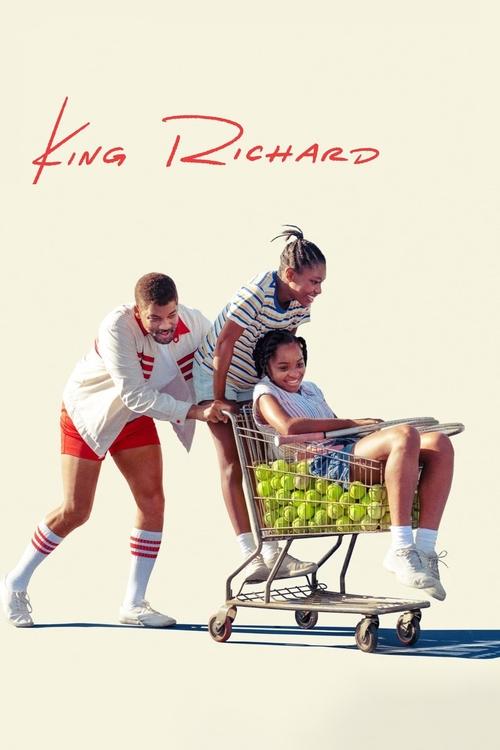
King Richard
2021 · Directed by Reinaldo Marcus Green
Woke Score
CriticCritic Score
Audience
Woke-Adjacent
Critics rated this 28 points above its woke score. Among Woke-Adjacent films, this critic score ranks #53 of 151.
Representation Casting
Score: 68/100
Strong casting of Black actors in central roles, with Aunjanue Ellis-Taylor and two young Black actresses playing the Williams daughters. The family is depicted with dignity and intelligence.
LGBTQ+ Themes
Score: 0/100
No LGBTQ+ themes, characters, or representation present in the film.
Feminist Agenda
Score: 42/100
Venus and Serena are shown as athletes with agency, but the narrative remains centered on Richard's vision and planning. Gender dynamics are not critically examined beyond the fact that the protagonists are women.
Racial Consciousness
Score: 55/100
The film acknowledges racism and class barriers the Williams family faces in tennis, but does not deeply interrogate systemic racism or invite viewers to examine their own complicity. Obstacles are presented as individual challenges to overcome.
Climate Crusade
Score: 0/100
No climate-related themes or messaging present in the film.
Eat the Rich
Score: 0/100
The film does not critique capitalism or wealth inequality. The family's success within the professional tennis apparatus is presented as unambiguously positive without interrogating commodification or exploitation.
Body Positivity
Score: 0/100
No body positivity messaging or critique of beauty standards present. The film does not engage with these themes.
Neurodivergence
Score: 0/100
No representation of neurodivergence or discussion of cognitive diversity in the film.
Revisionist History
Score: 15/100
The film is based on true events but emphasizes Richard Williams' role and vision while downplaying other factors in the family's success, presenting a particular interpretation of historical events rather than a comprehensive account.
Lecture Energy
Score: 28/100
While the film avoids heavy-handed moralizing, there is some instructional quality to Richard's planning and coaching philosophy, though this is presented as character development rather than explicit messaging to the audience.


Synopsis
The story of how Richard Williams served as a coach to his daughters Venus and Serena, who will soon become two of the most legendary tennis players in history.
Consciousness Assessment
King Richard presents a portrait of Black family ambition and strategic planning that circulates comfortably within prestige film conventions, a biographical drama that is careful not to disturb too many sensibilities while centering the story of a Black father and his daughters. The film does register genuine representation: Aunjanue Ellis-Taylor portrays the girls' mother with considerable agency, and the two young actresses playing Venus and Serena are given moments of autonomy and athletic prowess. The narrative acknowledges the racism and class obstacles facing the Williams family, particularly in the insular world of professional tennis, without dwelling on these complications in ways that might unsettle mainstream audiences. The result is a fundamentally conservative portrait of Black achievement oriented around paternal authority and individual determination rather than collective struggle or systemic critique.
The film's progressive sensibilities remain largely confined to its casting and the basic fact of centering a Black family's story in a high-budget production. There is no meaningful engagement with gender dynamics beyond the surface fact that the story involves two young women becoming athletes. The climate, anti-capitalist, neurodivergence, and body positivity markers are largely absent. There is no interrogation of the capitalist sports apparatus that the Williams family navigates, nor does the film suggest that wealth inequality or the commodification of athletic bodies presents anything worth examining closely. The film is politically safe, a celebration of individual excellence within existing structures rather than a challenge to them.
Will Smith's Oscar win suggests the film satisfied the Academy's appetite for a particular brand of social awareness: a story about Black people that does not require white viewers to examine their own complicity in systemic inequality, a narrative of triumph that credits individual will and paternal foresight rather than interrogating the systems that made such determination necessary in the first place. The film is competent, moving even, but its progressive credentials are considerably more modest than its cultural positioning might suggest.
Analysis generated by our Consciousness Algorithm
Critic Reviews
“This is a fundamentally — and I would say marvelously — old-fashioned entertainment, a sports drama that is also an appealing, socially alert story of perseverance and the up-by-the-bootstraps pursuit of excellence.”
“It’s serious at bottom. It means to teach and inspire, as well as entertain, and takes on more subjects of consequence than you can shake a racket at—among them race, parenting, marital dynamics, the weight of personal history and the mad commercialization of sports. Yet it’s marvelous fun from start to finish.”
“It’s the most sheerly pleasurable movie I’ve seen so far this year.”
“Rarely has a film used its foreknowledge of a happy ending as a reason to remain so uncritical and incurious of its central subject. ”
Consciousness Markers
Strong casting of Black actors in central roles, with Aunjanue Ellis-Taylor and two young Black actresses playing the Williams daughters. The family is depicted with dignity and intelligence.
No LGBTQ+ themes, characters, or representation present in the film.
Venus and Serena are shown as athletes with agency, but the narrative remains centered on Richard's vision and planning. Gender dynamics are not critically examined beyond the fact that the protagonists are women.
The film acknowledges racism and class barriers the Williams family faces in tennis, but does not deeply interrogate systemic racism or invite viewers to examine their own complicity. Obstacles are presented as individual challenges to overcome.
No climate-related themes or messaging present in the film.
The film does not critique capitalism or wealth inequality. The family's success within the professional tennis apparatus is presented as unambiguously positive without interrogating commodification or exploitation.
No body positivity messaging or critique of beauty standards present. The film does not engage with these themes.
No representation of neurodivergence or discussion of cognitive diversity in the film.
The film is based on true events but emphasizes Richard Williams' role and vision while downplaying other factors in the family's success, presenting a particular interpretation of historical events rather than a comprehensive account.
While the film avoids heavy-handed moralizing, there is some instructional quality to Richard's planning and coaching philosophy, though this is presented as character development rather than explicit messaging to the audience.