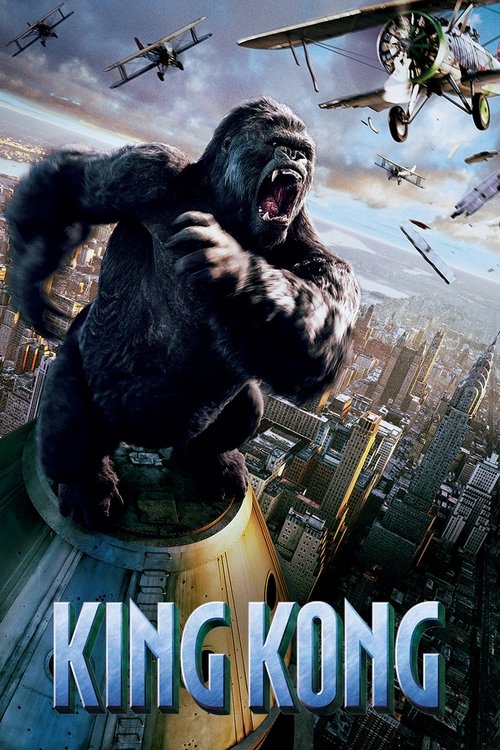
King Kong
2005 · Directed by Peter Jackson
Woke Score
CriticCritic Score
Audience
Ultra Based
Critics rated this 77 points above its woke score. Among Ultra Based films, this critic score ranks #339 of 1469.
Representation Casting
Score: 5/100
Naomi Watts is the lead female role, but she is portrayed as a damsel whose value centers on male attraction. Adrien Brody and other supporting roles are white actors in a 1930s period piece setting.
LGBTQ+ Themes
Score: 0/100
No LGBTQ+ themes, characters, or representation present in the film.
Feminist Agenda
Score: 15/100
The female lead shows agency and defiance but operates within a narrative where she exists primarily to be fought over by men. Her arc does not challenge gender hierarchies.
Racial Consciousness
Score: 5/100
Skull Island natives are depicted as primitive obstacles with no characterization or dignity. The film recreates colonial-era racial tropes without critical examination or revision.
Climate Crusade
Score: 0/100
No climate themes, environmental consciousness, or ecological awareness present in the film.
Eat the Rich
Score: 10/100
The producer character is depicted as greedy and ambitious, but his avarice is treated as personal character flaw rather than systemic critique of capitalism.
Body Positivity
Score: 0/100
No body positivity themes present. The film celebrates Kong's physical prowess as spectacle but offers no commentary on body diversity or acceptance.
Neurodivergence
Score: 0/100
No neurodivergent characters or themes present in the film.
Revisionist History
Score: 0/100
The film faithfully recreates 1930s colonial attitudes without revision or critical reexamination of historical prejudices.
Lecture Energy
Score: 0/100
The film does not pause to lecture the audience about social issues or progressive values.


Synopsis
In 1933 New York, an overly ambitious movie producer coerces his cast and hired ship crew to travel to mysterious Skull Island, where they encounter Kong, a giant ape who is immediately smitten with the leading lady.
Consciousness Assessment
Peter Jackson's 2005 remake is a monument to technical achievement, which is to say it is a three-hour spectacle of CGI excess that mistakes scale for substance. The film dutifully rescues the 1933 original from the dustbin of history, which sounds progressive until you examine what Jackson has chosen to rescue. Naomi Watts arrives as a Depression-era actress reduced to the familiar archetype of the imperiled female whose value derives entirely from her ability to captivate the male gaze, whether that male is a primatologist or a stop-motion ape. The film accumulates technical honors, including Academy Awards for Sound, but these accolades measure craft, not conscience. Jackson's Skull Island remains populated by indigenous peoples depicted as primitive obstacles rather than subjects worthy of characterization or dignity.
The film's gender politics operate entirely within the 1930s framework it has chosen to recreate, which is to say they operate not at all. Watts performs the role of damsel with competence and even moments of spirited defiance, yet the narrative's entire engine runs on the premise that a woman exists to be fought over by two male entities: the ambitious producer and the giant ape. Jack Black's producer is a cautionary tale about capitalism, though the film treats his avarice as personal vice rather than systemic corruption. There are no queer characters, no neurodivergent representation, no climate consciousness, no body positivity beyond the obvious spectacle of Kong's musculature. The film is, in its essence, a love letter to the blockbuster machinery of Hollywood itself, made with such technical precision and romantic nostalgia that it mistakes fidelity to source material for artistic virtue.
One searches in vain for any marker of contemporary progressive consciousness. The film is not reactionary, precisely, but rather pre-conscious, a 1933 narrative transplanted to 2005 with no adjustments made for the intervening decades of cultural conversation. It is a film that chose not to grapple with its own inheritance.
Analysis generated by our Consciousness Algorithm
Critic Reviews
“What a movie! This is how the medium seduced us originally.”
“One of the wonders of the holiday season.”
“Here is the jaw-dropping, eye-popping, heart-stopping movie epic we've been waiting for all year.”
“On its own terms, the film is overlong, repetitive and lacks impact. Even if this were the first gorilla-in-love movie ever made, audiences would come away vaguely dissatisfied, suspecting there was an intriguing idea buried somewhere in here, but it didn't quite come off.”
Consciousness Markers
Naomi Watts is the lead female role, but she is portrayed as a damsel whose value centers on male attraction. Adrien Brody and other supporting roles are white actors in a 1930s period piece setting.
No LGBTQ+ themes, characters, or representation present in the film.
The female lead shows agency and defiance but operates within a narrative where she exists primarily to be fought over by men. Her arc does not challenge gender hierarchies.
Skull Island natives are depicted as primitive obstacles with no characterization or dignity. The film recreates colonial-era racial tropes without critical examination or revision.
No climate themes, environmental consciousness, or ecological awareness present in the film.
The producer character is depicted as greedy and ambitious, but his avarice is treated as personal character flaw rather than systemic critique of capitalism.
No body positivity themes present. The film celebrates Kong's physical prowess as spectacle but offers no commentary on body diversity or acceptance.
No neurodivergent characters or themes present in the film.
The film faithfully recreates 1930s colonial attitudes without revision or critical reexamination of historical prejudices.
The film does not pause to lecture the audience about social issues or progressive values.