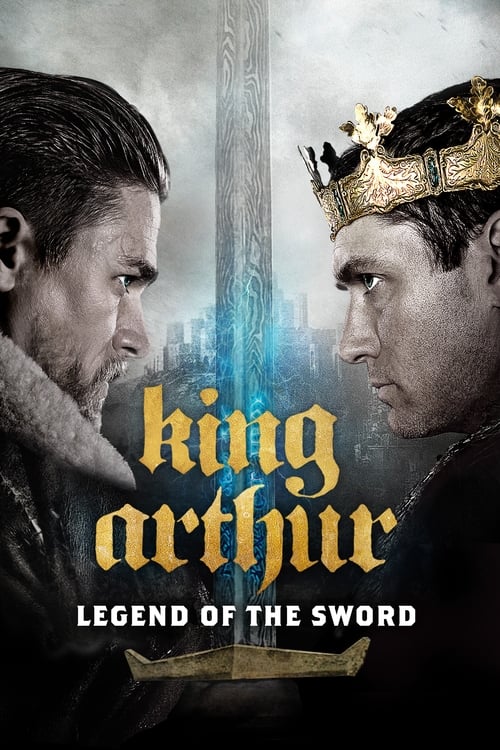
King Arthur: Legend of the Sword
2017 · Directed by Guy Ritchie
Woke Score
CriticCritic Score
Audience
Ultra Based
Critics rated this 33 points above its woke score. Among Ultra Based films, this critic score ranks #1322 of 1469.
Representation Casting
Score: 25/100
The film features a diverse cast including Black actors (Djimon Hounsou, Kingsley Ben-Adir) in supporting roles, but this diversity is entirely incidental with no narrative acknowledgment or thematic purpose.
LGBTQ+ Themes
Score: 0/100
No LGBTQ+ themes, characters, or representation are present in the film.
Feminist Agenda
Score: 10/100
Female characters are present but function primarily as love interests and plot devices. Àstrid Bergès-Frisbey's character exists to serve the male protagonist's journey.
Racial Consciousness
Score: 15/100
While the cast includes actors of color, the film makes no effort to explore or engage with racial themes. Their presence is decorative rather than meaningful.
Climate Crusade
Score: 0/100
No climate-related themes or environmental consciousness appears in this fantasy action film.
Eat the Rich
Score: 0/100
Despite Arthur's working-class background, the film contains no critique of capitalism, wealth inequality, or systemic economic oppression.
Body Positivity
Score: 0/100
The film exhibits conventional beauty standards and muscular masculinity without any body-positive messaging or representation.
Neurodivergence
Score: 0/100
No representation of neurodivergent characters or neurodivergent themes are present in the film.
Revisionist History
Score: 5/100
The film offers a modern reimagining of Arthurian legend but frames it as a stylistic choice rather than a revisionist political statement.
Lecture Energy
Score: 0/100
The film contains no preachy monologues or moments where characters explain social consciousness to the audience.


Synopsis
When the child Arthur's father is murdered, Vortigern, Arthur's uncle, seizes the crown. Robbed of his birthright and with no idea who he truly is, Arthur comes up the hard way in the back alleys of the city. But once he pulls the sword Excalibur from the stone, his life is turned upside down and he is forced to acknowledge his true legacy... whether he likes it or not.
Consciousness Assessment
Guy Ritchie's 2017 exercise in Arthurian reinvention arrives as a fundamentally apolitical affair, content to pursue kinetic spectacle over social commentary. The film casts a diverse ensemble, including Djimon Hounsou and Kingsley Ben-Adir in supporting roles, but deploys this diversity without intention, narrative purpose, or acknowledgment. They are simply there, which is neither progressive nor regressive, merely neutral casting in service of a plot that cares only for swords, magic, and working-class grit. The Arthur we meet is a street orphan with contemporary sensibilities, a choice that yields no sustained engagement with class critique or systemic inequality. His background serves as aesthetic flavor rather than thematic anchor.
The film's sensibility remains locked in the stylistic preoccupations of Ritchie's earlier work: kinetic editing, ensemble camaraderie, and a roguish irreverence toward authority. These are comfortable masculine spaces where women exist peripherally (Àstrid Bergès-Frisbey functions primarily as a love interest and plot device) and where the only meaningful revolution is personal rather than social. There is no lecture here, no grievance, no attempt to reframe the legend through any contemporary lens beyond surface-level attitude. The film is too busy with its own aesthetic flourishes to bother with representation as anything more than casting.
What we observe is a film that fails to justify either its creative ambitions or its substantial budget, landing instead in a peculiar middle ground where social consciousness is neither present nor absent but simply irrelevant. It represents the casual diversity of 2017 blockbuster filmmaking, competent enough not to offend but disinterested in meaning. In this respect, it may be the most honest film possible: a spectacle that wants nothing from us but our ticket price.
Analysis generated by our Consciousness Algorithm
Critic Reviews
“The stylish and engrossing reinterpretation of the mythological king's early years lacks character development, but makes up for it with swashbuckling, sword-fighting, beast-slaying fun.”
“In its finest moments, King Arthur: Legend of the Sword is swift and clever and exhilarating. At its low points, King Arthur: Legend of the Sword plays like a cheesy B-movie, with ridiculous monsters and unintentionally laugh-inducing moments.”
“With Legend of the Sword, the filmmaker isn’t remaking or adapting anything. This is his version of Arthur’s origin story and, if nothing else, it’s kinetic and attention-grabbing.”
“Ritchie aspires to be a great British director, but his working his way through British icons — Sherlock Holmes wasn’t even safe — does no one any good. He just reduces them to his own vernacular, his own level, and he ends up revealing nothing about them and everything about his own narrow vision. ”
Consciousness Markers
The film features a diverse cast including Black actors (Djimon Hounsou, Kingsley Ben-Adir) in supporting roles, but this diversity is entirely incidental with no narrative acknowledgment or thematic purpose.
No LGBTQ+ themes, characters, or representation are present in the film.
Female characters are present but function primarily as love interests and plot devices. Àstrid Bergès-Frisbey's character exists to serve the male protagonist's journey.
While the cast includes actors of color, the film makes no effort to explore or engage with racial themes. Their presence is decorative rather than meaningful.
No climate-related themes or environmental consciousness appears in this fantasy action film.
Despite Arthur's working-class background, the film contains no critique of capitalism, wealth inequality, or systemic economic oppression.
The film exhibits conventional beauty standards and muscular masculinity without any body-positive messaging or representation.
No representation of neurodivergent characters or neurodivergent themes are present in the film.
The film offers a modern reimagining of Arthurian legend but frames it as a stylistic choice rather than a revisionist political statement.
The film contains no preachy monologues or moments where characters explain social consciousness to the audience.