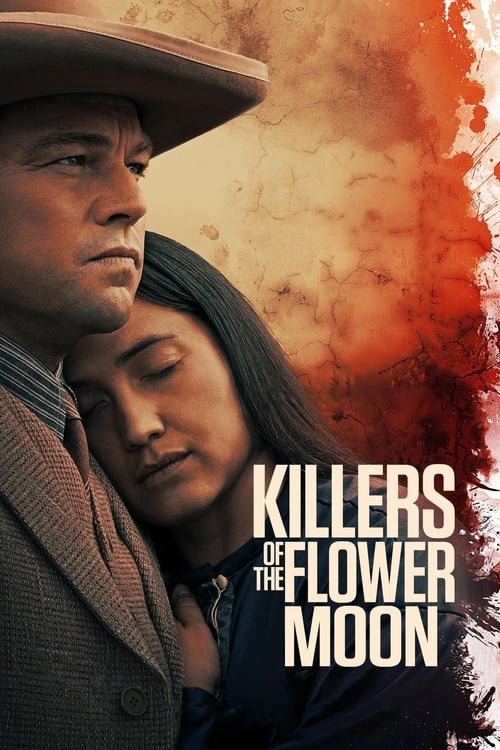
Killers of the Flower Moon
2023 · Directed by Martin Scorsese
Woke Score
CriticCritic Score
Audience
Woke
Critics rated this 27 points above its woke score. Among Woke films, this critic score ranks #9 of 88.
Representation Casting
Score: 75/100
Lily Gladstone cast in a lead role as a Native American character, with extensive use of Native actors and Osage cultural consultants. This represents genuinely progressive casting for a major Scorsese production.
LGBTQ+ Themes
Score: 0/100
No LGBTQ+ themes or representation in the film. The narrative focuses on historical crime and does not engage with sexual orientation or gender identity.
Feminist Agenda
Score: 25/100
Mollie Kyle has agency and narrative importance, but the film's focus remains on male investigators and criminals. Her victimization is central to the plot rather than her autonomy.
Racial Consciousness
Score: 70/100
The film directly centers the genocide of the Osage people and acknowledges systemic racism and exploitation. Scorsese engaged extensively with Osage Nation leadership and incorporated their historical perspectives.
Climate Crusade
Score: 0/100
No climate themes present. The film is set in the 1920s oil boom but does not engage with environmental consciousness or critique oil extraction from a contemporary ecological perspective.
Eat the Rich
Score: 15/100
The film depicts greed and corruption in the oil industry, but this critique remains historical rather than systemic. There is no contemporary call to 'eat the rich' or fundamental questioning of capitalism itself.
Body Positivity
Score: 0/100
No body positivity themes or messaging. The film does not engage with body representation, beauty standards, or body autonomy in any deliberate way.
Neurodivergence
Score: 0/100
No neurodivergence representation or themes. The film does not depict or discuss autism, ADHD, mental health conditions, or neurodivergent characters.
Revisionist History
Score: 20/100
The film presents historical events with Osage perspectives included, but it remains largely faithful to documented history rather than reimagining or revising historical narratives in service of contemporary political messaging.
Lecture Energy
Score: 40/100
At three and a half hours, the film has considerable expository dialogue and scenes designed to educate audiences about historical facts and Osage culture, though this serves historical documentation rather than contemporary social instruction.


Synopsis
When oil is discovered in 1920s Oklahoma under Osage Nation land, the Osage people are murdered one by one—until the FBI steps in to unravel the mystery.
Consciousness Assessment
Martin Scorsese's "Killers of the Flower Moon" represents a curious artifact of contemporary filmmaking: a lavishly produced historical drama that engages seriously with Native American representation while remaining fundamentally a work of classical crime cinema focused on white male protagonists. The film's commitment to centering Osage experience is genuine, particularly in its casting of Lily Gladstone as Mollie Kyle and its incorporation of Osage language and cultural specificity. Scorsese consulted extensively with Osage Nation leaders and filmed largely within Osage territory, gestures that signal institutional recognition of a historically marginalized community's authority over its own story. Yet these progressive gestures coexist uneasily with a narrative that still privileges the perspective of FBI investigator Tom White and white criminals, relegating the Osage to the role of victims within a procedural framework designed for mainstream audiences.
The film's social consciousness operates at a historical remove. We are watching a meditation on 1920s American racism, oil industry corruption, and genocide, topics that carry undeniable moral weight but that are safely distant from contemporary politics. There is no climate crusade here, no interrogation of capitalism as a system, no body positivity or neurodivergence representation. The film's lecture energy emerges not from contemporary grievance but from historical documentation: we learn about the Osage murders through conventional dramatic reconstruction. What we see is representation casting taken seriously for perhaps the first time by a major Hollywood director of Scorsese's stature, coupled with racial consciousness that acknowledges historical atrocity, balanced against a three-and-a-half-hour running time that occasionally feels designed to educate the audience about historical facts rather than to explore deeper questions of power and complicity.
This is a film that progressive audiences can appreciate without discomfort, which is to say it has absorbed certain lessons about representation while remaining rooted in classical narrative forms. It demonstrates that a major studio can invest in an expensive prestige project centered on Native American experience, yet it also demonstrates the limits of such investment when the film itself must justify its budget through mass appeal. The result is a work of genuine cultural significance that sits uneasily with markers of contemporary progressive sensibility, achieving something closer to historical reckoning than to activist cinema.
Analysis generated by our Consciousness Algorithm
Critic Reviews
“This is an utterly absorbing film, a story that Scorsese sees as a secret history of American power, a hidden violence epidemic polluting the water table of humanity.”
“The three-and-a-half-hour running time is fully justified in an escalating tragedy that never loosens its grip — a sordid illustration of historical erasure with echoes in today’s bitterly divisive political gamesmanship.”
“Weaving the Tulsa race riots, the KKK and the Masons into its tapestry, Scorsese’s opus questions the misdeeds of America in the last century while linking them to the pressing issues of today. Addressing racial violence, nationalism, the continued epidemic of missing and murdered Indigenous women and even our lurid obsession with true crime, Killers of the Flower Moon paints a robust picture of a moment in history that invites viewer introspection.”
“Ms. Gladstone draws a lot of sympathy as the modest, helpless Mollie, but like everything else here her performance suffers from inertia. She spends the bulk of the movie mired in illness and despondency, and her look mirrors how I felt as I watched: numb and trapped.”
Consciousness Markers
Lily Gladstone cast in a lead role as a Native American character, with extensive use of Native actors and Osage cultural consultants. This represents genuinely progressive casting for a major Scorsese production.
No LGBTQ+ themes or representation in the film. The narrative focuses on historical crime and does not engage with sexual orientation or gender identity.
Mollie Kyle has agency and narrative importance, but the film's focus remains on male investigators and criminals. Her victimization is central to the plot rather than her autonomy.
The film directly centers the genocide of the Osage people and acknowledges systemic racism and exploitation. Scorsese engaged extensively with Osage Nation leadership and incorporated their historical perspectives.
No climate themes present. The film is set in the 1920s oil boom but does not engage with environmental consciousness or critique oil extraction from a contemporary ecological perspective.
The film depicts greed and corruption in the oil industry, but this critique remains historical rather than systemic. There is no contemporary call to 'eat the rich' or fundamental questioning of capitalism itself.
No body positivity themes or messaging. The film does not engage with body representation, beauty standards, or body autonomy in any deliberate way.
No neurodivergence representation or themes. The film does not depict or discuss autism, ADHD, mental health conditions, or neurodivergent characters.
The film presents historical events with Osage perspectives included, but it remains largely faithful to documented history rather than reimagining or revising historical narratives in service of contemporary political messaging.
At three and a half hours, the film has considerable expository dialogue and scenes designed to educate audiences about historical facts and Osage culture, though this serves historical documentation rather than contemporary social instruction.