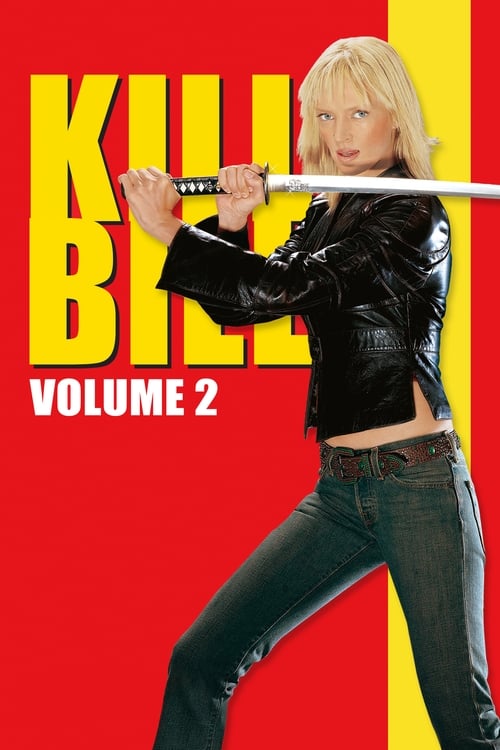
Kill Bill: Vol. 2
2004 · Directed by Quentin Tarantino
Woke Score
CriticCritic Score
Audience
Ultra Based
Critics rated this 79 points above its woke score. Among Ultra Based films, this critic score ranks #292 of 1469.
Representation Casting
Score: 15/100
Uma Thurman leads as a capable female action protagonist, but her inclusion reflects classic action cinema tropes rather than a conscious contemporary approach to representation or casting diversity.
LGBTQ+ Themes
Score: 0/100
No LGBTQ+ themes, characters, or representation are present in the film.
Feminist Agenda
Score: 25/100
The Bride is a skilled, autonomous female protagonist, but the film predates modern feminist discourse and presents her agency as a character trait rather than as engagement with contemporary gender politics.
Racial Consciousness
Score: 5/100
Gordon Liu appears in a significant role, but the film's racial composition reflects Tarantino's genre homage aesthetic rather than any conscious engagement with modern racial consciousness or representation frameworks.
Climate Crusade
Score: 0/100
No climate-related themes, messaging, or environmental consciousness are present in the film.
Eat the Rich
Score: 0/100
The film contains no critique of capitalism, wealth inequality, or anti-capitalist messaging despite its crime and violence narrative.
Body Positivity
Score: 0/100
No body positivity messaging, commentary on body standards, or representation of diverse body types are present in the film.
Neurodivergence
Score: 0/100
No neurodivergent characters, representation, or thematic engagement with neurodiversity appear in the film.
Revisionist History
Score: 0/100
While the film engages with cinema history and genre pastiche, it does not revise historical events or narratives.
Lecture Energy
Score: 0/100
The film is pure narrative entertainment with no preachy messaging or preachy engagement with social issues.


Synopsis
The Bride unwaveringly continues on her roaring rampage of revenge against the band of assassins who had tried to kill her and her unborn child. She visits each of her former associates one-by-one, checking off the victims on her Death List Five until there's nothing left to do … but kill Bill.
Consciousness Assessment
Kill Bill Vol. 2 arrives as a masterwork of genre pastiche and kinetic storytelling, yet it remains almost entirely untouched by the contemporary progressive sensibilities that would come to define cultural discourse in subsequent decades. The film features Uma Thurman as a capable, lethal female protagonist, but this represents a continuation of action cinema tropes rather than a conscious engagement with modern social consciousness. Tarantino's 2004 revenge narrative operates in a space of pure narrative entertainment, divorced from any preachy impulse regarding gender, representation, or systemic critique. The supporting cast, diverse in composition, serves the demands of Tarantino's aesthetic vision and plot mechanics rather than functioning as a deliberate statement on casting or representation.
The film's relative indifference to contemporary progressive frameworks is not a moral failing but simply a reflection of its era and artistic intent. It predates by over a decade the constellation of cultural markers that would come to characterize modern progressive sensibilities in cinema. The Bride's agency and competence are presented as character traits rather than as commentary on gender dynamics, and the film contains no engagement with climate, anti-capitalist themes, neurodivergence, body positivity, or revisionist history. Even its racial elements, while present through Gordon Liu's participation, emerge from Tarantino's longstanding interest in genre homage and cinematic pastiche rather than from contemporary frameworks of racial consciousness.
What remains is a beautifully constructed revenge narrative that operates according to its own internal logic and aesthetic principles. One might note this as a limitation from the perspective of modern cultural analysis, but the film's relative silence on contemporary social issues reflects its origins in a pre-2015 sensibility. It is, simply, a work of its time.
Analysis generated by our Consciousness Algorithm
Critic Reviews
“Kill Bill-Vol. 2 puts to shame doubts entertained about aesthetic strategies or structural imbalance provoked by "Kill Bill-Vol. 1." Now that the entirety of Quentin Tarantino's epic revenge melodrama is on view, "Kill Bill" emerges as a brilliant, invigorating work, one to muse over for years to come. ”
“You'll thrill to the action, savor the tasty dialogue and laugh like bloody hell. ”
“Originally conceived as one film, the two-parter that has finally emerged can now be seen as a truly epic work.”
“Watching Thurman's character "triumph" in a context as joyless and self-referential as Tarantino's is a soul-deadening experience, one that over two hours takes on the same dreary monotone as the cheapest pornography. ”
Consciousness Markers
Uma Thurman leads as a capable female action protagonist, but her inclusion reflects classic action cinema tropes rather than a conscious contemporary approach to representation or casting diversity.
No LGBTQ+ themes, characters, or representation are present in the film.
The Bride is a skilled, autonomous female protagonist, but the film predates modern feminist discourse and presents her agency as a character trait rather than as engagement with contemporary gender politics.
Gordon Liu appears in a significant role, but the film's racial composition reflects Tarantino's genre homage aesthetic rather than any conscious engagement with modern racial consciousness or representation frameworks.
No climate-related themes, messaging, or environmental consciousness are present in the film.
The film contains no critique of capitalism, wealth inequality, or anti-capitalist messaging despite its crime and violence narrative.
No body positivity messaging, commentary on body standards, or representation of diverse body types are present in the film.
No neurodivergent characters, representation, or thematic engagement with neurodiversity appear in the film.
While the film engages with cinema history and genre pastiche, it does not revise historical events or narratives.
The film is pure narrative entertainment with no preachy messaging or preachy engagement with social issues.