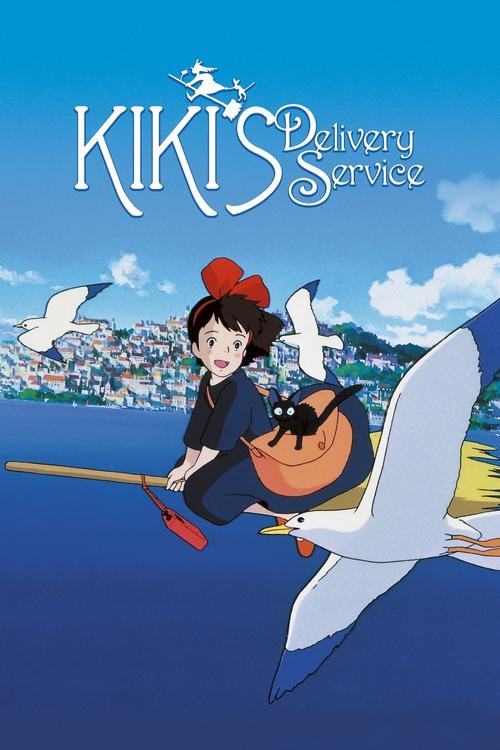
Kiki's Delivery Service
1989 · Directed by Hayao Miyazaki
Woke Score
CriticCritic Score
Audience
Ultra Based
Critics rated this 70 points above its woke score. Among Ultra Based films, this critic score ranks #250 of 1469.
Representation Casting
Score: 15/100
The cast is entirely Japanese, reflecting the film's setting and cultural origin. There is no deliberate effort to achieve demographic diversity or explicit representation.
LGBTQ+ Themes
Score: 0/100
No LGBTQ+ themes or characters are present in the film. The narrative does not engage with sexual orientation or gender identity as thematic elements.
Feminist Agenda
Score: 55/100
The film centers female economic independence and autonomy, with a protagonist who succeeds through her own labor and agency. However, this reflects humanistic values rather than explicit engagement with contemporary feminist discourse.
Racial Consciousness
Score: 0/100
The film contains no explicit racial consciousness or commentary. It is set in a fantasy European-inspired city with no racial dynamics foregrounded as thematic material.
Climate Crusade
Score: 0/100
There is no environmental or climate-related messaging in the narrative. The natural world appears as backdrop rather than as subject of moral or political concern.
Eat the Rich
Score: 5/100
The film presents entrepreneurship and market economics as fundamentally positive. Kiki builds her business through service and hard work without critique of capitalist systems.
Body Positivity
Score: 0/100
No explicit body positivity messaging is present. Kiki is depicted as conventionally attractive, and the film does not engage with body diversity or appearance politics.
Neurodivergence
Score: 5/100
Kiki's temporary loss of magical powers could be read as depression or burnout, which some might interpret as addressing mental health. However, this is not framed through a neurodivergence lens.
Revisionist History
Score: 0/100
The film is set in a fictional fantasy world with no historical claims. There is no revisionist engagement with real historical events or narratives.
Lecture Energy
Score: 5/100
The film trusts its audience to extract thematic meaning without heavy-handed exposition. It does not interrupt narrative flow with preachy messaging or moral instruction.


Synopsis
A young witch, on her mandatory year of independent life, finds fitting into a new community difficult while she supports herself by running an air courier service.
Consciousness Assessment
Kiki's Delivery Service presents a curious case in the annals of progressive animation. Here we find a film centered entirely on a young woman's economic independence and professional self-sufficiency, themes that contemporary critics have rightly identified as proto-feminist. Miyazaki's deliberate emphasis on Kiki's ability to navigate her new city through her own labor, to establish community through service rather than subordination, and to maintain her autonomy even when struggling, reads as genuinely forward-thinking for 1989. The film does not concern itself with reducing her to romantic prospects or familial obligation, which remains notable even by today's standards.
Yet the film's cultural moment cannot be ignored. This is not a work engaged in the specific constellation of 2020s progressive sensibilities that constitute modern social consciousness. There are no explicit discussions of systemic oppression, no foregrounding of marginalized identities as political statement, no environmental crisis to serve as backdrop for moral instruction. The supporting cast exists without the careful demographic accounting that contemporary audiences have been trained to expect. Kiki herself is simply a young woman who works, struggles, doubts herself, and perseveres. Her challenges are existential and emotional rather than political.
What we are confronting is the curious phenomenon of a genuinely humanistic film about female agency being retrospectively interpreted through a contemporary lens it was never designed to accommodate. Miyazaki created something that speaks to timeless themes of independence and belonging, not to the specific grievances and frameworks of a particular historical moment. To score it as though it were participating in modern cultural debates would be to misread the film's own intentions entirely.
Analysis generated by our Consciousness Algorithm
Critic Reviews
“As a story about how hard it is to make your own way in the world, Kiki’s Delivery Service is truthful and scalpel-sharp. That it manages all this while remaining consistently funny, optimistic and exciting – even for little ones – is a mark of Miyazaki’s genius.”
“Overall, thoroughly delightful tale is stronger on character and texture than on plot, with Miyazaki’s masterful use of quiet spaces and expansive moods (especially in flying segs) offering a fresh contrast to hyped-up Yank toons.”
“It’s a sweet, small story that deals comfortably in big emotions when required, whilst also taking time to speculate on the nature of art and the difficulties of navigating adolescence. One of the greatest triumphs of Miyazaki’s movie, however, is how well-defined each of its characters truly are.”
“It’s a film my kids still enjoy, although it’s a bit lightweight as Miyazaki’s works go.”
Consciousness Markers
The cast is entirely Japanese, reflecting the film's setting and cultural origin. There is no deliberate effort to achieve demographic diversity or explicit representation.
No LGBTQ+ themes or characters are present in the film. The narrative does not engage with sexual orientation or gender identity as thematic elements.
The film centers female economic independence and autonomy, with a protagonist who succeeds through her own labor and agency. However, this reflects humanistic values rather than explicit engagement with contemporary feminist discourse.
The film contains no explicit racial consciousness or commentary. It is set in a fantasy European-inspired city with no racial dynamics foregrounded as thematic material.
There is no environmental or climate-related messaging in the narrative. The natural world appears as backdrop rather than as subject of moral or political concern.
The film presents entrepreneurship and market economics as fundamentally positive. Kiki builds her business through service and hard work without critique of capitalist systems.
No explicit body positivity messaging is present. Kiki is depicted as conventionally attractive, and the film does not engage with body diversity or appearance politics.
Kiki's temporary loss of magical powers could be read as depression or burnout, which some might interpret as addressing mental health. However, this is not framed through a neurodivergence lens.
The film is set in a fictional fantasy world with no historical claims. There is no revisionist engagement with real historical events or narratives.
The film trusts its audience to extract thematic meaning without heavy-handed exposition. It does not interrupt narrative flow with preachy messaging or moral instruction.