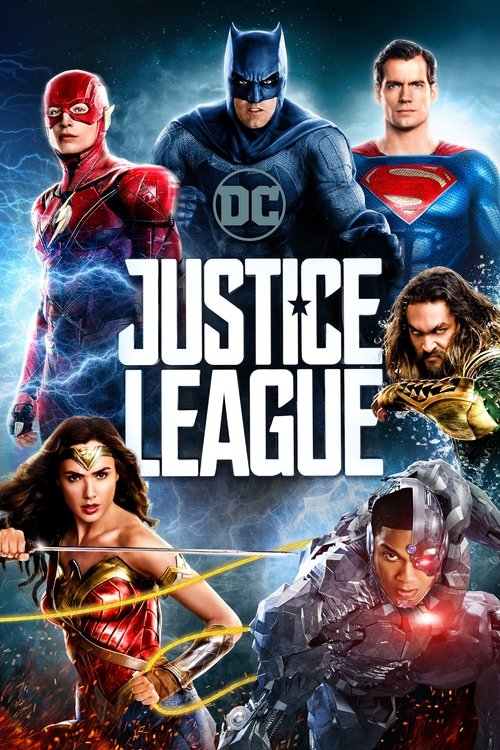
Justice League
2017 · Directed by Zack Snyder
Woke Score
CriticCritic Score
Audience
Ultra Based
Critics rated this 37 points above its woke score. Among Ultra Based films, this critic score ranks #1260 of 1469.
Representation Casting
Score: 35/100
The ensemble cast includes actors of various ethnicities and Gal Gadot as a female lead, but representation is incidental to the plot rather than thematically examined or celebrated. No narrative engagement with representation itself.
LGBTQ+ Themes
Score: 0/100
No LGBTQ+ themes, characters, or representation are present in the film.
Feminist Agenda
Score: 15/100
Wonder Woman is a capable action hero, but the film contains no feminist critique or messaging. She operates within traditional superhero tropes without interrogating gender dynamics.
Racial Consciousness
Score: 0/100
Despite Ray Fisher's presence as Cyborg, the film engages in no racial consciousness, commentary, or thematic exploration of race.
Climate Crusade
Score: 0/100
No climate-related themes, messaging, or consciousness appear in the film.
Eat the Rich
Score: 0/100
The film presents no critique of capitalism, class systems, or wealth inequality. It follows standard superhero narrative conventions.
Body Positivity
Score: 0/100
No body positivity messaging or representation of diverse body types appears in this conventionally cast action film.
Neurodivergence
Score: 0/100
No neurodivergent characters or representation are present in the film.
Revisionist History
Score: 0/100
The film contains no historical revision or reframing of historical events.
Lecture Energy
Score: 5/100
While the film contains occasional thematic dialogue about hope and unity, it is primarily an action spectacle with minimal preachy or preachy messaging.


Synopsis
Fuelled by his restored faith in humanity and inspired by Superman's selfless act, Bruce Wayne and Diana Prince assemble a team of metahumans consisting of Barry Allen, Arthur Curry and Victor Stone to face the catastrophic threat of Steppenwolf and the Parademons who are on the hunt for three Mother Boxes on Earth.
Consciousness Assessment
Justice League arrives as a straightforward superhero assembly picture, a film concerned almost entirely with the mechanics of gathering disparate heroes to fight an extraterrestrial threat. The presence of Gal Gadot, Ezra Miller, Jason Momoa, and Ray Fisher in the cast creates the appearance of diversity, but this remains purely a matter of casting rather than thematic engagement. The film has no interest in examining what these actors bring to the screen beyond their capacity to perform action sequences and deliver exposition.
The 2017 theatrical version, shaped by the competing visions of Zack Snyder and Joss Whedon through contentious reshoots, settles into a comfortable middle ground of narrative blandness. Wonder Woman functions as a capable warrior, but the film offers no feminist interrogation of power, gender, or heroism. Cyborg, portrayed by Ray Fisher, remains largely sidelined despite being positioned as an integral team member. The script contains no meaningful engagement with identity, systemic structures, or social consciousness beyond vague appeals to human unity against an alien menace. This is the work of a blockbuster machine designed to move product rather than provoke thought or challenge convention.
What emerges from this analysis is a film fundamentally indifferent to the cultural preoccupations of contemporary progressive sensibilities. The diversity in the cast functions as mere set dressing, a box checked in the service of contemporary marketing. The film speaks to no particular moment in our social consciousness, offers no commentary on systems of power, and engages in no interrogation of its own assumptions. It is a film about heroes assembled to save the world, nothing more, which is precisely what makes it so perfectly, thoroughly unremarkable from the perspective of cultural analysis.
Analysis generated by our Consciousness Algorithm
Critic Reviews
“It’s a putting-the-band-together origins movie, executed with great fun and energy.”
“A seriously satisfying superhero movie, one that, rife with lines like "the stench of your fear is making my soldiers hungry," actually feels like the earnest comic books of our squandered youth.”
“The movie is no cheat. It’s a tasty franchise delivery system that kicks a certain series back into gear.”
“The film is, plainly stated, terrible, and I’m sorry that everyone wasted their time and money making it—and that people are being asked to waste their time and money seeing it. I hate to be so blunt, but it simply must be said this time.”
Consciousness Markers
The ensemble cast includes actors of various ethnicities and Gal Gadot as a female lead, but representation is incidental to the plot rather than thematically examined or celebrated. No narrative engagement with representation itself.
No LGBTQ+ themes, characters, or representation are present in the film.
Wonder Woman is a capable action hero, but the film contains no feminist critique or messaging. She operates within traditional superhero tropes without interrogating gender dynamics.
Despite Ray Fisher's presence as Cyborg, the film engages in no racial consciousness, commentary, or thematic exploration of race.
No climate-related themes, messaging, or consciousness appear in the film.
The film presents no critique of capitalism, class systems, or wealth inequality. It follows standard superhero narrative conventions.
No body positivity messaging or representation of diverse body types appears in this conventionally cast action film.
No neurodivergent characters or representation are present in the film.
The film contains no historical revision or reframing of historical events.
While the film contains occasional thematic dialogue about hope and unity, it is primarily an action spectacle with minimal preachy or preachy messaging.