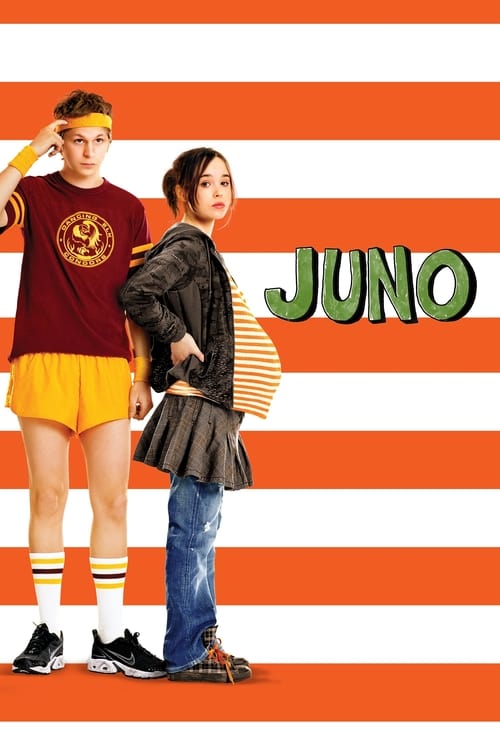
Juno
2007 · Directed by Jason Reitman
Woke Score
CriticCritic Score
Audience
Ultra Based
Critics rated this 63 points above its woke score. Among Ultra Based films, this critic score ranks #337 of 1469.
Representation Casting
Score: 15/100
Cast is predominantly white with no meaningful representation of communities of color. Female lead provides some basic gender representation but does not extend to diverse backgrounds.
LGBTQ+ Themes
Score: 5/100
The film contains casual homophobic jokes about baby names sounding 'too gay' and lacks any LGBTQ characters or themes. This represents a net negative rather than engagement with queer representation.
Feminist Agenda
Score: 35/100
The film centers a teenage girl's agency and challenges some traditional gender roles, particularly around female sexuality. However, the narrative ultimately resolves into traditional family structures and the protagonist's reproductive autonomy is compromised by pro-life messaging.
Racial Consciousness
Score: 0/100
No evidence of racial consciousness or engagement with racial themes. The film's world is entirely white with no acknowledgment of or engagement with racial issues.
Climate Crusade
Score: 0/100
No climate-related themes or messaging present in the film.
Eat the Rich
Score: 0/100
No anti-capitalist themes or critique of economic systems. The film is apolitical regarding class and capitalism.
Body Positivity
Score: 10/100
The film depicts pregnancy visibly on screen and does not shame the pregnant body, which represents a modest step toward body acceptance. However, this is not a central thematic concern.
Neurodivergence
Score: 0/100
No representation of or engagement with neurodivergent characters or themes.
Revisionist History
Score: 0/100
No historical revisionism present. The film is a contemporary story set in the present day.
Lecture Energy
Score: 12/100
The film avoids heavy-handed messaging, presenting itself as a character-driven indie comedy. However, the subtle insertion of pro-life messaging through a protestor encounter carries implicit ideological weight.


Synopsis
Faced with an unplanned pregnancy, sixteen year old high-schooler, Juno MacGuff, makes an unusual decision regarding her unborn child.
Consciousness Assessment
Juno arrives as a curious artifact of the late 2000s indie comedy moment, a film that has aged into something more complicated than its creators perhaps intended. At the time of release, the film was celebrated for its witty protagonist and its willingness to center a teenage girl's agency around an unplanned pregnancy. Yet the years have revealed the limits of this approach. Screenwriter Diablo Cody herself has expressed regret about crafting an apolitical narrative, one that avoids genuine engagement with reproductive autonomy in favor of a safer middle ground where Juno rejects abortion after a chance encounter with a pro-life protestor. The film's treatment of gender roles shows some progressive instincts, particularly in the notion that Juno initiates sexual contact, challenging traditional assumptions about teenage girls and desire. However, these moments exist in service of a fundamentally conservative narrative arc.
The film's most glaring failure lies in its casual homophobia, a fact that has only become more visible over time. Baby names are rejected for sounding "too gay," a joke that lands with the grace of a sledgehammer. The film deploys this humor as though it were merely quirky wordplay, a product of Juno's sarcastic affect, rather than engaging with what such casual dismissal of queer identity actually signifies. This is not the work of a film attempting genuine cultural reckoning. Rather, it reflects the anxieties of a 2007 production that wanted to seem edgy without committing to anything resembling actual social consciousness. The cast is overwhelmingly white, the supporting characters are thin, and the film's ultimate message centers on the redemptive power of adoption within a traditional family structure.
What remains genuinely interesting about Juno is its accidental historical irony: the film features one of the first major lead roles for Elliot Page, now recognized as a trans man. The film itself contains nothing that would suggest such a reading, yet the work now exists in productive tension with its own star's identity. This is not something the film deserves credit for, but it does illustrate how cinema's social consciousness often lags decades behind the lived experiences of those appearing on screen. Juno remains a competent comedy-drama, but its progressive credentials are far thinner than the cultural memory suggests.
Analysis generated by our Consciousness Algorithm
Critic Reviews
“Hollywood's Woman of the Year is a pregnant 16-year-old, the incredibly hip, smart-mouthed and totally endearing heroine of the wise and witty Juno.”
“With its original performances that can't be reduced to simplistic labels, Juno is charming, honest and terrifically acted.”
“The movie has been hailed and marketed as this year's Little Miss Sunshine, but it has none of that movie's empathy and comic surprise. Too much of it is like a subpar episode of Freaks and Geeks, padded out to 92 minutes with pseudo-witty dialogue.”
Consciousness Markers
Cast is predominantly white with no meaningful representation of communities of color. Female lead provides some basic gender representation but does not extend to diverse backgrounds.
The film contains casual homophobic jokes about baby names sounding 'too gay' and lacks any LGBTQ characters or themes. This represents a net negative rather than engagement with queer representation.
The film centers a teenage girl's agency and challenges some traditional gender roles, particularly around female sexuality. However, the narrative ultimately resolves into traditional family structures and the protagonist's reproductive autonomy is compromised by pro-life messaging.
No evidence of racial consciousness or engagement with racial themes. The film's world is entirely white with no acknowledgment of or engagement with racial issues.
No climate-related themes or messaging present in the film.
No anti-capitalist themes or critique of economic systems. The film is apolitical regarding class and capitalism.
The film depicts pregnancy visibly on screen and does not shame the pregnant body, which represents a modest step toward body acceptance. However, this is not a central thematic concern.
No representation of or engagement with neurodivergent characters or themes.
No historical revisionism present. The film is a contemporary story set in the present day.
The film avoids heavy-handed messaging, presenting itself as a character-driven indie comedy. However, the subtle insertion of pro-life messaging through a protestor encounter carries implicit ideological weight.