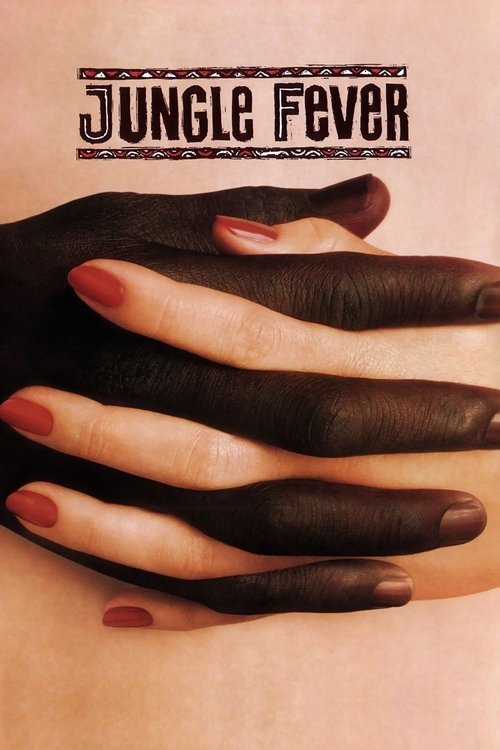
Jungle Fever
1991 · Directed by Spike Lee
Woke Score
CriticCritic Score
Audience
Woke-Adjacent
Critics rated this 30 points above its woke score. Among Woke-Adjacent films, this critic score ranks #47 of 151.
Representation Casting
Score: 45/100
Strong ensemble of Black actors including Wesley Snipes, Samuel L. Jackson, and legendary performers Ossie Davis and Ruby Dee. The casting reflects thoughtful ensemble composition rather than modern diversity consciousness metrics.
LGBTQ+ Themes
Score: 0/100
No LGBTQ+ representation, themes, or characters present in the film.
Feminist Agenda
Score: 15/100
Female characters are depicted through conventional dramatic lenses, with the white woman serving as temptress and the Black wife as wronged party. Limited feminist critique of patriarchal structures or gender dynamics.
Racial Consciousness
Score: 65/100
The film's central concern is interracial desire and its impact on Black family and community structures. Includes examination of systemic inequality through the crack epidemic subplot, though explicit racial commentary was diluted by studio pressure.
Climate Crusade
Score: 0/100
No climate or environmental themes present in the film.
Eat the Rich
Score: 0/100
No anti-capitalist critique or class consciousness is evident. The protagonist's professional success is not interrogated or thematized.
Body Positivity
Score: 0/100
No body diversity representation or body positivity themes present in the film.
Neurodivergence
Score: 0/100
No neurodivergent characters or themes represented in the film.
Revisionist History
Score: 0/100
The film is set in contemporary 1991 and does not engage with historical reinterpretation or revisionist framing of past events.
Lecture Energy
Score: 35/100
The film contains moments of social commentary through dialogue and character interaction, particularly regarding race and family values. However, it lacks the self-conscious pedagogical tone of modern progressive cinema, and an explicit racial prologue was removed by studio pressure.


Synopsis
A successful and married black man contemplates having an affair with a white girl from work. He's quite rightly worried that the racial difference would make an already taboo relationship even worse.
Consciousness Assessment
Spike Lee's 1991 examination of interracial desire and Black community cohesion remains a serious engagement with race and family dynamics, though it operates according to pre-contemporary cultural frameworks. The film treats racial difference as a substantive dramatic concern, exploring how an affair between a married Black architect and a white Italian-American secretary reverberates through family and social networks. Lee's decision to remove an explicitly racial prologue at Universal's insistence reveals the limits of studio tolerance for direct racial commentary, a constraint that shapes the film's more diffuse engagement with systemic inequality and identity.
The film's racial consciousness emerges through character interaction and social observation rather than pedagogical pronouncement. Wesley Snipes delivers a nuanced performance as a man caught between desire and social responsibility, while the ensemble cast, including Samuel L. Jackson, Ossie Davis, and Ruby Dee, grounds the narrative in authentic community response. Yet the film's approach to gender remains conventionally dramatic, depicting women primarily through their relationship to the central male crisis. The white woman functions partly as temptress, the Black wife as wronged partner, neither receiving the complex treatment that modern progressive sensibilities would demand.
What distinguishes this film from contemporary progressive cinema is its refusal of explicit moral instruction. Lee presents racial and social conflict as lived experience rather than pedagogical opportunity. This is both a strength and a limitation, depending on one's assessment of whether films should educate or dramatize. The film's relative lack of modern progressive markers reflects not indifference to social justice but a different historical moment, when racial consciousness meant something other than contemporary identity politics.
Analysis generated by our Consciousness Algorithm
Critic Reviews
“Jungle Fever is Spike Lee's best film yet. Although it's about a black man and a white woman launching an intimate relationship, it's anything but an interracial love story. Which is exactly the film's point. [7 June 1991, p.43]”
“Spike Lee is one of a handful of great filmmakers working in mainstream movies today, and he has a moral vision that is pure and simply uplifting. See his movie. See it often. [7 June 1991, p.G5]”
“WITH Jungle Fever, a shattering movie that focuses on interracial love andracial hatred but that also confronts a dozen other incendiary topics, Spike Lee confirms his position as the leading American director of his generation. [7 June 1991, p.3F]”
“Jungle Fever may be a failure, but it is the kind of failure that engenders hope: It finds Lee refining the skills he already possesses and striking out in encouraging new directions. The next ''Spike Lee Joint''”
Consciousness Markers
Strong ensemble of Black actors including Wesley Snipes, Samuel L. Jackson, and legendary performers Ossie Davis and Ruby Dee. The casting reflects thoughtful ensemble composition rather than modern diversity consciousness metrics.
No LGBTQ+ representation, themes, or characters present in the film.
Female characters are depicted through conventional dramatic lenses, with the white woman serving as temptress and the Black wife as wronged party. Limited feminist critique of patriarchal structures or gender dynamics.
The film's central concern is interracial desire and its impact on Black family and community structures. Includes examination of systemic inequality through the crack epidemic subplot, though explicit racial commentary was diluted by studio pressure.
No climate or environmental themes present in the film.
No anti-capitalist critique or class consciousness is evident. The protagonist's professional success is not interrogated or thematized.
No body diversity representation or body positivity themes present in the film.
No neurodivergent characters or themes represented in the film.
The film is set in contemporary 1991 and does not engage with historical reinterpretation or revisionist framing of past events.
The film contains moments of social commentary through dialogue and character interaction, particularly regarding race and family values. However, it lacks the self-conscious pedagogical tone of modern progressive cinema, and an explicit racial prologue was removed by studio pressure.