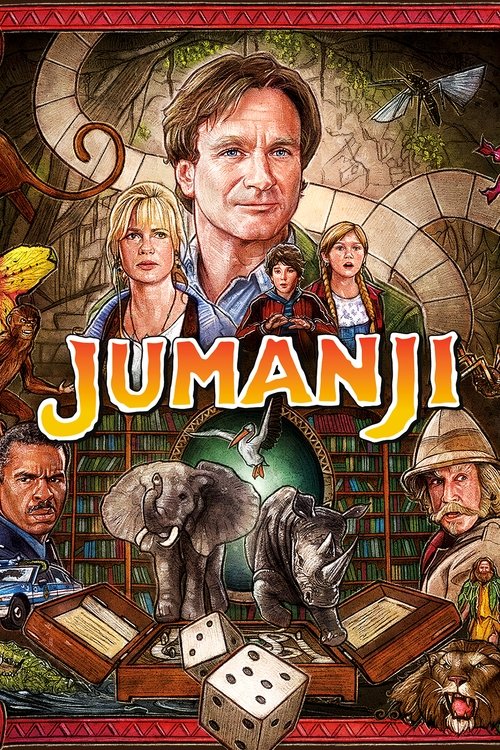
Jumanji
1995 · Directed by Joe Johnston
Woke Score
CriticCritic Score
Audience
Ultra Based
Critics rated this 37 points above its woke score. Among Ultra Based films, this critic score ranks #1333 of 1469.
Representation Casting
Score: 5/100
Cast reflects 1990s mainstream demographics with minimal intentional diversity. One Black police officer in supporting role represents basic demographic presence rather than conscious inclusive casting.
LGBTQ+ Themes
Score: 0/100
No LGBTQ+ themes, characters, or representation present in the film.
Feminist Agenda
Score: 2/100
Female characters exist within traditional family structures. Judy is a child character with no particular feminist consciousness or agency beyond typical adventure narrative participation.
Racial Consciousness
Score: 3/100
African setting treated as exotic backdrop for adventure plot. No meaningful engagement with or commentary on African culture, colonialism, or racial dynamics.
Climate Crusade
Score: 0/100
No climate or environmental themes present. The magical chaos is purely fantastical with no connection to environmental or ecological messaging.
Eat the Rich
Score: 0/100
No critique of capitalism, wealth, or economic systems. The narrative centers on personal adventure rather than systemic critique.
Body Positivity
Score: 0/100
No body positivity messaging or representation of diverse body types. The film shows conventional physical comedy without commentary on body diversity.
Neurodivergence
Score: 0/100
No representation of neurodivergent characters or themes. Alan's behavior is played for comedy rather than any disability consciousness.
Revisionist History
Score: 0/100
No historical revisionism present. The film operates in a purely fantastical space disconnected from historical narrative or reinterpretation.
Lecture Energy
Score: 2/100
Minimal moralizing or preachy messaging. The film teaches basic lessons about family and responsibility through narrative implication rather than explicit social commentary.


Synopsis
When siblings Judy and Peter discover an enchanted board game that opens the door to a magical world, they unwittingly invite Alan -- an adult who's been trapped inside the game for 26 years -- into their living room. Alan's only hope for freedom is to finish the game, which proves risky as all three find themselves running from giant rhinoceroses, evil monkeys and other terrifying creatures.
Consciousness Assessment
Jumanji presents itself as a straightforward adventure romp, concerned primarily with spectacle and the comedic misadventures of its protagonist trapped in a magical realm. The film operates entirely within the conventions of mid-1990s family entertainment, showing no particular investment in progressive sensibilities of any stripe. The story unfolds as a simple narrative of suburban children learning lessons about familial responsibility and resilience, which are humanist themes rather than markers of contemporary social consciousness. That the game originates from Africa is treated as mere exotic window dressing, a plot device rather than an opportunity for any meaningful cultural engagement or awareness.
The casting reflects the demographic expectations of mainstream American cinema in 1995. Robin Williams leads as the adult Alan Parrish, Kirsten Dunst and Bradley Pierce play the siblings, and the supporting cast is largely composed of white actors in conventional roles. There is no deliberate effort to construct a diverse ensemble, nor is there any narrative acknowledgment of race, gender dynamics, or systemic inequity. The female characters, particularly Judy, exist within a traditional family structure and are not presented through any lens of feminist consciousness. They are simply children experiencing adventure alongside their male counterparts.
The film's few moments that might register as culturally progressive by 1995 standards are incidental rather than intentional. A Black character appears in a police officer role, reflecting basic representation rather than any conscious commitment to inclusive casting. The overall sensibility remains apolitical, focused on delivering spectacle, comedy, and adventure to a family audience. No climate messaging, anti-capitalist critique, body positivity discourse, neurodivergent representation, or revisionist historical examination troubles the film's surface. It is a product of its era, utterly innocent of the cultural frameworks that would emerge two decades later.
Analysis generated by our Consciousness Algorithm
Critic Reviews
“As for Williams himself, his wild-man routine is only in evidence in his opening scenes; otherwise he dials it down, perhaps sensing that the way to upstage the loony creatures is to be relatively rational. There is something touchingly innocent in his performance.”
“The result is a thrill ride with enough plunges and turns and loop-the-loops to make it worth a spin. What the picture lacks is the magic and resonance you feel in the best of popular entertainments.”
“Regrettably, however, the weird elegance of Chris Van Allsburg's much-praised picture book has been all but lost in translation.”
“Director Joe Johnston's elaborately dressed kids' movie--about a board game that sucks its players into a perilous jungle overrun by lions, rhinos, monkeys, crocodiles and spiders--spends so much time on the how of special effects that it neglects the why of characterization.”
Consciousness Markers
Cast reflects 1990s mainstream demographics with minimal intentional diversity. One Black police officer in supporting role represents basic demographic presence rather than conscious inclusive casting.
No LGBTQ+ themes, characters, or representation present in the film.
Female characters exist within traditional family structures. Judy is a child character with no particular feminist consciousness or agency beyond typical adventure narrative participation.
African setting treated as exotic backdrop for adventure plot. No meaningful engagement with or commentary on African culture, colonialism, or racial dynamics.
No climate or environmental themes present. The magical chaos is purely fantastical with no connection to environmental or ecological messaging.
No critique of capitalism, wealth, or economic systems. The narrative centers on personal adventure rather than systemic critique.
No body positivity messaging or representation of diverse body types. The film shows conventional physical comedy without commentary on body diversity.
No representation of neurodivergent characters or themes. Alan's behavior is played for comedy rather than any disability consciousness.
No historical revisionism present. The film operates in a purely fantastical space disconnected from historical narrative or reinterpretation.
Minimal moralizing or preachy messaging. The film teaches basic lessons about family and responsibility through narrative implication rather than explicit social commentary.