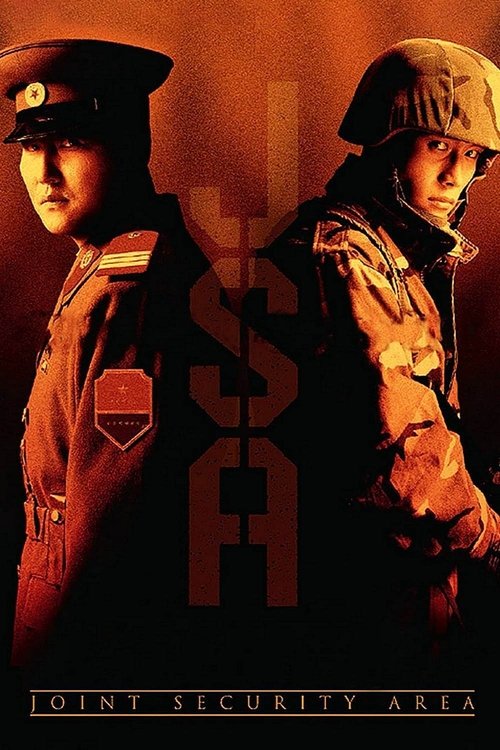
Joint Security Area
2000 · Directed by Park Chan-wook
Woke Score
CriticCritic Score
Ultra Based
Critics rated this 64 points above its woke score. Among Ultra Based films, this critic score ranks #567 of 1469.
Representation Casting
Score: 20/100
The female lead investigator is competent and central to the plot, but her presence is narrative-functional rather than representational. No commentary is made on her gender or mixed heritage.
LGBTQ+ Themes
Score: 0/100
No LGBTQ+ themes, characters, or subtext present in the film.
Feminist Agenda
Score: 15/100
The female investigator occupies an authority position, but the film does not engage with feminist themes or gender politics. She is treated as a professional, not as a statement.
Racial Consciousness
Score: 10/100
The film addresses Korean national division and the arbitrary nature of the border, but within a historical/tragic framework rather than through a contemporary progressive lens.
Climate Crusade
Score: 0/100
No climate-related themes or messaging present.
Eat the Rich
Score: 0/100
No critique of capitalism or wealth inequality present in the narrative.
Body Positivity
Score: 0/100
No body positivity messaging or representation of diverse body types as a thematic concern.
Neurodivergence
Score: 0/100
No neurodivergent characters or themes present.
Revisionist History
Score: 0/100
The film engages with actual Korean DMZ history and the real complexity of division without attempting to revise historical facts for contemporary purposes.
Lecture Energy
Score: 5/100
The film presents moral ambiguity and allows audiences to draw conclusions rather than explicitly stating its themes. Minimal preachy tone.


Synopsis
Two North Korean soldiers are killed in the border area between North and South Korea, prompting an investigation by a neutral body. The sergeant is the shooter, but the lead investigator, a Swiss-Korean woman, receives differing accounts from the two sides.
Consciousness Assessment
Park Chan-wook's 2000 investigation thriller operates in the register of humanist tragedy, not progressive consciousness-raising. The film's central moral insight, that soldiers on opposite sides of the Korean DMZ remain fundamentally human despite their ideological positions, derives from classical humanism rather than contemporary social frameworks. The female investigator character (a Swiss-Korean woman played by Lee Young-ae) functions within the narrative as a neutral arbiter and competent professional without the film pausing to celebrate her presence as a representation milestone. She is simply there, doing her job, which is precisely how pre-2000s cinema handled capable women in authoritative roles.
The film engages seriously with Korean division, militarism, and the machinery of state violence, but these are treated as tragic historical realities worthy of dramatic exploration rather than as platforms for contemporary messaging. The investigation's moral ambiguity and the soldiers' genuine friendships across the border suggest a critique of nationalism itself, yet the film never lectures. Instead it allows the audience to experience the contradiction between institutional duty and human connection. This restraint, this refusal to explain its own themes, places it fundamentally at odds with contemporary progressive cinema's pedagogical instincts.
There is no LGBTQ+ content, no body positivity signaling, no climate crusade, no neurodivergence representation, and no revisionist history. The anti-capitalist content is nonexistent. The film's representation remains incidental to its narrative rather than instrumental to its purpose. By the specific metrics of 2020s progressive sensibility, Joint Security Area scores low precisely because it predates and operates outside that framework entirely.
Analysis generated by our Consciousness Algorithm
Critic Reviews
“the impassioned naiveté of this brothers-across-the-border drama may be director Park's most sincere and resonant work.”
“Though JSA is before the Vengeance trilogy or The Handmaiden (2016), it bears all the hallmarks of a Park picture: mystery, deception, and a glimpse at the complex nature of relationships.”
“Joint Security Area gets less attention than Park's other more bombastic films, but its quiet contemplative core cements it as one of his most emotional works.”
Consciousness Markers
The female lead investigator is competent and central to the plot, but her presence is narrative-functional rather than representational. No commentary is made on her gender or mixed heritage.
No LGBTQ+ themes, characters, or subtext present in the film.
The female investigator occupies an authority position, but the film does not engage with feminist themes or gender politics. She is treated as a professional, not as a statement.
The film addresses Korean national division and the arbitrary nature of the border, but within a historical/tragic framework rather than through a contemporary progressive lens.
No climate-related themes or messaging present.
No critique of capitalism or wealth inequality present in the narrative.
No body positivity messaging or representation of diverse body types as a thematic concern.
No neurodivergent characters or themes present.
The film engages with actual Korean DMZ history and the real complexity of division without attempting to revise historical facts for contemporary purposes.
The film presents moral ambiguity and allows audiences to draw conclusions rather than explicitly stating its themes. Minimal preachy tone.