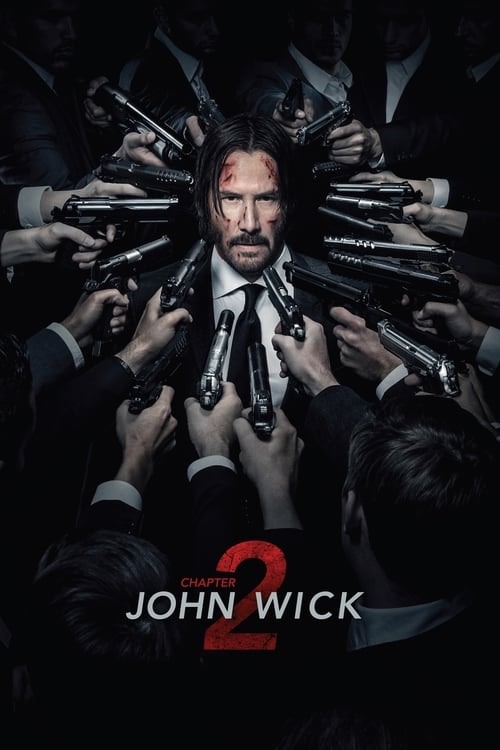
John Wick: Chapter 2
2017 · Directed by Chad Stahelski
Woke Score
CriticCritic Score
Audience
Ultra Based
Critics rated this 71 points above its woke score. Among Ultra Based films, this critic score ranks #473 of 1469.
Representation Casting
Score: 25/100
The cast includes actors of color (Common, Laurence Fishburne, John Leguizamo, Ruby Rose) in significant roles, but this appears driven by casting for action talent rather than deliberate diversity initiatives or representation goals.
LGBTQ+ Themes
Score: 0/100
No LGBTQ+ themes are present in the narrative. Ruby Rose plays a character whose sexual orientation is never addressed or relevant to the story.
Feminist Agenda
Score: 15/100
Female characters participate in action sequences, but there is no thematic exploration of gender, feminism, or any commentary on women's roles or experiences.
Racial Consciousness
Score: 0/100
The film contains no exploration of race, racism, or racial identity. Characters of color are cast for their action abilities, not to explore racial themes.
Climate Crusade
Score: 0/100
No environmental or climate-related themes appear in the film.
Eat the Rich
Score: 0/100
While the film depicts an assassins' guild as an economic system, there is no critique of capitalism or wealth inequality present.
Body Positivity
Score: 0/100
The film contains no commentary on body types, beauty standards, or body positivity. Action film aesthetics are standard and unremarked upon.
Neurodivergence
Score: 0/100
Ares is portrayed as deaf, but this trait is treated as a character gimmick for combat purposes rather than representation or meaningful commentary on disability.
Revisionist History
Score: 0/100
The film contains no historical elements or revisionist reframing of historical events.
Lecture Energy
Score: 0/100
The film does not pause to deliver speeches or lectures about social issues. It remains focused on plot and action throughout.


Synopsis
John Wick is forced out of retirement by a former associate looking to seize control of a shadowy international assassins' guild. Bound by a blood oath to aid him, Wick travels to Rome and does battle against some of the world's most dangerous killers.
Consciousness Assessment
John Wick: Chapter 2 is a film concerned almost entirely with the mechanics of violence and the architecture of its fictional assassins' underworld. The narrative unfolds as a series of increasingly elaborate set pieces, each designed to showcase choreography rather than character development or thematic depth. The film employs a diverse cast, including Common, Laurence Fishburne, Ruby Rose, and John Leguizamo in various antagonistic roles, but this casting reflects no particular ideological commitment. These actors were hired to participate in fight sequences, not to represent constituencies or advance social consciousness.
The film's sole gesture toward anything resembling modern progressive sensibility is the inclusion of Ares, a deaf assassin played by Ruby Rose. Yet the character's deafness functions as a combat advantage rather than an opportunity for representation or commentary. She communicates through sign language, but the film treats this as a quirk of the character rather than exploring what such representation might mean. The film is indifferent to questions of identity, gender, or social structure. It exists in a moral vacuum where only the rules of the assassins' guild matter.
What emerges is not so much a film as a delivery system for action sequences. The political, social, and cultural preoccupations of 2020s progressivism are entirely absent. This is not a critique. The film simply does not attempt to engage with these concerns, making it a relic of pre-conscious Hollywood action cinema. It is competent within its narrow parameters and asks nothing of the audience except that they appreciate the craft of its violence.
Analysis generated by our Consciousness Algorithm
Critic Reviews
“In the first film, his rhythmic overkills felt brutal. Here, they're more like a dance, and the best bits of the movie have a lightness that made me giggle with delight.”
“John Wick: Chapter 2 has style to burn, and oh! what violence — terrible, bone-crunching, glorious violence, beautifully orchestrated by director Chad Stahelski.”
“The movie may look like disposable goods — it’s a sequel, a shoot-’em-up, starring an actor too often treated as a punchline — but it is also a connoisseur’s delight, a down-and-dirty B-picture with a lustrous A-picture soul.”
“No, this is not good. This is just not good.”
Consciousness Markers
The cast includes actors of color (Common, Laurence Fishburne, John Leguizamo, Ruby Rose) in significant roles, but this appears driven by casting for action talent rather than deliberate diversity initiatives or representation goals.
No LGBTQ+ themes are present in the narrative. Ruby Rose plays a character whose sexual orientation is never addressed or relevant to the story.
Female characters participate in action sequences, but there is no thematic exploration of gender, feminism, or any commentary on women's roles or experiences.
The film contains no exploration of race, racism, or racial identity. Characters of color are cast for their action abilities, not to explore racial themes.
No environmental or climate-related themes appear in the film.
While the film depicts an assassins' guild as an economic system, there is no critique of capitalism or wealth inequality present.
The film contains no commentary on body types, beauty standards, or body positivity. Action film aesthetics are standard and unremarked upon.
Ares is portrayed as deaf, but this trait is treated as a character gimmick for combat purposes rather than representation or meaningful commentary on disability.
The film contains no historical elements or revisionist reframing of historical events.
The film does not pause to deliver speeches or lectures about social issues. It remains focused on plot and action throughout.