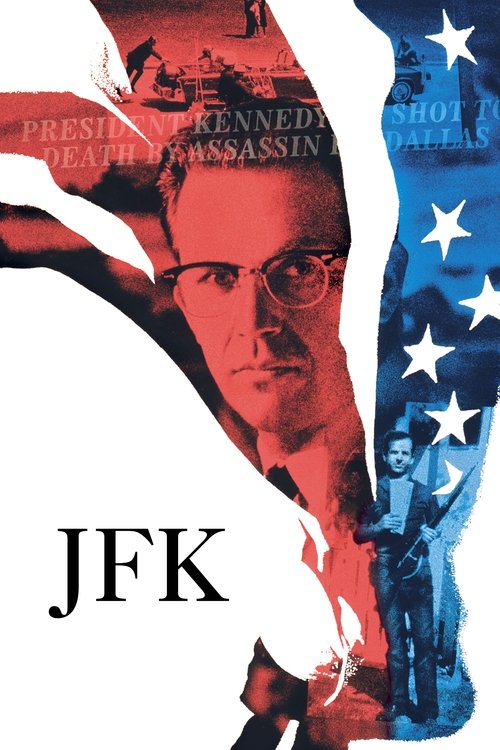
JFK
1991 · Directed by Oliver Stone
Woke Score
CriticCritic Score
Audience
Based
Critics rated this 50 points above its woke score. Among Based films, this critic score ranks #146 of 345.
Representation Casting
Score: 15/100
The cast is predominantly male stars of the era. Female characters like Metcalf and Spacek occupy supporting roles as wives and witnesses, not primary agents.
LGBTQ+ Themes
Score: 0/100
No LGBTQ+ themes, characters, or representation are present in the film.
Feminist Agenda
Score: 5/100
Female characters exist in the narrative but primarily in supportive capacities. No sustained feminist critique or agenda is evident.
Racial Consciousness
Score: 10/100
The film depicts racial dynamics as they existed in 1960s New Orleans but does not apply contemporary racial consciousness or critique to these dynamics.
Climate Crusade
Score: 0/100
Climate themes are entirely absent from this political thriller about presidential assassination.
Eat the Rich
Score: 35/100
The film critiques the military-industrial complex and attacks elite institutional power, but this emerges from Cold War paranoia rather than sustained anti-capitalist ideology.
Body Positivity
Score: 0/100
No body positivity themes or messaging appear in the film.
Neurodivergence
Score: 0/100
Neurodivergent representation or themes are absent from the narrative.
Revisionist History
Score: 60/100
The film presents speculative, conspiracy-based reinterpretations of the Kennedy assassination and challenges official historical narratives, though this is conspiracy theory rather than progressive revisionism.
Lecture Energy
Score: 45/100
Stone delivers his conspiracy thesis with considerable preachy intensity across three hours, though the lecture energy serves paranoid speculation rather than social justice messaging.


Synopsis
Follows the investigation into the assassination of President John F. Kennedy led by New Orleans district attorney Jim Garrison.
Consciousness Assessment
JFK arrives as a period piece from the early 1990s, and it shows. Oliver Stone's three-hour conspiracy epic about District Attorney Jim Garrison's investigation into the Kennedy assassination is fundamentally a work of paranoid political theater, not social consciousness. The film traffics in revisionist speculation about government malfeasance, which might seem progressive, but it predates the modern markers of cultural awareness by a full generation. Its relationship to class critique is incidental rather than ideological, a byproduct of attacking the military-industrial establishment rather than a sustained engagement with systemic inequality.
The casting reflects early-1990s Hollywood pragmatism. Kevin Costner, Tommy Lee Jones, Gary Oldman, and Joe Pesci occupy the principal roles, representing an ensemble of male star power. Laurie Metcalf and Sissy Spacek appear in supporting roles, though their characters function primarily as wives and witnesses rather than as subjects of narrative focus. The film contains no discernible engagement with LGBTQ+ themes, body positivity, neurodivergence, or climate consciousness. Its depiction of racial dynamics remains locked in the historical moment of its subject matter, without the contemporary framing that would mark it as exhibiting modern racial consciousness.
Where JFK approaches something resembling a social consciousness marker is in its willingness to question official narratives and governmental authority, which it pursues with the energy of a lecture delivered at high volume and considerable length. Yet this impulse emerges from Cold War-era paranoia and conspiracy thinking rather than from 2020s progressive sensibilities. Stone's film is a relic of a different political imagination, one preoccupied with hidden conspiracies among elites rather than systemic oppression or representational justice. It remains, in its earnest way, a thoroughly pre-woke artifact.
Analysis generated by our Consciousness Algorithm
Critic Reviews
“Stone and his editors, Joe Hutshing and Pietro Scalia, have somehow triumphed over the tumult of material here and made it work - made it grip and disturb us.”
“Director Oliver Stone has fashioned in JFK a riveting, dramatic and disturbing look at one of the great whodunits of history. [20 Dec 1991]”
“If history is a battlefield, JFK has to be seen as a bold attempt to seize the turf for future debate. It is also "just" a movie, and one that for three hours and eight minutes of dense, almost dizzying detail, is capable of holding the audience rapt in its grip. [23 Dec 1991, p.50]”
“Stone's all-purpose conspiracy theory, built like a house of cards, rivals "Mississippi Burning" in its sheer crudeness and contempt for the audience.”
Consciousness Markers
The cast is predominantly male stars of the era. Female characters like Metcalf and Spacek occupy supporting roles as wives and witnesses, not primary agents.
No LGBTQ+ themes, characters, or representation are present in the film.
Female characters exist in the narrative but primarily in supportive capacities. No sustained feminist critique or agenda is evident.
The film depicts racial dynamics as they existed in 1960s New Orleans but does not apply contemporary racial consciousness or critique to these dynamics.
Climate themes are entirely absent from this political thriller about presidential assassination.
The film critiques the military-industrial complex and attacks elite institutional power, but this emerges from Cold War paranoia rather than sustained anti-capitalist ideology.
No body positivity themes or messaging appear in the film.
Neurodivergent representation or themes are absent from the narrative.
The film presents speculative, conspiracy-based reinterpretations of the Kennedy assassination and challenges official historical narratives, though this is conspiracy theory rather than progressive revisionism.
Stone delivers his conspiracy thesis with considerable preachy intensity across three hours, though the lecture energy serves paranoid speculation rather than social justice messaging.