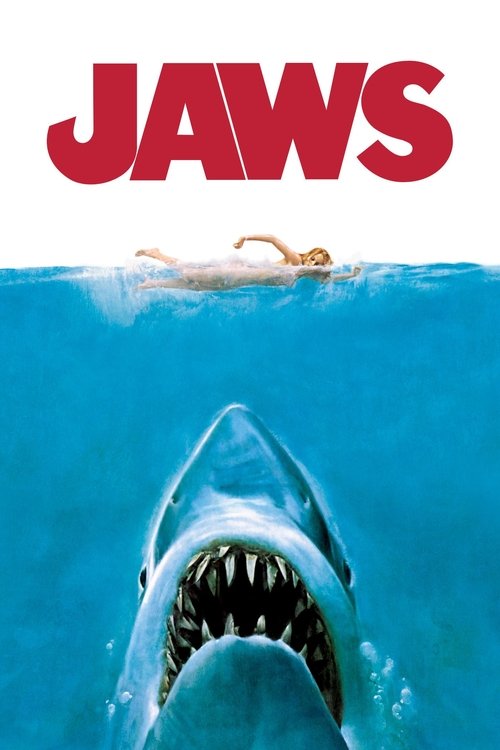
Jaws
1975 · Directed by Steven Spielberg
Woke Score
CriticCritic Score
Audience
Ultra Based
Critics rated this 83 points above its woke score. Among Ultra Based films, this critic score ranks #204 of 1469.
Representation Casting
Score: 5/100
The cast is predominantly male and white. Female characters exist primarily as wives and background figures with minimal agency.
LGBTQ+ Themes
Score: 0/100
No LGBTQ+ themes, representation, or subtext present in the narrative.
Feminist Agenda
Score: 3/100
The female lead is relegated to domestic concern and worry. No feminist themes or consciousness evident in the screenplay.
Racial Consciousness
Score: 2/100
The cast is entirely white. No racial consciousness or diverse representation appears in the film.
Climate Crusade
Score: 0/100
No climate themes. The shark is treated as a monster to be eliminated, not an ecosystem concern.
Eat the Rich
Score: 10/100
If anything, the film celebrates capitalist recovery and tourism economy restoration. No anti-capitalist themes present.
Body Positivity
Score: 0/100
No body positivity themes. The film depicts bodies as prey, victims, or threats without commentary on appearance or acceptance.
Neurodivergence
Score: 0/100
No representation or discussion of neurodivergence.
Revisionist History
Score: 0/100
The film makes no historical claims or offers no revisionist interpretations of historical events.
Lecture Energy
Score: 2/100
The film contains exposition about shark behavior but no preachy social messaging or moralizing lectures.


Synopsis
When the seaside community of Amity finds itself under attack by a dangerous great white shark, the town's chief of police, a young marine biologist, and a grizzled shark hunter embark on a desperate quest to kill the beast before it strikes again.
Consciousness Assessment
Jaws remains a masterwork of commercial cinema, though its social consciousness registers at a level best described as subterranean. Spielberg's 1975 thriller operates in a register so divorced from contemporary progressive sensibilities that one struggles to locate even accidental alignment with modern cultural awareness. The film is, quite simply, about a shark. The great white shark does not care about representation matrices, nor does it pause to consider the intersectional implications of its predatory behavior. We are thus spared the burden of analyzing anything resembling social commentary.
The female representation here consists of Lorraine Gary as the police chief's wife, a character whose primary function involves worrying and occasionally appearing in domestic scenes. She is not a person so much as a narrative fixture, a reminder that our protagonist has something to lose other than his professional reputation. This is not progressive casting, nor was it intended to be. The film predates by decades the notion that women might appear in adventure narratives for reasons unrelated to their proximity to male protagonists. The supporting cast is uniformly male, uniformly white, and uniformly focused on the singular objective of killing a fish.
There exists a reading of Jaws as an oblique commentary on masculine anxiety and the erosion of American confidence in the post-Vietnam era, though such readings require considerably more scholarly charity than the film itself earns. What we have instead is a supremely crafted entertainment machine that functions entirely outside the realm of social consciousness. The shark eats people. Men kill the shark. The film ends. To score it highly on contemporary progressive markers would constitute an act of profound misreading, akin to praising a hammer for its sensitivity to color theory.
Analysis generated by our Consciousness Algorithm
Critic Reviews
“It was the complete nightmare that invented the "summer blockbuster", launched the genius on a global scale and delivered an astonishingly effective thriller built on a very primal level: fear.”
“Steven Spielberg overcame the lumpy plotting of Peter Benchley's novel to create an efficient, graceful fright machine in Jaws.”
“Steven Spielberg's mechanical thriller is guaranteed to make you scream on schedule (John Williams's score even has the audience reactions programmed into the melodies), particularly if your tolerance for weak motivation and other minor inconsistencies is high.”
Consciousness Markers
The cast is predominantly male and white. Female characters exist primarily as wives and background figures with minimal agency.
No LGBTQ+ themes, representation, or subtext present in the narrative.
The female lead is relegated to domestic concern and worry. No feminist themes or consciousness evident in the screenplay.
The cast is entirely white. No racial consciousness or diverse representation appears in the film.
No climate themes. The shark is treated as a monster to be eliminated, not an ecosystem concern.
If anything, the film celebrates capitalist recovery and tourism economy restoration. No anti-capitalist themes present.
No body positivity themes. The film depicts bodies as prey, victims, or threats without commentary on appearance or acceptance.
No representation or discussion of neurodivergence.
The film makes no historical claims or offers no revisionist interpretations of historical events.
The film contains exposition about shark behavior but no preachy social messaging or moralizing lectures.