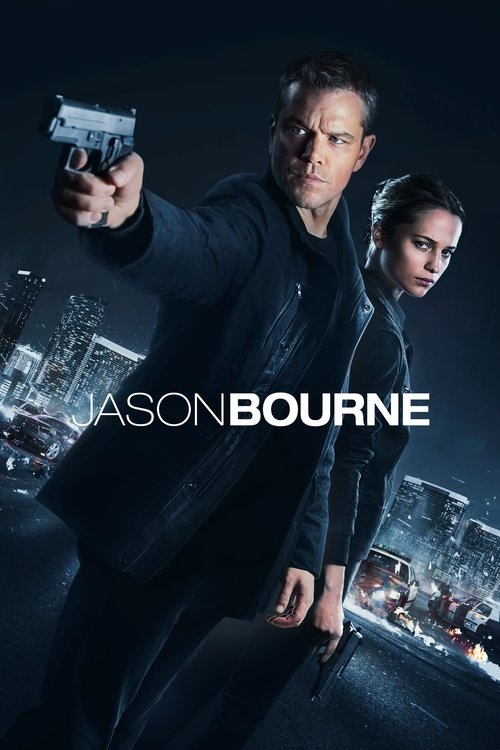
Jason Bourne
2016 · Directed by Paul Greengrass
Woke Score
CriticCritic Score
Audience
Ultra Based
Critics rated this 43 points above its woke score. Among Ultra Based films, this critic score ranks #955 of 1469.
Representation Casting
Score: 35/100
The film features Riz Ahmed and Ato Essandoh in supporting roles, and Alicia Vikander in a significant part, providing modest racial and gender diversity in the cast. However, these casting choices appear incidental to the narrative rather than intentional commentary on representation.
LGBTQ+ Themes
Score: 0/100
No LGBTQ themes, characters, or subtext are present in the film. The narrative contains no engagement with sexual orientation or gender identity.
Feminist Agenda
Score: 15/100
Alicia Vikander plays a CIA operative in a position of institutional authority, which offers a modest acknowledgment of women in power structures. However, her character lacks depth and functions primarily as a plot device rather than exploring feminist themes.
Racial Consciousness
Score: 10/100
While the cast includes actors of color in supporting roles, the film does not engage with race as a thematic concern or explore racial dynamics in any meaningful way. Their inclusion appears to reflect contemporary casting practices rather than intentional commentary.
Climate Crusade
Score: 0/100
No climate-related themes or environmental concerns are present in the film's narrative or visual language.
Eat the Rich
Score: 15/100
The film includes critique of corporate data harvesting and institutional corruption, which carries faint anti-capitalist undertones. However, this remains embedded within standard spy-thriller conventions rather than developing into systematic critique of economic systems.
Body Positivity
Score: 0/100
The film contains no engagement with body positivity, body image, or non-conventional body representation. All characters conform to conventional Hollywood physical standards.
Neurodivergence
Score: 0/100
No characters with neurodivergence, disability, or cognitive difference are represented in the film. No thematic engagement with neurodivergent experience occurs.
Revisionist History
Score: 0/100
The film does not engage in historical revisionism or reinterpret historical events through a contemporary lens. It operates as a fictional narrative within the spy-thriller genre.
Lecture Energy
Score: 5/100
The film maintains the kinetic, action-focused aesthetic of the Bourne franchise and avoids preachy exposition about social issues. While surveillance themes are present, they are woven into plot mechanics rather than delivered as explicit commentary.


Synopsis
The most dangerous former operative of the CIA is drawn out of hiding to uncover hidden truths about his past.
Consciousness Assessment
Jason Bourne arrives as a mid-budget action thriller in 2016, a moment when the Snowden revelations had already aged into historical fact and surveillance culture was becoming normalized rather than provocative. Paul Greengrass directs with his customary kinetic competence, crafting a film that treats government overreach with the seriousness of a thriller plot device rather than a vehicle for cultural consciousness. The film does include Alicia Vikander in a significant supporting role as a CIA operative, which represents a modest acknowledgment of women in institutional power structures, though her character functions primarily as a plot mechanism rather than as a fully realized commentary on gender dynamics. The narrative engages with themes of institutional corruption and technological surveillance, but these operate within the well-established spy-thriller grammar rather than as contemporary social critique specific to progressive sensibilities.
The film's engagement with contemporary politics remains largely surface-level. Its critique of governmental surveillance and corporate data harvesting could theoretically align with anti-establishment sentiment, yet the film presents these issues without the explicit social consciousness that would mark them as distinctly of the modern progressive moment. There is no meaningful representation beyond the casting of Riz Ahmed and Ato Essandoh in supporting roles, and these actors function within the ensemble without special attention to their identities or experiences. The film contains no discernible engagement with LGBTQ themes, body positivity, neurodivergence, feminist ideology, racial consciousness as a primary concern, climate themes, or anti-capitalist sentiment. It operates as a competent action vehicle that happens to star a diverse supporting cast, rather than as a work that interrogates these categories of identity or experience.
What emerges is a fundamentally traditional action thriller that incorporates some contemporary casting choices and a plot about government data collection, but lacks the thematic commitment to modern progressive sensibilities that would elevate its score. The film treats surveillance as a mechanical plot element rather than as a site of cultural reckoning, and its representation, while present, remains incidental rather than intentional. This is a sequel to a franchise that predates our current moment of cultural reassessment, and it remains content to operate within those pre-existing parameters.
Analysis generated by our Consciousness Algorithm
Critic Reviews
“What could be a cash grab turns out to be the series' finest chapter, with the same piano-wire tension plus a narrative clarity lacking before.”
“Made with a palpable sense of urgency, this tense, propulsive motion picture is a model of what mainstream entertainment can be like when everything goes right.”
“This fourth entry after a nine-year break for Damon and Greengrass should represent, for those ready and able to separate popcorn mayhem from the grim realities of world headlines, a bruising and exhilarating ride.”
“The character motivations are weak, and the story is poorly structured. But its camera work, possibly intended to distract audiences from the movie’s flaws, only compounds its problems. It distances the audience and makes Jason Bourne a chore to sit through.”
Consciousness Markers
The film features Riz Ahmed and Ato Essandoh in supporting roles, and Alicia Vikander in a significant part, providing modest racial and gender diversity in the cast. However, these casting choices appear incidental to the narrative rather than intentional commentary on representation.
No LGBTQ themes, characters, or subtext are present in the film. The narrative contains no engagement with sexual orientation or gender identity.
Alicia Vikander plays a CIA operative in a position of institutional authority, which offers a modest acknowledgment of women in power structures. However, her character lacks depth and functions primarily as a plot device rather than exploring feminist themes.
While the cast includes actors of color in supporting roles, the film does not engage with race as a thematic concern or explore racial dynamics in any meaningful way. Their inclusion appears to reflect contemporary casting practices rather than intentional commentary.
No climate-related themes or environmental concerns are present in the film's narrative or visual language.
The film includes critique of corporate data harvesting and institutional corruption, which carries faint anti-capitalist undertones. However, this remains embedded within standard spy-thriller conventions rather than developing into systematic critique of economic systems.
The film contains no engagement with body positivity, body image, or non-conventional body representation. All characters conform to conventional Hollywood physical standards.
No characters with neurodivergence, disability, or cognitive difference are represented in the film. No thematic engagement with neurodivergent experience occurs.
The film does not engage in historical revisionism or reinterpret historical events through a contemporary lens. It operates as a fictional narrative within the spy-thriller genre.
The film maintains the kinetic, action-focused aesthetic of the Bourne franchise and avoids preachy exposition about social issues. While surveillance themes are present, they are woven into plot mechanics rather than delivered as explicit commentary.