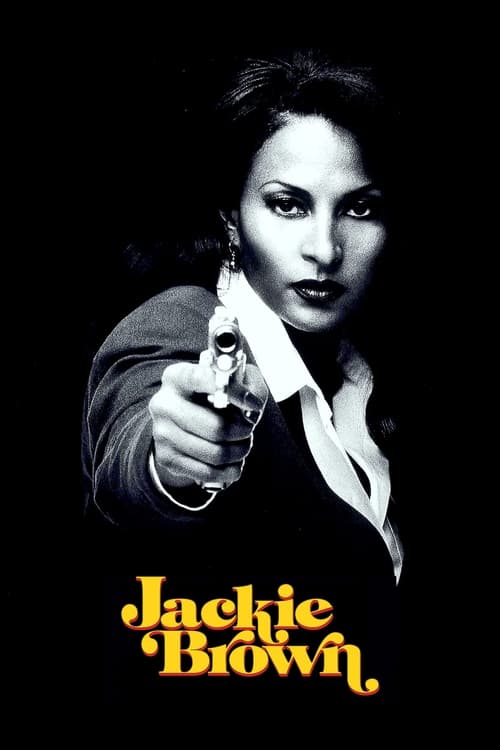
Jackie Brown
1997 · Directed by Quentin Tarantino
Woke Score
CriticCritic Score
Audience
Ultra Based
Critics rated this 54 points above its woke score. Among Ultra Based films, this critic score ranks #849 of 1469.
Representation Casting
Score: 35/100
The film centers a Black female protagonist in a lead role, which was unusual for mainstream crime thrillers in 1997. However, this reflects Tarantino's stylistic choices and nostalgia for 1970s blaxploitation rather than a deliberate representation strategy. The supporting cast includes several Black actors in substantive roles, but the film does not examine representation as a theme.
LGBTQ+ Themes
Score: 0/100
There is no LGBTQ+ representation or thematic content in the film. No characters are coded as queer, and sexuality is not addressed.
Feminist Agenda
Score: 15/100
The female protagonist is intelligent and takes decisive action to achieve her goals. However, the film does not engage with feminist themes or examine gender dynamics through a contemporary progressive lens. Her agency emerges from plot necessity rather than thematic intent.
Racial Consciousness
Score: 25/100
The film does not interrogate race or systemic racism. Black characters are treated as fully realized individuals with wit and agency, which was notable for the era, but the film offers no explicit examination of racial power structures or discrimination.
Climate Crusade
Score: 0/100
There is no environmental or climate-related content in the film.
Eat the Rich
Score: 5/100
The film's plot involves theft and outsmarting wealthy or powerful figures, but this is generic heist narrative convention rather than a systematic critique of capitalism or economic systems.
Body Positivity
Score: 0/100
The film does not engage with body positivity themes or examine beauty standards and body diversity.
Neurodivergence
Score: 0/100
There is no representation of neurodivergent characters or engagement with neurodiversity themes.
Revisionist History
Score: 0/100
The film does not engage with historical narratives or attempt to reframe historical events.
Lecture Energy
Score: 0/100
The film does not feature expository dialogue about social issues or characters explaining progressive concepts to the audience.


Synopsis
Jackie Brown is a flight attendant who gets caught in the middle of smuggling cash into the country for her gunrunner boss. When the cops try to use Jackie to get to her boss, she hatches a plan — with help from a bail bondsman — to keep the money for herself.
Consciousness Assessment
Jackie Brown remains a curiosity in Tarantino's filmography, not because it represents a breakthrough in progressive sensibilities, but because it predates the contemporary frameworks we now use to evaluate such things by nearly a decade. The film centers a Black female protagonist who outwits everyone around her, and this structural choice has occasionally been retrofitted into arguments about representation. Yet the film exists in a pre-2015 context where hiring Pam Grier as a lead was a gesture toward nostalgia rather than a calculated diversity metric. The narrative itself concerns itself with plot mechanics and character interplay, not with examining systemic inequality or centering marginalized perspectives as inherent to its meaning.
The cast includes several Black actors in significant roles, and Tarantino's dialogue grants them the same verbose, witty register as his white characters. This was notable at the time, yet it is not the same as conscious representation work. The film does not interrogate race, gender, or power structures through a contemporary progressive lens. Jackie Brown functions as a crime thriller first, with its lead character's agency deriving from her intelligence and cunning rather than from any thematic statement about gender or race. The film's sensibility remains firmly rooted in 1970s blaxploitation aesthetics and pop culture pastiche, deployed for style rather than commentary.
There is no climate content, no explicit body positivity work, no neurodivergence representation, no revisionist history, and no systematic lecture energy. The feminist elements are minimal, consisting primarily of a female protagonist who takes action. The anti-capitalist sentiment extends no further than generic heist narrative tropes. The film treats its characters with humor and respect across racial lines, but this is not the same as embodying 2020s progressive consciousness. It is a stylish crime film from the 1990s that happens to star a Black woman, not a work engaged with modern social consciousness.
Analysis generated by our Consciousness Algorithm
Critic Reviews
“You savor every moment of Jackie Brown. Those who say it is too long have developed cinematic attention deficit disorder. I wanted these characters to live, talk, deceive and scheme for hours and hours.”
“Filled with funny, gritty Tarantino lowlife gab and a respectable body count, but what is most striking is the film's gallantry and sweetness. Tarantino hits some new and touching notes with Grier and Forster.”
“The most exciting thing about Jackie Brown is the director's seamless transition to a less flashy, revealing style; it's well-suited to the more character-oriented focus of the film... an assured, accomplished, and very good film.”
“It's the flat, self-exposing dud that fate often keeps in store for the initially overpraised. [26 Jan 1998, p.24]”
Consciousness Markers
The film centers a Black female protagonist in a lead role, which was unusual for mainstream crime thrillers in 1997. However, this reflects Tarantino's stylistic choices and nostalgia for 1970s blaxploitation rather than a deliberate representation strategy. The supporting cast includes several Black actors in substantive roles, but the film does not examine representation as a theme.
There is no LGBTQ+ representation or thematic content in the film. No characters are coded as queer, and sexuality is not addressed.
The female protagonist is intelligent and takes decisive action to achieve her goals. However, the film does not engage with feminist themes or examine gender dynamics through a contemporary progressive lens. Her agency emerges from plot necessity rather than thematic intent.
The film does not interrogate race or systemic racism. Black characters are treated as fully realized individuals with wit and agency, which was notable for the era, but the film offers no explicit examination of racial power structures or discrimination.
There is no environmental or climate-related content in the film.
The film's plot involves theft and outsmarting wealthy or powerful figures, but this is generic heist narrative convention rather than a systematic critique of capitalism or economic systems.
The film does not engage with body positivity themes or examine beauty standards and body diversity.
There is no representation of neurodivergent characters or engagement with neurodiversity themes.
The film does not engage with historical narratives or attempt to reframe historical events.
The film does not feature expository dialogue about social issues or characters explaining progressive concepts to the audience.