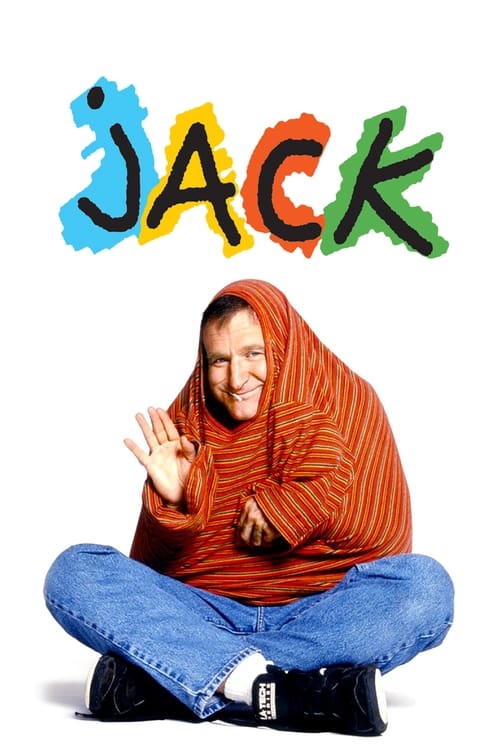
Jack
1996 · Directed by Francis Ford Coppola
Woke Score
CriticCritic Score
Audience
Ultra Based
Critics rated this 19 points above its woke score. Among Ultra Based films, this critic score ranks #1429 of 1469.
Representation Casting
Score: 35/100
The cast includes Jennifer Lopez, Jurnee Smollett, and other actors of color in supporting roles, demonstrating racial diversity in casting. However, their characters lack depth and exist primarily to react to the protagonist's condition.
LGBTQ+ Themes
Score: 0/100
No LGBTQ+ themes, representation, or plot elements are present in the film.
Feminist Agenda
Score: 15/100
Diane Lane plays Jack's mother with some agency, but the film does not foreground feminist themes or critique patriarchal structures. Female characters function primarily as emotional support.
Racial Consciousness
Score: 10/100
While the film includes actors of color, it demonstrates no meaningful engagement with racial themes or consciousness. Diversity exists in the cast but not in the narrative.
Climate Crusade
Score: 0/100
No climate-related themes, messaging, or environmental consciousness are present in the film.
Eat the Rich
Score: 0/100
The film contains no critique of capitalism, wealth disparity, or economic systems. It operates within a conventional middle-class family narrative.
Body Positivity
Score: 5/100
The film's treatment of Jack's unusual appearance is primarily comedic and tragic rather than affirming. While it attempts to argue for acceptance, it fundamentally treats his body as an object of pity.
Neurodivergence
Score: 0/100
While Jack's condition involves accelerated aging rather than neurodivergence, the film does not engage with neurodivergent representation or themes.
Revisionist History
Score: 0/100
The film contains no historical revisionism or reexamination of historical narratives.
Lecture Energy
Score: 25/100
The film frequently pauses narrative momentum to deliver lessons about childhood, mortality, and the value of friendship. These moments are preachy and emotionally manipulative rather than organically integrated.


Synopsis
Born with a rare condition that makes him age four times faster than normal, ten-year-old Jack Powell looks like a forty-year-old man. After years of homeschooling, he enters public school for the first time, eager to make friends and live like any other kid—only to discover that growing up too fast means learning some of life's hardest lessons early.
Consciousness Assessment
Francis Ford Coppola's "Jack" arrives as a film made with genuine if misguided compassion, a work that mistakes sentiment for insight and pathos for social consciousness. The film concerns itself with a boy whose body ages rapidly while his mind remains youthful, a premise that, despite its medical framing, functions primarily as a vehicle for Robin Williams to perform his particular brand of manic energy while teaching us all something about the preciousness of childhood. The earnestness here is suffocating.
The film's handling of disability deserves particular scrutiny. Jack's condition is not a real disease but a fictional construct designed to generate emotional manipulation, and the film treats his appearance as fundamentally comedic. He is presented as an object of pity and wonder rather than a person, a narrative strategy that strips away agency in service of heartwarming moments. The supporting cast, including a diverse ensemble, functions primarily to react to Jack's existence rather than occupy their own narrative space. Jennifer Lopez appears as a schoolmate, Jurnee Smollett as another student, and the film congratulates itself for their presence without considering whether representation without dimensionality constitutes progress.
The film's progressive impulses, such as they exist, remain entirely surface level. Yes, there are actors of color in the cast. Yes, the film treats childhood with apparent sincerity. But these elements do not constitute the modern constellation of social consciousness that emerged in later decades. What the film offers instead is 1990s liberalism that believes diversity in casting and emotional accessibility constitute substantive engagement with difference. The film is well-intentioned enough to be exhausting, which may be the most honest assessment one can offer.
Analysis generated by our Consciousness Algorithm
Critic Reviews
“This feel-good motion picture is intelligently written and expertly directed.”
“Within the limits and cliches of utterly predictable material, Mr. Coppola is still finally able to make this one from the heart.”
“it's a synthetic, rather drab movie, one that seems linked less to experience, or even to fantasy, than to other movies - "Big," of course, and also "E.T.," "Mask," and "Phenomenon."”
“A listless family comedy and bland morality primer.”
Consciousness Markers
The cast includes Jennifer Lopez, Jurnee Smollett, and other actors of color in supporting roles, demonstrating racial diversity in casting. However, their characters lack depth and exist primarily to react to the protagonist's condition.
No LGBTQ+ themes, representation, or plot elements are present in the film.
Diane Lane plays Jack's mother with some agency, but the film does not foreground feminist themes or critique patriarchal structures. Female characters function primarily as emotional support.
While the film includes actors of color, it demonstrates no meaningful engagement with racial themes or consciousness. Diversity exists in the cast but not in the narrative.
No climate-related themes, messaging, or environmental consciousness are present in the film.
The film contains no critique of capitalism, wealth disparity, or economic systems. It operates within a conventional middle-class family narrative.
The film's treatment of Jack's unusual appearance is primarily comedic and tragic rather than affirming. While it attempts to argue for acceptance, it fundamentally treats his body as an object of pity.
While Jack's condition involves accelerated aging rather than neurodivergence, the film does not engage with neurodivergent representation or themes.
The film contains no historical revisionism or reexamination of historical narratives.
The film frequently pauses narrative momentum to deliver lessons about childhood, mortality, and the value of friendship. These moments are preachy and emotionally manipulative rather than organically integrated.