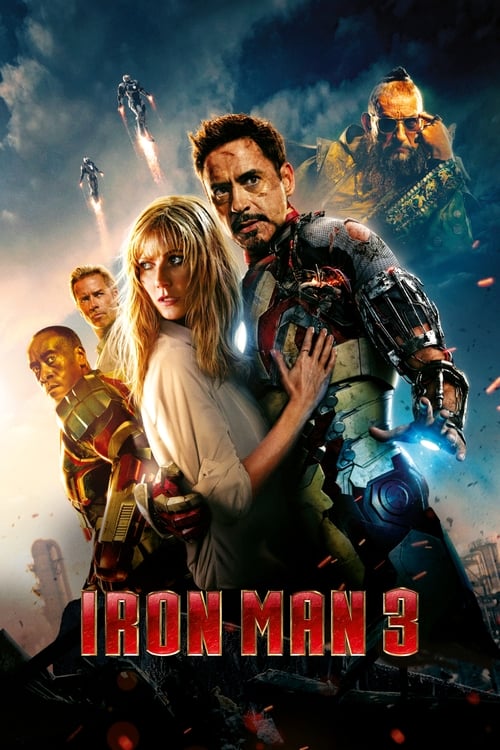
Iron Man 3
2013 · Directed by Shane Black
Woke Score
CriticCritic Score
Audience
Based
Critics rated this 40 points above its woke score. Among Based films, this critic score ranks #225 of 345.
Representation Casting
Score: 35/100
The cast includes Don Cheadle as a military officer and Rebecca Hall in a supporting role, providing baseline racial diversity. However, the controversial Mandarin casting decision muddies the representation landscape considerably.
LGBTQ+ Themes
Score: 0/100
No LGBTQ themes, characters, or subtext present in the film. This is a straightforward heterosexual action narrative with no engagement with queer sensibilities.
Feminist Agenda
Score: 25/100
Pepper Potts receives marginally more agency than in Iron Man 2, but remains primarily a damsel in distress. The film shows minimal feminist consciousness despite having a female character in a prominent role.
Racial Consciousness
Score: 15/100
The Mandarin twist involving Ben Kingsley perpetrating an elaborate hoax around Asian villainy is either a critique or an accident. The broader racial politics of the film are largely underdeveloped and unexamined.
Climate Crusade
Score: 0/100
No climate themes whatsoever. The film's environmental consciousness is entirely absent, which is unsurprising for a 2013 action blockbuster.
Eat the Rich
Score: 40/100
Aldrich Killian serves as a villain embodying corporate excess and the military-industrial complex. However, this critique is underdeveloped and the film never interrogates Tony Stark's own capitalist foundation.
Body Positivity
Score: 5/100
The film contains no body positivity messaging. All characters conform to conventional Hollywood physical standards with no engagement with diverse body representation.
Neurodivergence
Score: 10/100
Tony Stark exhibits anxiety and PTSD symptoms following the events of The Avengers, though this is portrayed as a character flaw rather than a neurodivergent identity deserving of respect or accommodation.
Revisionist History
Score: 5/100
The film contains no historical revisionism. It operates entirely in a contemporary superhero fantasy space with no engagement with actual historical events or narratives.
Lecture Energy
Score: 15/100
Shane Black's script occasionally gestures toward themes of power and responsibility but rarely stops to explicitly lecture the audience. The film prioritizes entertainment over preachiness.


Synopsis
When Tony Stark's world is torn apart by a formidable terrorist called the Mandarin, he starts an odyssey of rebuilding and retribution.
Consciousness Assessment
Iron Man 3 occupies a peculiar position in the Marvel canon as a film that fumbles multiple opportunities for modern progressive sensibilities while simultaneously avoiding outright offense through sheer narrative chaos. The casting of Ben Kingsley as the Mandarin, only to reveal him as a British actor playing a drug-addled fraud, represents a strange kind of anti-representation, though whether this counts as conscious social commentary or directorial mischief remains unclear. Gwyneth Paltrow's Pepper Potts is given slightly more agency than in previous installments, though she spends considerable time in peril and ultimately receives a dubious plot device rather than character development.
The film's racial consciousness registers somewhere between absent and actively problematic. The actual terrorist threat is embodied by Guy Pearce's Aldrich Killian, a wealthy industrialist, which does contain faint anti-capitalist undertones. However, the elaborate deception around the Mandarin character and the film's general disinterest in interrogating its own geopolitical premises suggests that Shane Black was far more interested in crafting a buddy-cop detective story than in engaging with contemporary social frameworks. The casting of Don Cheadle as James Rhodes provides racial diversity without commentary, which is neutral territory.
The film contains virtually no engagement with LGBTQ themes, climate consciousness, body positivity, neurodivergence representation, or revisionist history. Its lecture energy is minimal, which constitutes either a mercy or a missed opportunity depending on one's perspective. Iron Man 3 is ultimately a summer blockbuster that predates the full flowering of modern progressive filmmaking by just enough years to avoid the markers entirely while failing to generate any particularly interesting cultural conversation about its own choices.
Analysis generated by our Consciousness Algorithm
Critic Reviews
“Iron Man 3 is an ominously exciting, shoot-the-works comic-book spectacular. ”
“A madly creative, darkly comical, and fiendishly self-aware actioner with muscle to spare.”
“Thanks to Downey’s genius, Iron Man 3 is equally terrific, whether Tony’s fending off an army of villains or bantering with a kid in a shed on a cold, snowy night.”
“The villains are all wrong, the motivations are muddy, even the gadgetry is off. And the swaggering genius at the center of it all has become a preening fool.”
Consciousness Markers
The cast includes Don Cheadle as a military officer and Rebecca Hall in a supporting role, providing baseline racial diversity. However, the controversial Mandarin casting decision muddies the representation landscape considerably.
No LGBTQ themes, characters, or subtext present in the film. This is a straightforward heterosexual action narrative with no engagement with queer sensibilities.
Pepper Potts receives marginally more agency than in Iron Man 2, but remains primarily a damsel in distress. The film shows minimal feminist consciousness despite having a female character in a prominent role.
The Mandarin twist involving Ben Kingsley perpetrating an elaborate hoax around Asian villainy is either a critique or an accident. The broader racial politics of the film are largely underdeveloped and unexamined.
No climate themes whatsoever. The film's environmental consciousness is entirely absent, which is unsurprising for a 2013 action blockbuster.
Aldrich Killian serves as a villain embodying corporate excess and the military-industrial complex. However, this critique is underdeveloped and the film never interrogates Tony Stark's own capitalist foundation.
The film contains no body positivity messaging. All characters conform to conventional Hollywood physical standards with no engagement with diverse body representation.
Tony Stark exhibits anxiety and PTSD symptoms following the events of The Avengers, though this is portrayed as a character flaw rather than a neurodivergent identity deserving of respect or accommodation.
The film contains no historical revisionism. It operates entirely in a contemporary superhero fantasy space with no engagement with actual historical events or narratives.
Shane Black's script occasionally gestures toward themes of power and responsibility but rarely stops to explicitly lecture the audience. The film prioritizes entertainment over preachiness.