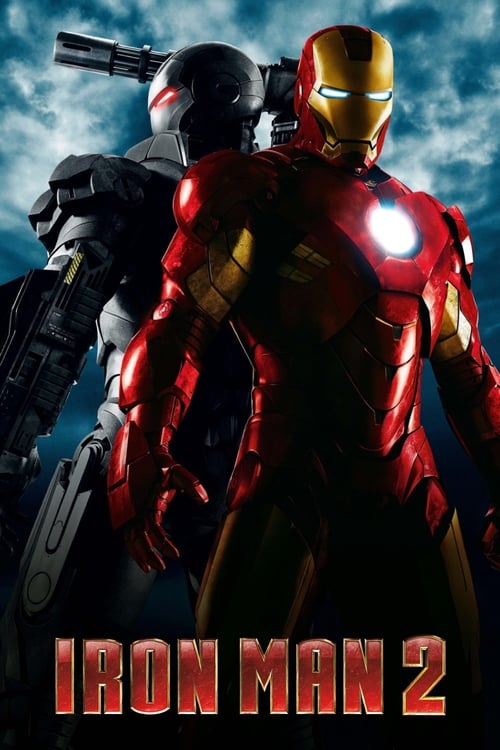
Iron Man 2
2010 · Directed by Jon Favreau
Woke Score
CriticCritic Score
Audience
Ultra Based
Critics rated this 49 points above its woke score. Among Ultra Based films, this critic score ranks #991 of 1469.
Representation Casting
Score: 35/100
The cast includes Black actors (Don Cheadle, Samuel L. Jackson) and a female action performer (Scarlett Johansson), but these are treated as unremarkable casting choices rather than deliberate diversity statements. No effort is made to highlight or celebrate their presence.
LGBTQ+ Themes
Score: 0/100
No LGBTQ+ themes, characters, or representation appear in the film. The narrative is entirely heteronormative and contains no acknowledgment of sexual orientation or gender identity.
Feminist Agenda
Score: 10/100
Pepper Potts exists primarily as a romantic interest and secondary character. While Scarlett Johansson's Black Widow is a capable fighter, she is presented through a sexualized male gaze and has minimal agency in the plot.
Racial Consciousness
Score: 15/100
Diverse casting exists but without any racial consciousness or commentary. Characters are not defined by their race, and the film makes no statements about systemic racism or racial justice.
Climate Crusade
Score: 0/100
No climate themes or environmental consciousness appear in the film. The narrative focuses entirely on military technology and personal rivalry with no mention of ecological concerns.
Eat the Rich
Score: 5/100
The film's protagonist is a billionaire whose wealth and power are presented as entirely justified. There is no critique of capitalism; instead, Stark's resistance to sharing his technology is framed as heroic self-determination.
Body Positivity
Score: 0/100
The film features conventionally attractive actors in peak physical condition. There is no representation of diverse body types or any engagement with body positivity discourse.
Neurodivergence
Score: 0/100
No characters with neurodivergent traits or disabilities are portrayed in meaningful ways. The film contains no representation of autism, ADHD, mental health struggles, or other neurodivergent experiences.
Revisionist History
Score: 0/100
The film is a fictional superhero narrative with no historical claims to revise. It makes no statements about history, past injustices, or alternative historical interpretations.
Lecture Energy
Score: 5/100
The film prioritizes entertainment and action over preachy messaging. Any thematic content is delivered through plot and dialogue without the hectoring quality of films designed to instruct audiences about social issues.


Synopsis
With the world now aware of his dual life as the armored superhero Iron Man, billionaire inventor Tony Stark faces pressure from the government, the press and the public to share his technology with the military. Unwilling to let go of his invention, Stark, with Pepper Potts and James 'Rhodey' Rhodes at his side, must forge new alliances – and confront powerful enemies.
Consciousness Assessment
Iron Man 2 arrives at that peculiar historical moment when diversity in casting could be accomplished without any accompanying ideological scaffolding. Don Cheadle inherits the role of War Machine from Terrence Howard with little fanfare, Samuel L. Jackson reprises Nick Fury, and Scarlett Johansson appears as a spy who is primarily distinguished by her ability to perform acrobatics in a tight outfit. The film treats these casting choices as straightforward narrative necessities rather than statements about representation. There is no self-congratulation, no meta-commentary, no pause in the action to allow the audience to feel virtuous about witnessing diversity on screen.
The film's actual concerns are entirely divorced from modern progressive preoccupations. Tony Stark remains an unrepentant capitalist whose wealth and technological prowess form the entire moral universe of the narrative. The military-industrial complex is presented as an obstacle to Stark's autonomy, not as a systemic evil requiring structural critique. Pepper Potts, played by Gwyneth Paltrow, exists primarily as a romantic interest and object of concern, her agency confined to the margins of Stark's grand designs. The film's villain is a disgruntled rival played by Mickey Rourke, a personal antagonist born from wounded pride, not a representation of systemic injustice.
What defines Iron Man 2 is its comfortable detachment from any moral project beyond spectacle and entertainment. The film was made in 2010, that distant era before progressive social consciousness became a standard component of blockbuster filmmaking. It is a relic of a time when a billionaire inventor could be the unquestioned hero of his own story, when diversity existed without commentary, and when the only mandate was to deliver impressive action sequences and quippy dialogue. By contemporary standards, it reads as almost refreshingly unconcerned with the apparatus of modern social consciousness.
Analysis generated by our Consciousness Algorithm
Critic Reviews
“Iron Man 2 sets gold standard for sequels thanks to Robert Downey Jr.'s Stark performance.”
“Favreau supplies the go-go-go that makes the movie stratospherically entertaining, even without 3-D. But it's the promiscuously talented Downey who adds the grace notes that make Iron Man 2 something to remember.”
“A movie franchise can only take us by surprise once, and by that measure, Iron Man 2 is a preordained letdown. But so much of what gave the first film its gas — is still here.”
“Well, that didn't take long. Everything fun and terrific about "Iron Man," a mere two years ago, has vanished with its sequel. In its place, Iron Man 2 has substituted noise, confusion, multiple villains, irrelevant stunts and misguided story lines.”
Consciousness Markers
The cast includes Black actors (Don Cheadle, Samuel L. Jackson) and a female action performer (Scarlett Johansson), but these are treated as unremarkable casting choices rather than deliberate diversity statements. No effort is made to highlight or celebrate their presence.
No LGBTQ+ themes, characters, or representation appear in the film. The narrative is entirely heteronormative and contains no acknowledgment of sexual orientation or gender identity.
Pepper Potts exists primarily as a romantic interest and secondary character. While Scarlett Johansson's Black Widow is a capable fighter, she is presented through a sexualized male gaze and has minimal agency in the plot.
Diverse casting exists but without any racial consciousness or commentary. Characters are not defined by their race, and the film makes no statements about systemic racism or racial justice.
No climate themes or environmental consciousness appear in the film. The narrative focuses entirely on military technology and personal rivalry with no mention of ecological concerns.
The film's protagonist is a billionaire whose wealth and power are presented as entirely justified. There is no critique of capitalism; instead, Stark's resistance to sharing his technology is framed as heroic self-determination.
The film features conventionally attractive actors in peak physical condition. There is no representation of diverse body types or any engagement with body positivity discourse.
No characters with neurodivergent traits or disabilities are portrayed in meaningful ways. The film contains no representation of autism, ADHD, mental health struggles, or other neurodivergent experiences.
The film is a fictional superhero narrative with no historical claims to revise. It makes no statements about history, past injustices, or alternative historical interpretations.
The film prioritizes entertainment and action over preachy messaging. Any thematic content is delivered through plot and dialogue without the hectoring quality of films designed to instruct audiences about social issues.