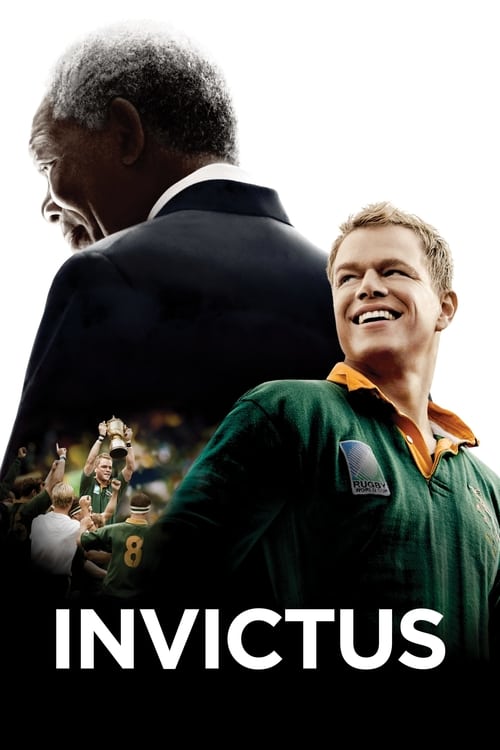
Invictus
2009 · Directed by Clint Eastwood
Woke Score
CriticCritic Score
Audience
Based
Critics rated this 46 points above its woke score. Among Based films, this critic score ranks #124 of 345.
Representation Casting
Score: 25/100
While the cast includes South African actors, the two lead roles (Mandela and the rugby captain) go to American actors Freeman and Damon, centering non-South African perspectives on South African history.
LGBTQ+ Themes
Score: 0/100
No LGBTQ+ themes, characters, or representation present in the film.
Feminist Agenda
Score: 10/100
Female characters appear minimally and serve supporting roles to the male-centered rugby and political narrative, with limited agency or substantive development.
Racial Consciousness
Score: 35/100
The film engages with apartheid and racial reconciliation as its central theme, but frames these through individual heroism and sports transcendence rather than systemic critique or material analysis.
Climate Crusade
Score: 0/100
No climate-related themes, messaging, or environmental consciousness present in the film.
Eat the Rich
Score: 0/100
The film contains no critique of capitalism, economic systems, or wealth inequality in post-apartheid South Africa.
Body Positivity
Score: 0/100
No body positivity messaging or representation of diverse body types; the film focuses on athletic rugby players within conventional physical ideals.
Neurodivergence
Score: 0/100
No representation of neurodivergent characters or acknowledgment of neurodiversity in the narrative.
Revisionist History
Score: 15/100
The film simplifies and sanitizes the complexity of post-apartheid South Africa, presenting racial reconciliation as more complete and harmonious than historical reality would support.
Lecture Energy
Score: 20/100
While the film contains some expository dialogue about Mandela's philosophy and racial unity, it maintains a narrative-driven approach rather than sermonizing, though Freeman's dignified performance borders on preachy at times.


Synopsis
Newly elected President Nelson Mandela knows his nation remains racially and economically divided in the wake of apartheid. Believing he can bring his people together through the universal language of sport, Mandela rallies South Africa's rugby union team as they make their historic run to the 1995 Rugby World Cup Championship match.
Consciousness Assessment
Clint Eastwood's "Invictus" approaches the dismantling of apartheid as a problem to be solved by individual moral will and strategic thinking about sport, a framework that mistakes the transcendent properties of rugby for systematic change. Morgan Freeman's portrayal of Mandela is dignified and emotionally resonant, yet the film studiously avoids examining the structural inequities that persisted in post-1995 South Africa. The narrative arc treats racial reconciliation as fundamentally complete once a multiracial rugby team takes the field, a sentimental notion that flattens the ongoing material realities of economic and social division.
The film's casting choices reveal its limitations. While South African actors appear throughout the rugby team, Freeman and Matt Damon occupy the two central roles, a decision that centers American and international audiences at the expense of indigenous South African storytelling authority. The screenplay emphasizes forgiveness and unity above all else, which can read as an implicit critique of those unwilling to move past historical trauma quickly enough. There is no interrogation of capitalism, no recognition of disability or neurodivergence, no queer presence, and certainly no climate consciousness.
What remains is a well-crafted sports narrative that engages with race and history in an earnest but ultimately superficial manner. The film's progressive impulses are real but pre-date and predate the specific cultural markers that would later define contemporary social consciousness. It is, fundamentally, a film about reconciliation made for audiences comfortable with the idea that some problems can be solved through sports and good intentions.
Analysis generated by our Consciousness Algorithm
Critic Reviews
“It’s an exciting sports movie, an inspiring tale of prejudice overcome and, above all, a fascinating study of political leadership.”
“Clint Eastwood, a master director, orchestrates all of these notes and has us loving Mandela, proud of Francois and cheering for the plucky Springboks. A great entertainment. Not, as I said, the Mandela biopic I would have expected.”
“What makes it special is Eastwood's ability to artfully and concisely tell a story, and Morgan Freeman's wonderfully understated turn as South African President Nelson Mandela.”
“As a non-South African, I can't speak to the accuracy of the movie's racial politics, but they feel insultingly vague.”
Consciousness Markers
While the cast includes South African actors, the two lead roles (Mandela and the rugby captain) go to American actors Freeman and Damon, centering non-South African perspectives on South African history.
No LGBTQ+ themes, characters, or representation present in the film.
Female characters appear minimally and serve supporting roles to the male-centered rugby and political narrative, with limited agency or substantive development.
The film engages with apartheid and racial reconciliation as its central theme, but frames these through individual heroism and sports transcendence rather than systemic critique or material analysis.
No climate-related themes, messaging, or environmental consciousness present in the film.
The film contains no critique of capitalism, economic systems, or wealth inequality in post-apartheid South Africa.
No body positivity messaging or representation of diverse body types; the film focuses on athletic rugby players within conventional physical ideals.
No representation of neurodivergent characters or acknowledgment of neurodiversity in the narrative.
The film simplifies and sanitizes the complexity of post-apartheid South Africa, presenting racial reconciliation as more complete and harmonious than historical reality would support.
While the film contains some expository dialogue about Mandela's philosophy and racial unity, it maintains a narrative-driven approach rather than sermonizing, though Freeman's dignified performance borders on preachy at times.