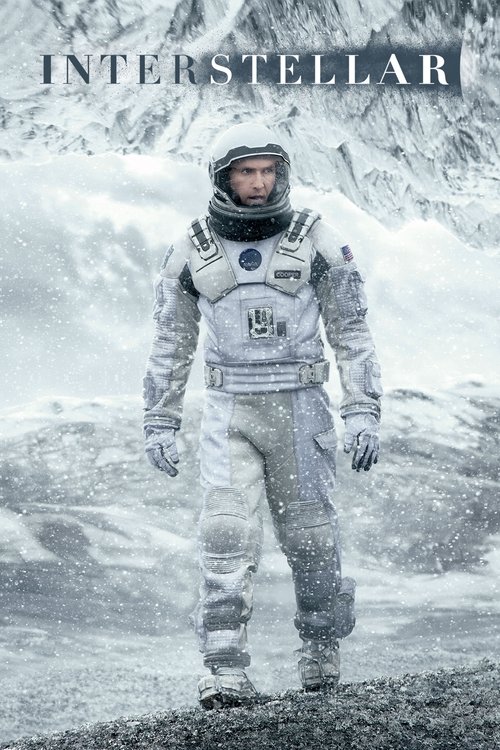
Interstellar
2014 · Directed by Christopher Nolan
Woke Score
CriticCritic Score
Audience
Ultra Based
Critics rated this 59 points above its woke score. Among Ultra Based films, this critic score ranks #495 of 1469.
Representation Casting
Score: 28/100
The film includes female astronauts and scientists in substantive roles, though they remain secondary to the male protagonist's narrative arc. Racial diversity is present but unremarked upon.
LGBTQ+ Themes
Score: 0/100
No LGBTQ+ themes, characters, or representation are present in the film.
Feminist Agenda
Score: 12/100
Female characters are professionally capable but occupy supporting roles. The core narrative privileges paternal relationships and masculine scientific ambition.
Racial Consciousness
Score: 8/100
The ensemble cast includes actors of color, but there is no engagement with racial themes or consciousness. Diversity is treated as background casting.
Climate Crusade
Score: 5/100
An environmental catastrophe serves as plot backdrop, but the film offers no critique of systems causing it or advocacy for action.
Eat the Rich
Score: 3/100
Humanity's survival depends on technological advancement and resource mobilization, concepts that align with rather than challenge capitalist frameworks.
Body Positivity
Score: 0/100
Body positivity themes are entirely absent. The film does not engage with questions of bodily autonomy, acceptance, or representation.
Neurodivergence
Score: 0/100
No neurodivergent characters or themes are present in the narrative.
Revisionist History
Score: 0/100
The film does not engage with historical events or attempt to revise historical narratives.
Lecture Energy
Score: 25/100
The film includes substantial expository dialogue explaining scientific concepts and wormhole mechanics, though this serves narrative function rather than preachy social messaging.


Synopsis
The adventures of a group of explorers who make use of a newly discovered wormhole to surpass the limitations on human space travel and conquer the vast distances involved in an interstellar voyage.
Consciousness Assessment
Interstellar stands as a monument to the traditional space opera, one that treats its scientific apparatus and emotional core with equal reverence. Nolan's film is at its heart a meditation on paternal duty and species survival, concerns that predate contemporary consciousness by centuries. The presence of female astronauts and scientists is handled matter-of-factly, which is to say they are simply present without commentary or special pleading. This is not progressive politics so much as basic casting necessity. Anne Hathaway's Dr. Brand and Jessica Chastain's adult Murph are competent professionals who happen to be women, a distinction that registers as entirely unremarkable within the film's universe. Such an approach, by contemporary standards, reads as almost aggressively neutral.
The film's engagement with its environmental catastrophe exists purely as plot mechanics. The dying Earth serves as motivation for the mission rather than as an opportunity for systemic critique or calls to action. There are no billionaire villains to be toppled, no lectures about consumption or exploitation, no indigenous peoples wronged by capitalist expansion. The antagonists are entropy and distance, not social structures. When Nolan's characters discuss humanity's future, they speak in terms of species continuity and scientific achievement, not resource redistribution or structural transformation. This is scientism, not social consciousness.
Interstellar remains a film of genuine intellectual ambition and emotional power, yet it operates in a cultural register that predates the specific markers we now evaluate. It is a film about big ideas and bigger feelings, rendered with technical mastery and narrative intelligence. For those seeking evidence of progressive sensibilities in contemporary cinema, Interstellar will provide scant comfort. For those seeking a well-crafted exploration of humanity's place in an indifferent cosmos, it remains an exemplary achievement. These two assessments are not in conflict.
Analysis generated by our Consciousness Algorithm
Critic Reviews
“An exhilarating slalom through the wormholes of Christopher Nolan’s vast imagination that is at once a science-geek fever dream and a formidable consideration of what makes us human.”
“It’s a bold, beautiful cosmic adventure story with a touch of the surreal and the dreamlike, and yet it always feels grounded in its own deadly serious reality.”
“Interstellar is Nolan’s best and most brazenly ambitious film to date.”
“Promising outer-space majesty and deep-thought topics like some modern variation on Stanley Kubrick's “2001: A Space Odyssey,” Interstellar instead plays like a confused mix of daringly unique space-travel footage like you’ve never seen and droningly familiar emotional and plot beats that you’ve seen all too many times before.”
Consciousness Markers
The film includes female astronauts and scientists in substantive roles, though they remain secondary to the male protagonist's narrative arc. Racial diversity is present but unremarked upon.
No LGBTQ+ themes, characters, or representation are present in the film.
Female characters are professionally capable but occupy supporting roles. The core narrative privileges paternal relationships and masculine scientific ambition.
The ensemble cast includes actors of color, but there is no engagement with racial themes or consciousness. Diversity is treated as background casting.
An environmental catastrophe serves as plot backdrop, but the film offers no critique of systems causing it or advocacy for action.
Humanity's survival depends on technological advancement and resource mobilization, concepts that align with rather than challenge capitalist frameworks.
Body positivity themes are entirely absent. The film does not engage with questions of bodily autonomy, acceptance, or representation.
No neurodivergent characters or themes are present in the narrative.
The film does not engage with historical events or attempt to revise historical narratives.
The film includes substantial expository dialogue explaining scientific concepts and wormhole mechanics, though this serves narrative function rather than preachy social messaging.