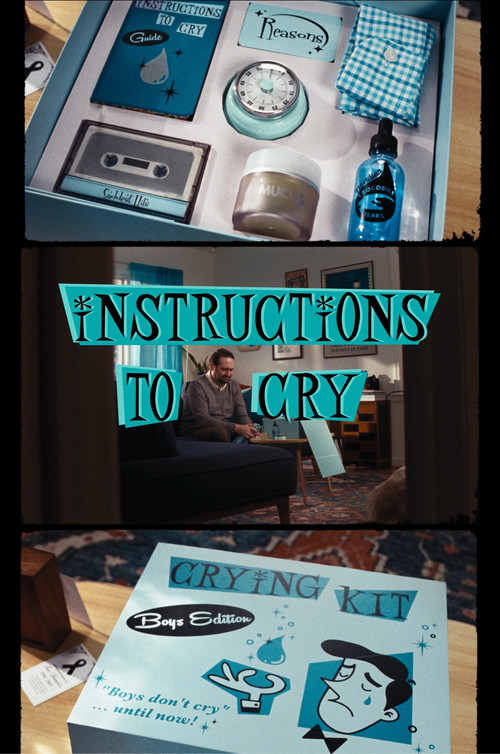
Instructions To Cry
2026 · Directed by Domenicca Botero
Woke
Consciousness Score: 70%
Representation Casting
Score: 65/100
The cast includes Latin American representation through director Domenicca Botero (Mexican-Ecuadorian) and cast member Maria Gabriela Guerrero. However, the limited three-minute runtime and small ensemble size constrain the visibility of this commitment.
LGBTQ+ Themes
Score: 0/100
No explicit LGBTQ+ themes are evident from available information. The film's focus on male emotional expression could be read as adjacent to discussions of masculine performance, but there is no indication of queer content or representation.
Feminist Agenda
Score: 55/100
The film critiques patriarchal conditioning and toxic masculinity, which are feminist concerns. However, the work focuses on male emotional access rather than centering feminist critique or female perspectives and experiences.
Racial Consciousness
Score: 40/100
While the director brings Latin American heritage and the cast includes Latinx representation, the film's central conflict does not appear to explicitly engage with racial consciousness or structural racism.
Climate Crusade
Score: 0/100
No climate-related themes or environmental consciousness are present in this film about emotional expression and crying.
Eat the Rich
Score: 25/100
The premise involves a consumer product (a package) designed to solve an emotional problem, which could be read as subtle critique of commodification, but no systematic anti-capitalist analysis is evident.
Body Positivity
Score: 35/100
The film's engagement with tears and bodily emotional expression touches on body acceptance, though it is not framed as explicit body positivity advocacy in the contemporary sense.
Neurodivergence
Score: 30/100
The film's treatment of emotional difficulty as something requiring instruction could tangentially relate to neurodivergent experiences, but no explicit neurodivergence representation or discourse is evident.
Revisionist History
Score: 0/100
This contemporary comedy short contains no historical content or revisionist historical claims.
Lecture Energy
Score: 60/100
The work carries didactic weight, presenting its premise as a lesson about emotional expression and masculine conditioning. The instructional framing creates an inherent lecture quality, though the comedy format provides some distance from overt preachiness.
Synopsis
A man receives a package with items intended to help him navigate his emotions and cry.
Consciousness Assessment
Here we have a film that takes the question of male emotional expression with the gravity of a sommelier appraising a Burgundy, though the object of study is, frankly, whether men can cry. Domenicca Botero's three-minute exercise operates as a kind of instructional manual for dismantling toxic masculinity, presenting the act of crying not as weakness but as a correctable deficiency in emotional literacy. The premise itself functions as cultural commentary: a man requires external assistance and literal tools to access his own emotional capacity, suggesting that patriarchal conditioning has rendered him functionally illiterate in the language of vulnerability.
The film's engagement with masculinity studies and emotional labor positions it comfortably within the contemporary discourse surrounding toxic masculinity and the pathologization of male emotional suppression. By centering the absurdity of a grown man needing instructions to perform what should be a basic human function, the work invites us to examine the structural barriers society has erected around male emotional expression. The cast composition includes representation beyond a single demographic, and the director herself brings a Latin American perspective to a decidedly American anxiety about male vulnerability.
What prevents a higher score is the film's relatively straightforward approach to its themes. While the premise is undeniably aligned with progressive sensibilities about emotional authenticity and the critique of patriarchal conditioning, the execution appears to operate more as comedic commentary than as a work that substantially interrogates or complicates these ideas. The humor does not depend on mockery of progressive values but rather on the recognition of their validity, which is precisely where its cultural positioning becomes clear.
Analysis generated by our Consciousness Algorithm
Consciousness Markers
The cast includes Latin American representation through director Domenicca Botero (Mexican-Ecuadorian) and cast member Maria Gabriela Guerrero. However, the limited three-minute runtime and small ensemble size constrain the visibility of this commitment.
No explicit LGBTQ+ themes are evident from available information. The film's focus on male emotional expression could be read as adjacent to discussions of masculine performance, but there is no indication of queer content or representation.
The film critiques patriarchal conditioning and toxic masculinity, which are feminist concerns. However, the work focuses on male emotional access rather than centering feminist critique or female perspectives and experiences.
While the director brings Latin American heritage and the cast includes Latinx representation, the film's central conflict does not appear to explicitly engage with racial consciousness or structural racism.
No climate-related themes or environmental consciousness are present in this film about emotional expression and crying.
The premise involves a consumer product (a package) designed to solve an emotional problem, which could be read as subtle critique of commodification, but no systematic anti-capitalist analysis is evident.
The film's engagement with tears and bodily emotional expression touches on body acceptance, though it is not framed as explicit body positivity advocacy in the contemporary sense.
The film's treatment of emotional difficulty as something requiring instruction could tangentially relate to neurodivergent experiences, but no explicit neurodivergence representation or discourse is evident.
This contemporary comedy short contains no historical content or revisionist historical claims.
The work carries didactic weight, presenting its premise as a lesson about emotional expression and masculine conditioning. The instructional framing creates an inherent lecture quality, though the comedy format provides some distance from overt preachiness.