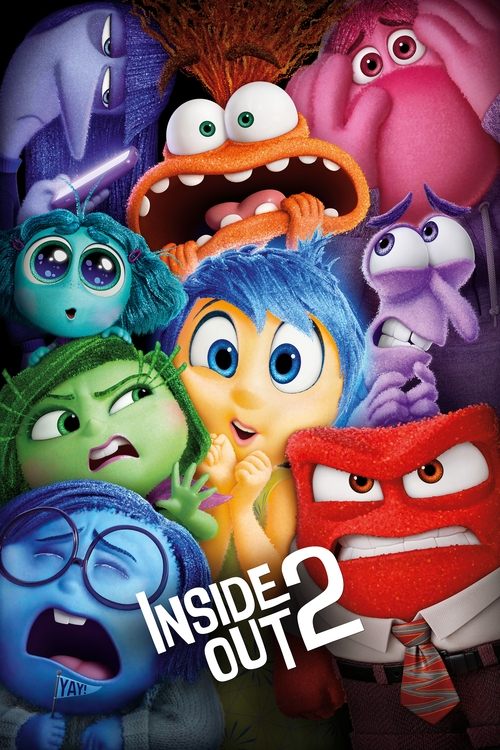
Inside Out 2
2024 · Directed by Kelsey Mann
Woke Score
CriticCritic Score
Audience
Woke-Adjacent
Critics rated this 25 points above its woke score. Among Woke-Adjacent films, this critic score ranks #66 of 151.
Representation Casting
Score: 28/100
The primary cast is predominantly white, with minimal representation in supporting roles. For a 2024 film, the racial diversity of the main voice cast is notably limited.
LGBTQ+ Themes
Score: 0/100
No LGBTQ+ themes, characters, or representation present in the film. The narrative contains no engagement with sexual orientation or gender identity.
Feminist Agenda
Score: 25/100
The protagonist is female, but this reflects the character design rather than any particular feminist agenda. The film contains no explicit examination of gender roles or patriarchal structures.
Racial Consciousness
Score: 15/100
The film demonstrates minimal racial consciousness. Riley's world is racially homogeneous, and the narrative contains no engagement with racial dynamics or experiences.
Climate Crusade
Score: 0/100
No climate themes, environmental messaging, or eco-conscious elements are present in the film.
Eat the Rich
Score: 0/100
The film contains no critique of capitalism, economic inequality, or class structures. Riley's affluent suburban existence is presented without irony or interrogation.
Body Positivity
Score: 0/100
No explicit body positivity messaging is present. The animated characters exist in a stylized aesthetic that does not engage with body representation debates.
Neurodivergence
Score: 85/100
The film's central focus is on anxiety disorder representation, treating it as a valid psychological experience deserving of understanding and accommodation rather than pathologization.
Revisionist History
Score: 0/100
No historical narratives or revisionist historical frameworks appear in this contemporary psychological story.
Lecture Energy
Score: 35/100
The film educates about anxiety and mental health through narrative and character rather than explicit exposition, maintaining entertainment value while conveying therapeutic concepts.


Synopsis
Teenager Riley's mind headquarters is undergoing a sudden demolition to make room for something entirely unexpected: new Emotions. Joy, Sadness, Anger, Fear and Disgust, who've long been running a successful operation by all accounts, aren't sure how to feel when Anxiety shows up. And it looks like she's not alone.
Consciousness Assessment
Inside Out 2 arrives as a film genuinely invested in destigmatizing anxiety and mental health awareness, which marks a shift in contemporary children's entertainment. The film's central conceit treats Anxiety not as a villain but as an emotion deserving of understanding and integration, a framework that aligns with modern therapeutic approaches. This represents the film's most coherent engagement with progressive sensibilities, offering validation to adolescents experiencing psychological distress without pathologizing their internal experience.
However, the film's cultural awareness extends primarily into neurodiversity and mental health discourse rather than the broader constellation of social justice concerns that define contemporary progressive cultural markers. The cast remains predominantly white, with representation in supporting roles that feels incidental rather than intentional. Riley inhabits a world of material comfort and suburban stability, and the narrative contains no interrogation of economic inequality, systemic injustice, or structural power dynamics. The film is not interested in those conversations.
The result is a well-intentioned but narrowly focused work that excels at one specific form of cultural awareness while remaining largely indifferent to others. It is a film about internal emotional life rather than external social conditions, which represents a perfectly valid artistic choice but limits its engagement with the full spectrum of contemporary progressive consciousness.
Analysis generated by our Consciousness Algorithm
Critic Reviews
“It was a tall order to match the brilliance of “Inside Out,” but the sequel meets the challenge on every level.”
“Like sequels of beloved movies, puberty can either be terrific, passable or really suck. So, while Riley, the lead character in Pixar’s Inside Out, has a rough-ish start to adolescence, the sequel Inside Out 2 — I’m relieved to say — is terrific. ”
“It’s the balance of basic psychology with abstract concepts and inspired observational comedy that makes this a uniquely captivating coming-of-age tale.”
“Here we have another spreadsheet of a movie that conceives of the human mind with the vision of a digital artist and the ethos of a corporate accountant; a film so mercilessly “relatable” that only a chatbot could ever hope to see themselves in it.”
Consciousness Markers
The primary cast is predominantly white, with minimal representation in supporting roles. For a 2024 film, the racial diversity of the main voice cast is notably limited.
No LGBTQ+ themes, characters, or representation present in the film. The narrative contains no engagement with sexual orientation or gender identity.
The protagonist is female, but this reflects the character design rather than any particular feminist agenda. The film contains no explicit examination of gender roles or patriarchal structures.
The film demonstrates minimal racial consciousness. Riley's world is racially homogeneous, and the narrative contains no engagement with racial dynamics or experiences.
No climate themes, environmental messaging, or eco-conscious elements are present in the film.
The film contains no critique of capitalism, economic inequality, or class structures. Riley's affluent suburban existence is presented without irony or interrogation.
No explicit body positivity messaging is present. The animated characters exist in a stylized aesthetic that does not engage with body representation debates.
The film's central focus is on anxiety disorder representation, treating it as a valid psychological experience deserving of understanding and accommodation rather than pathologization.
No historical narratives or revisionist historical frameworks appear in this contemporary psychological story.
The film educates about anxiety and mental health through narrative and character rather than explicit exposition, maintaining entertainment value while conveying therapeutic concepts.