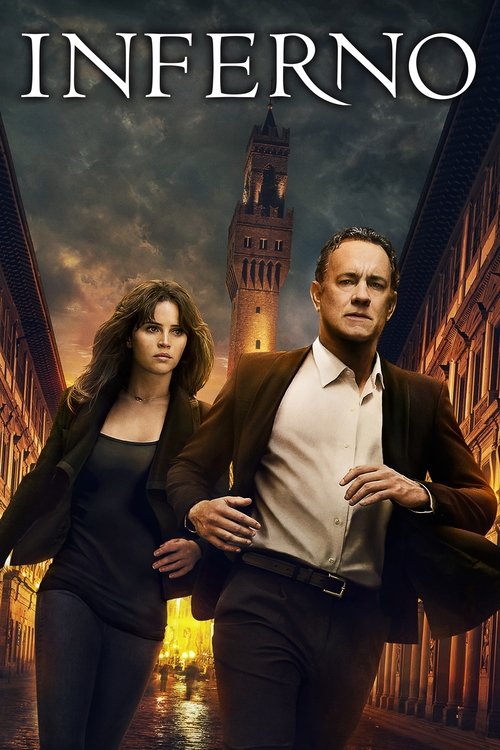
Inferno
2016 · Directed by Ron Howard
Woke Score
CriticCritic Score
Audience
Based
Critics rated this 16 points above its woke score. Among Based films, this critic score ranks #330 of 345.
Representation Casting
Score: 35/100
The cast includes actors of color in supporting roles (Omar Sy, Irrfan Khan), and a capable female co-lead, though these casting choices feel more demographic than deliberate in terms of narrative significance.
LGBTQ+ Themes
Score: 0/100
No LGBTQ+ themes, representation, or storylines are present in the film.
Feminist Agenda
Score: 25/100
Felicity Jones plays a capable female doctor, but her character functions primarily as a support mechanism for the male protagonist's journey rather than as an autonomous agent with her own narrative arc.
Racial Consciousness
Score: 15/100
The film includes actors of color in its ensemble, but demonstrates no explicit engagement with racial themes, identity, or systemic inequality. Their presence is incidental to the plot.
Climate Crusade
Score: 30/100
The film's central conflict involves a bioterrorist motivated by overpopulation concerns and environmental collapse, but the narrative treats these themes superficially as plot devices rather than engaging with them as substantive critique or advocacy.
Eat the Rich
Score: 0/100
No anti-capitalist themes, critique of wealth inequality, or systemic economic commentary appear in the film.
Body Positivity
Score: 0/100
The film contains no representation or thematic engagement with body diversity, body positivity, or non-normative body types.
Neurodivergence
Score: 0/100
No neurodivergent characters or themes related to neurodiversity are present in the film.
Revisionist History
Score: 0/100
While the film incorporates historical and artistic references from Renaissance Florence, it does not engage in revisionist historical reframing or challenge dominant historical narratives.
Lecture Energy
Score: 40/100
The film contains expository dialogue about art history, Renaissance figures, and bioterrorism concepts, with Tom Hanks' character delivering information-heavy monologues typical of the Dan Brown adaptation formula.


Synopsis
After waking up in a hospital with amnesia, professor Robert Langdon and a doctor must race against time to foil a deadly global plot.
Consciousness Assessment
Inferno arrives as a Dan Brown adaptation that grinds through its thriller mechanics with all the enthusiasm of a tour group moving through Florence's greatest hits. The film concerns itself with a bioterrorism plot rooted in overpopulation anxiety, a concept that, while certainly existential in scope, lacks any meaningful engagement with the complex systems that produce such anxieties. Instead, the narrative treats global population concerns as a backdrop for Tom Hanks to squint at Renaissance paintings and run through European locations. The film's progressive sensibilities extend only so far as its casting choices: Omar Sy and Irrfan Khan appear in supporting roles, though they function primarily as plot mechanics rather than fully realized characters.
The female lead, played by Felicity Jones, operates as a competent professional within the narrative framework, though her character remains subordinate to the central male protagonist's arc. Her agency exists primarily insofar as it serves the larger mystery. The film demonstrates no particular commitment to interrogating the power structures that might render a woman doctor's perspective significant or distinct from a male academic's. Similarly, the cast's diversity reads as cosmetic rather than thematic. The production values are solid, the pacing functional, yet the film offers no cultural commentary beyond its surface-level thriller conventions.
Fundamentally, Inferno concerns itself with mystery and spectacle rather than social consciousness. The environmental themes underlying the plot never materialize into anything resembling advocacy or critique. The film presents evil as the province of a single madman rather than systemic failure, a narrative choice that forecloses any possibility of meaningful engagement with the material's implicit questions about global responsibility. One watches Hanks perform his familiar professorial routine while the film maintains a studied indifference to everything beyond its genre obligations.
Analysis generated by our Consciousness Algorithm
Critic Reviews
“Bourne it is not, but the twists come with enough regularity to keep the squishier parts of the plot from mucking up the works.”
“Inferno delivers as an engaging thriller that I frankly enjoyed far more than Howard’s last Brown outing.”
“It is a satisfying but thoroughly idiotic film, in which relationships make no sense, character motivations change on a dime, and Tom Hanks has weird hair. But brainless as it is, it’s artful. It is a well-made bit of silliness, a piece of construction optimally designed to maintain audience interest while garnering absolutely no one’s respect.”
“Take the Dan Brown out of a Dan Brown movie and all you’re left with is Tom Hanks jogging in mild irritation.”
Consciousness Markers
The cast includes actors of color in supporting roles (Omar Sy, Irrfan Khan), and a capable female co-lead, though these casting choices feel more demographic than deliberate in terms of narrative significance.
No LGBTQ+ themes, representation, or storylines are present in the film.
Felicity Jones plays a capable female doctor, but her character functions primarily as a support mechanism for the male protagonist's journey rather than as an autonomous agent with her own narrative arc.
The film includes actors of color in its ensemble, but demonstrates no explicit engagement with racial themes, identity, or systemic inequality. Their presence is incidental to the plot.
The film's central conflict involves a bioterrorist motivated by overpopulation concerns and environmental collapse, but the narrative treats these themes superficially as plot devices rather than engaging with them as substantive critique or advocacy.
No anti-capitalist themes, critique of wealth inequality, or systemic economic commentary appear in the film.
The film contains no representation or thematic engagement with body diversity, body positivity, or non-normative body types.
No neurodivergent characters or themes related to neurodiversity are present in the film.
While the film incorporates historical and artistic references from Renaissance Florence, it does not engage in revisionist historical reframing or challenge dominant historical narratives.
The film contains expository dialogue about art history, Renaissance figures, and bioterrorism concepts, with Tom Hanks' character delivering information-heavy monologues typical of the Dan Brown adaptation formula.