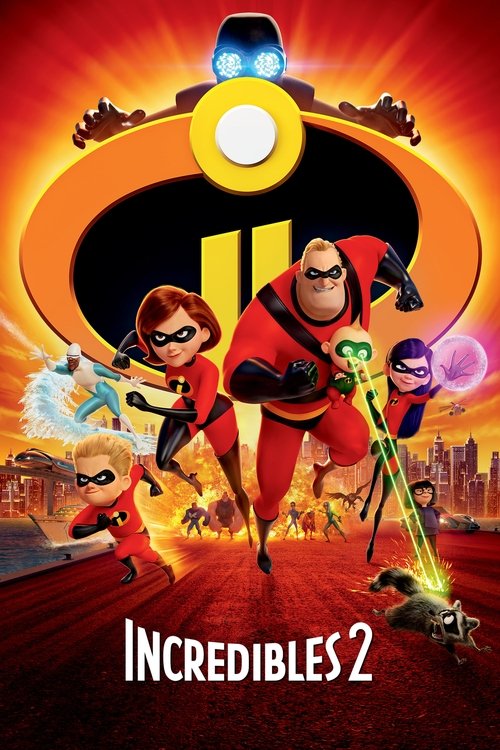
Incredibles 2
2018 · Directed by Brad Bird
Woke Score
CriticCritic Score
Audience
Woke-Adjacent
Critics rated this 38 points above its woke score. Among Woke-Adjacent films, this critic score ranks #37 of 151.
Representation Casting
Score: 35/100
The core family remains predominantly white. Supporting cast shows minimal ethnic diversity beyond background characters, with no meaningful representation of marginalized groups in substantive roles.
LGBTQ+ Themes
Score: 0/100
No LGBTQ+ representation or themes present in the film. The narrative centers entirely on heterosexual family structures.
Feminist Agenda
Score: 72/100
Elastigirl serves as the primary action hero and takes the lead role, inverting traditional gender dynamics. However, this is framed through comedy and domestic role reversal rather than genuine systemic critique.
Racial Consciousness
Score: 15/100
Samuel L. Jackson appears in a supporting role as Frozone, a character conceived in the previous film. No meaningful engagement with racial themes or consciousness throughout the narrative.
Climate Crusade
Score: 0/100
Climate concerns are entirely absent from the film's narrative, themes, or worldbuilding.
Eat the Rich
Score: 10/100
The film contains no critique of capitalism or class structures. The wealthy superhero family remains unexamined, and the villain's motivations lack ideological substance.
Body Positivity
Score: 5/100
The film presents conventionally attractive characters in superhero form. No meaningful body diversity or body positivity messaging appears in the narrative.
Neurodivergence
Score: 0/100
No representation of neurodivergent characters or exploration of neurodivergent themes in the film.
Revisionist History
Score: 0/100
The film is a contemporary superhero adventure with no historical elements or revisionist historical content.
Lecture Energy
Score: 25/100
While the gender role reversal carries implicit commentary, the film avoids explicit preachiness. The message remains largely implicit and comedic rather than preachy.


Synopsis
Elastigirl springs into action to save the day, while Mr. Incredible faces his greatest challenge yet – taking care of the problems of his three children.
Consciousness Assessment
Incredibles 2 arrives in 2018 with a narrative premise designed to flatter progressive sensibilities: the female superhero takes the spotlight while the male lead handles domestic duties. This inversion of traditional family roles forms the film's central conceit, and it does so with neither apology nor particular subtlety. Elastigirl's prominence as the primary action hero, combined with Mr. Incredible's bumbling incompetence in childcare, suggests a deliberate commentary on gender expectations and labor division. The film treats this scenario as inherently comedic and self-aware, which indicates at least a surface-level consciousness of contemporary gender discourse.
However, the execution reveals the limits of this progressive framing. The humor derived from Mr. Incredible's domestic failure operates as pure slapstick, treating parental responsibility as inherently emasculating rather than examining the structural inequities that create such imbalances. Elastigirl's character, while capable and authoritative, remains fundamentally defined through her relationship to her family's needs. The supporting cast features minimal diversity beyond the returning ensemble, and the film offers no meaningful engagement with racial consciousness, class consciousness, or any systemic critique. The villain's motivations lack ideological substance, and the narrative resolves through conventional superhero spectacle rather than any examination of the social structures it momentarily questions.
The film occupies a curious middle ground: progressive enough in its framing to receive praise from mainstream critics seeking contemporary sensibility, yet conservative enough in its actual content to avoid genuine disruption. It performs the aesthetics of social consciousness without risking the substance. This is not a film that challenges power structures so much as it rearranges the furniture within them.
Analysis generated by our Consciousness Algorithm
Critic Reviews
“While it’s great fun to watch the Incredibles/Parrs zipping around saving the world (with help from their preternaturally cool pal Lucius/Frozone, voiced with gusto by Samuel L. Jackson), Incredibles 2 gets its heart by being a sweet family story.”
“It would have been a relief if, 14 years later, Incredibles 2 had simply met expectations. Instead, it exceeds them.”
“It’s been a long time coming for Incredibles 2, but the punchline is worth the setup.”
Consciousness Markers
The core family remains predominantly white. Supporting cast shows minimal ethnic diversity beyond background characters, with no meaningful representation of marginalized groups in substantive roles.
No LGBTQ+ representation or themes present in the film. The narrative centers entirely on heterosexual family structures.
Elastigirl serves as the primary action hero and takes the lead role, inverting traditional gender dynamics. However, this is framed through comedy and domestic role reversal rather than genuine systemic critique.
Samuel L. Jackson appears in a supporting role as Frozone, a character conceived in the previous film. No meaningful engagement with racial themes or consciousness throughout the narrative.
Climate concerns are entirely absent from the film's narrative, themes, or worldbuilding.
The film contains no critique of capitalism or class structures. The wealthy superhero family remains unexamined, and the villain's motivations lack ideological substance.
The film presents conventionally attractive characters in superhero form. No meaningful body diversity or body positivity messaging appears in the narrative.
No representation of neurodivergent characters or exploration of neurodivergent themes in the film.
The film is a contemporary superhero adventure with no historical elements or revisionist historical content.
While the gender role reversal carries implicit commentary, the film avoids explicit preachiness. The message remains largely implicit and comedic rather than preachy.