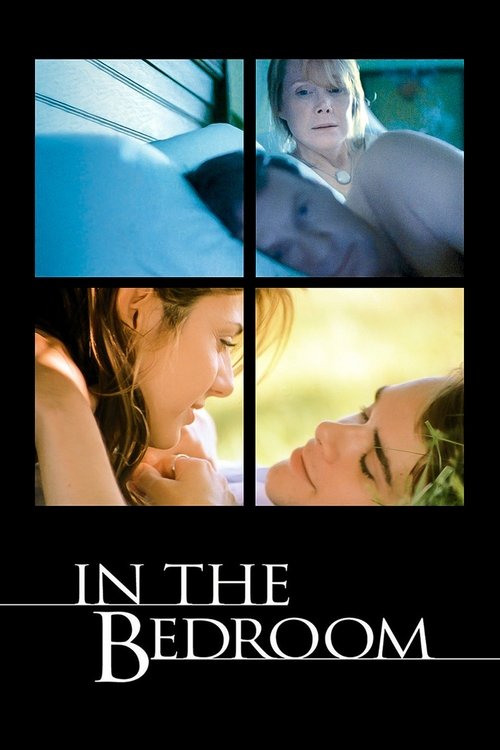
In the Bedroom
2001 · Directed by Todd Field
Woke Score
CriticCritic Score
Audience
Ultra Based
Critics rated this 86 points above its woke score. Among Ultra Based films, this critic score ranks #219 of 1469.
Representation Casting
Score: 0/100
The film features an entirely white cast that reflects the rural Maine setting. There is no deliberate diversity consideration or conscious representation in the casting choices.
LGBTQ+ Themes
Score: 0/100
The film contains no LGBTQ+ characters, relationships, or thematic exploration of LGBTQ+ identity.
Feminist Agenda
Score: 0/100
While Sissy Spacek's character Ruth is competent and involved in the narrative, the film contains no feminist agenda or exploration of gender politics as a thematic concern.
Racial Consciousness
Score: 0/100
The film does not engage with racial themes or racial consciousness. The all-white cast exists without commentary or deliberate examination of race.
Climate Crusade
Score: 0/100
There are no environmental themes, climate messaging, or ecological consciousness present in the film.
Eat the Rich
Score: 0/100
The film contains no anti-capitalist critique. The protagonist is a respected physician; the family occupies a solidly middle-class position without ideological examination.
Body Positivity
Score: 0/100
The film contains no body positivity messaging or engagement with body image as a thematic concern.
Neurodivergence
Score: 0/100
There is no representation of neurodivergent characters or thematic exploration of neurodivergence.
Revisionist History
Score: 0/100
The film is a contemporary drama with no historical revisionism or reinterpretation of historical events.
Lecture Energy
Score: 0/100
While the film is contemplative and morally complex, it does not operate with preachy lecture energy. Its approach is understated and ambiguous rather than explicitly instructive.


Synopsis
Summertime on the coast of Maine, "In the Bedroom" centers on the inner dynamics of a family in transition. Matt Fowler is a doctor practicing in his native Maine and is married to New York born Ruth Fowler, a music teacher. His son is involved in a love affair with a local single mother. As the beauty of Maine's brief and fleeting summer comes to an end, these characters find themselves in the midst of unimaginable tragedy.
Consciousness Assessment
Todd Field's directorial debut arrives as a masterclass in narrative restraint, a quality that has become unfashionable in contemporary cinema. Adapted from Andre Dubus's 1979 short story "Killings," the film unfolds with the deliberate pacing of a legal brief, each scene positioned to illuminate the moral architecture underlying a family's descent into vengeance. The performances by Tom Wilkinson and Sissy Spacek operate in a register of muted anguish, their bodies language conveying what dialogue refuses to articulate. This is not a film interested in catharsis or emotional resolution. Instead, it presents grief and revenge as morally incoherent impulses that nonetheless possess their own terrible logic.
The film's cultural positioning is notable primarily for its absence of any positioning whatsoever. It contains no markers of contemporary progressive ideology, no deliberate diversification of its cast, no environmental messaging, no social consciousness beyond the intimate tragedy of family rupture. The setting is rural Maine, populated by white characters who exist within the narrative without commentary or self-awareness regarding their representation. This is simply how the story unfolds. The film is neither reactionary nor progressive; it is indifferent to such categories entirely.
What emerges instead is something rarer: a film genuinely concerned with moral ambiguity in an era that has largely abandoned such concerns. The violence at the film's center is neither justified nor condemned by the narrative voice. We watch capable, decent people commit acts that destroy them, and the film holds this contradiction without flinching. In the context of contemporary cinema, such refusal to provide ideological scaffolding reads as almost radical.
Analysis generated by our Consciousness Algorithm
Critic Reviews
“The surehandedly wrought, beautifully acted, almost unbearably tense In the Bedroom is a rare film, not to be missed.”
“The compositions, the editing, the lighting, the sound, the music: everything seems meticulously considered, conjuring up a hushed intimacy that instantly sucks you in.”
“The best movie of the last several years: the most evocative, the most mysterious, the most inconsolably devastating.”
“A killer ending does not a movie make, and ultimately In the Bedroom may be more interesting to talk about than sit through.”
Consciousness Markers
The film features an entirely white cast that reflects the rural Maine setting. There is no deliberate diversity consideration or conscious representation in the casting choices.
The film contains no LGBTQ+ characters, relationships, or thematic exploration of LGBTQ+ identity.
While Sissy Spacek's character Ruth is competent and involved in the narrative, the film contains no feminist agenda or exploration of gender politics as a thematic concern.
The film does not engage with racial themes or racial consciousness. The all-white cast exists without commentary or deliberate examination of race.
There are no environmental themes, climate messaging, or ecological consciousness present in the film.
The film contains no anti-capitalist critique. The protagonist is a respected physician; the family occupies a solidly middle-class position without ideological examination.
The film contains no body positivity messaging or engagement with body image as a thematic concern.
There is no representation of neurodivergent characters or thematic exploration of neurodivergence.
The film is a contemporary drama with no historical revisionism or reinterpretation of historical events.
While the film is contemplative and morally complex, it does not operate with preachy lecture energy. Its approach is understated and ambiguous rather than explicitly instructive.