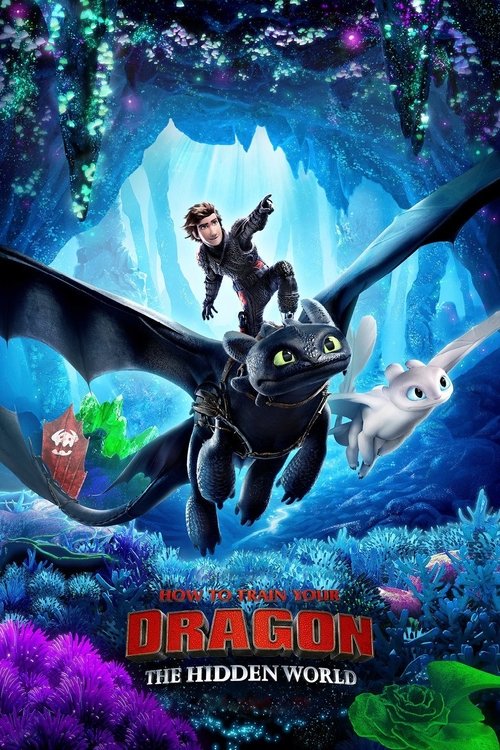
How to Train Your Dragon: The Hidden World
2019 · Directed by Dean DeBlois
Woke Score
CriticCritic Score
Audience
Based
Critics rated this 36 points above its woke score. Among Based films, this critic score ranks #152 of 345.
Representation Casting
Score: 45/100
The film features diverse voice casting including America Ferrera and Cate Blanchett in supporting roles, reflecting modern animation industry standards for representation without particular thematic intention.
LGBTQ+ Themes
Score: 0/100
No LGBTQ+ themes, relationships, or characters are present in the film. The narrative focuses on platonic bonds and environmental preservation.
Feminist Agenda
Score: 25/100
Astrid remains a capable female warrior character, but her agency and competence are presented as existing characteristics rather than as a deliberate feminist statement or corrective.
Racial Consciousness
Score: 0/100
The film contains no racial themes, commentary, or consciousness-raising elements. Race is not addressed in the narrative.
Climate Crusade
Score: 55/100
The Hidden World functions as an allegory for ecological preservation and environmental protection, with the narrative centered on protecting dragons and their sanctuary from exploitation.
Eat the Rich
Score: 0/100
No critique of capitalism or wealth inequality is present. The villain Grimmel is motivated by personal malice rather than systemic economic concerns.
Body Positivity
Score: 0/100
Body diversity or body positivity themes are absent. The film features conventionally proportioned animated characters.
Neurodivergence
Score: 0/100
No representation or acknowledgment of neurodivergence is present in the film.
Revisionist History
Score: 0/100
The film is set in a fantasy world with no historical revisionism or reinterpretation of actual events.
Lecture Energy
Score: 15/100
While the film contains mild environmental messaging about protection and preservation, it avoids heavy-handed preachiness, allowing themes to emerge organically from the narrative.


Synopsis
As Hiccup fulfills his dream of creating a peaceful dragon utopia, Toothless' discovery of an untamed, elusive mate draws the Night Fury away. When danger mounts at home and Hiccup's reign as village chief is tested, both dragon and rider must make impossible decisions to save their kind.
Consciousness Assessment
Here we encounter a film that operates in the liminal space between genuine artistic sensibility and the machinery of corporate brand maintenance. "How to Train Your Dragon: The Hidden World" presents itself as a meditation on environmental stewardship and the costs of civilization, but these themes are deployed with the careful neutrality of a company that has already calculated their target demographic's tolerance for messaging. The dragon utopia functions as an allegory for ecological preservation, yet the narrative never requires anyone to sacrifice materially or examine their own complicity. We are invited to feel good about conservation without contemplating what conservation demands.
The film's approach to representation reflects the contemporary animation industry standard: diverse voice casting deployed without particular intention or examination. America Ferrera voices Astrid, a character who has been a capable warrior since the franchise's inception, but her competence is not presented as a corrective or statement. She simply exists as a strong female character in a mainstream adventure, which is now the default expectation rather than a progressive assertion. The absence of explicit heteronormative romance as the film's central conflict represents a meaningful departure from earlier animated fare, though this owes more to narrative focus on dragon preservation than to any deliberate queering of the genre.
Where the film achieves its modest cultural positioning is in its gentle ecological consciousness. The Hidden World itself becomes a character, a space that must be protected from exploitation and destruction. Yet this protection is framed as the burden of the enlightened few, not as a systemic critique of the structures that create the need for such preservation in the first place. The film's ultimate message, that some things must remain hidden and untouched, sits uneasily with its blockbuster ambitions. It is a work that wants to say something about loss and responsibility while remaining thoroughly committed to entertainment and spectacle.
Analysis generated by our Consciousness Algorithm
Critic Reviews
“By the way, if you’re wondering about the subliminal appeal of the dragons — why these animated creatures look adorable on screen and not menacing at all — here’s why: Their movements, behaviors and expressions are based on cats. Once you know, it’s the most obvious thing in the world.”
“Here, the visuals outdo anything we’ve seen before, to such a degree that we might almost overlook the subtler innovations in the character animation: the nuances of expression on both the human and reptilian faces, and the wonderful nonverbal tactics these artists use to convey emotional intricacies neither Hiccup nor Toothless have had to communicate before, all of which pays off in an unforgettable final scene.”
“How to Train Your Dragon: The Hidden World is a fantastic, visually stunning and poignant way to end this beloved trilogy. ”
“One kudo to this lazy effort: The climax does have a real end-of-a-trilogy feel, making further sequels less likely. Silver linings, folks.”
Consciousness Markers
The film features diverse voice casting including America Ferrera and Cate Blanchett in supporting roles, reflecting modern animation industry standards for representation without particular thematic intention.
No LGBTQ+ themes, relationships, or characters are present in the film. The narrative focuses on platonic bonds and environmental preservation.
Astrid remains a capable female warrior character, but her agency and competence are presented as existing characteristics rather than as a deliberate feminist statement or corrective.
The film contains no racial themes, commentary, or consciousness-raising elements. Race is not addressed in the narrative.
The Hidden World functions as an allegory for ecological preservation and environmental protection, with the narrative centered on protecting dragons and their sanctuary from exploitation.
No critique of capitalism or wealth inequality is present. The villain Grimmel is motivated by personal malice rather than systemic economic concerns.
Body diversity or body positivity themes are absent. The film features conventionally proportioned animated characters.
No representation or acknowledgment of neurodivergence is present in the film.
The film is set in a fantasy world with no historical revisionism or reinterpretation of actual events.
While the film contains mild environmental messaging about protection and preservation, it avoids heavy-handed preachiness, allowing themes to emerge organically from the narrative.