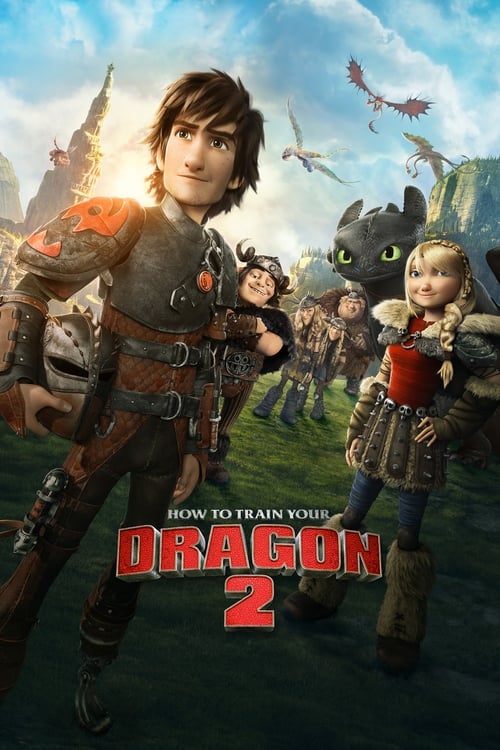
How to Train Your Dragon 2
2014 · Directed by Dean DeBlois
Woke Score
CriticCritic Score
Audience
Based
Critics rated this 55 points above its woke score. Among Based films, this critic score ranks #97 of 345.
Representation Casting
Score: 45/100
The film features a diverse voice cast including women, Black actors (Djimon Hounsou), and Latino representation (America Ferrera). However, this appears to reflect standard contemporary casting practice rather than deliberate representation strategy.
LGBTQ+ Themes
Score: 15/100
Gobber contains queer coding through his character design and mannerisms, though this remains subtext in HTTYD2 and is not explicitly developed. The franchise later confirmed his sexuality, but this installment offers minimal concrete evidence.
Feminist Agenda
Score: 52/100
Hiccup's rejection of patriarchal masculine expectations forms the narrative core. Astrid is presented as a capable warrior and leader. However, the film does not engage in explicit feminist critique or consciousness-raising about gender systems.
Racial Consciousness
Score: 10/100
While the film features actors of color in voice roles, there is no substantive engagement with racial themes, racial history, or racial justice. The casting appears incidental to the narrative.
Climate Crusade
Score: 0/100
No evidence of climate consciousness or environmental advocacy. The natural world functions as setting and resource rather than as a subject of ecological concern.
Eat the Rich
Score: 15/100
The villain Drago Bludvist represents authoritarian power-seeking rather than capitalist exploitation specifically. The film contains no critique of economic systems or class structures.
Body Positivity
Score: 0/100
No evidence of body positivity messaging or challenge to conventional beauty standards. Character designs follow standard animated film conventions.
Neurodivergence
Score: 0/100
No representation of neurodivergent characters or engagement with neurodiversity as a theme. Hiccup's difference from his father relates to personality and values, not neurology.
Revisionist History
Score: 0/100
The film is set in a fictional Viking-inspired world and does not engage with actual history or historical revisionism. It contains no reexamination of real historical narratives.
Lecture Energy
Score: 8/100
The film trusts its audience to absorb themes through narrative and character action rather than through explicit messaging. Dialogue remains in service of story rather than social instruction.


Synopsis
Five years after uniting the dragons and Vikings of Berk, Hiccup and Toothless soar beyond their homeland, charting the vast unknown. During one of their adventures, the pair discover a secret cave that houses hundreds of wild dragons -- and a mysterious dragon rider with a startling connection to Hiccup. And as the ruthless dragon conqueror Drago Bludvist rises to seize control of both dragons and people alike, Hiccup must step into his role as a true leader and, alongside his friends and Toothless, protect Berk from a devastating war.
Consciousness Assessment
How to Train Your Dragon 2 presents itself as a film somewhat ahead of its 2014 release date in its treatment of masculine identity and female capability. Hiccup's rejection of his father's warrior expectations in favor of diplomacy and understanding forms the narrative's emotional core, and this rejection of traditional masculine dominance carries progressive implications. Astrid functions as a capable warrior and leader rather than a supporting love interest, and the film's diverse voice cast includes several female characters in positions of agency. The subtext around Gobber, though not explicitly developed in this installment, hints at queer representation that would later be confirmed in the franchise.
Yet the film operates primarily as an adventure narrative that happens to feature these elements rather than as a work of explicit social commentary. The diverse casting reflects contemporary Hollywood practice more than conscious representation politics. The story's central conflict involves a conqueror seeking to dominate dragons and people, which could read as anti-authoritarian, but the film does not engage with systemic critique or material conditions. There is no exploration of environmental degradation, economic systems, disability representation, or the historical construction of Viking society. The acceptance of differences message, while genuinely present, remains thematic rather than polemical.
The film's earnest sincerity about finding common ground and rejecting violence as a solution carries a kind of progressive humanism that belongs more to mid-2000s animated filmmaking than to the specific cultural markers we recognize in contemporary progressive cinema. It is a well-crafted work with values we might broadly call progressive, but it lacks the explicit consciousness that would elevate its score meaningfully. This is a film that trusts its audience to absorb its lessons through narrative rather than through preachy assertion.
Analysis generated by our Consciousness Algorithm
Critic Reviews
“This is a sequel that has its own story to tell and that gets right down to it, and it expands on the ideas from the first film, but in a way that tells a thematically satisfying and complete story. In other words, this is how franchises are supposed to work.”
“Not only does this second movie match the charm, wit, animation skill and intelligent storytelling of the original, I think it even exceeds it.”
“Gleeful and smart, funny and serious, this sequel surpasses the endearing original with gorgeous animation — a dragon Eden, a dragon scourge, an infinitude of dragons — and one stirring human encounter after another. ”
“It has the core of a genuine crowd-pleaser, but unfortunately something bigger and more all-consuming keeps getting into its head.”
Consciousness Markers
The film features a diverse voice cast including women, Black actors (Djimon Hounsou), and Latino representation (America Ferrera). However, this appears to reflect standard contemporary casting practice rather than deliberate representation strategy.
Gobber contains queer coding through his character design and mannerisms, though this remains subtext in HTTYD2 and is not explicitly developed. The franchise later confirmed his sexuality, but this installment offers minimal concrete evidence.
Hiccup's rejection of patriarchal masculine expectations forms the narrative core. Astrid is presented as a capable warrior and leader. However, the film does not engage in explicit feminist critique or consciousness-raising about gender systems.
While the film features actors of color in voice roles, there is no substantive engagement with racial themes, racial history, or racial justice. The casting appears incidental to the narrative.
No evidence of climate consciousness or environmental advocacy. The natural world functions as setting and resource rather than as a subject of ecological concern.
The villain Drago Bludvist represents authoritarian power-seeking rather than capitalist exploitation specifically. The film contains no critique of economic systems or class structures.
No evidence of body positivity messaging or challenge to conventional beauty standards. Character designs follow standard animated film conventions.
No representation of neurodivergent characters or engagement with neurodiversity as a theme. Hiccup's difference from his father relates to personality and values, not neurology.
The film is set in a fictional Viking-inspired world and does not engage with actual history or historical revisionism. It contains no reexamination of real historical narratives.
The film trusts its audience to absorb themes through narrative and character action rather than through explicit messaging. Dialogue remains in service of story rather than social instruction.