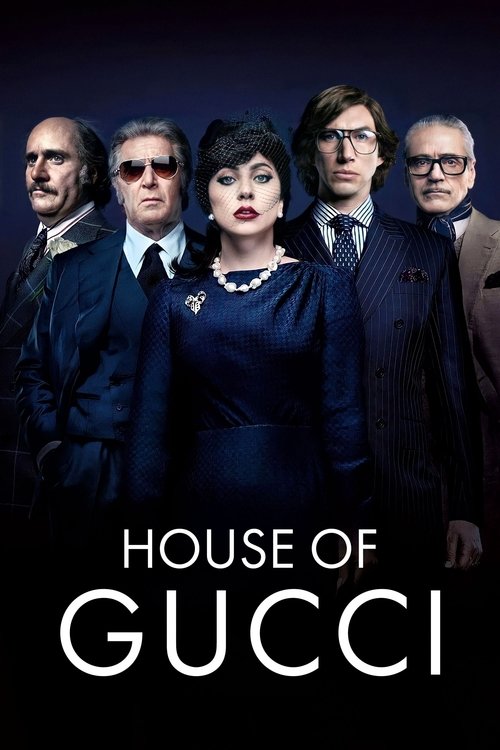
House of Gucci
2021 · Directed by Ridley Scott
Woke Score
CriticCritic Score
Audience
Based
Critics rated this 27 points above its woke score. Among Based films, this critic score ranks #245 of 345.
Representation Casting
Score: 25/100
The cast includes international and diverse actors, but this reflects the story's actual geography and the historical figures portrayed rather than deliberate progressive casting decisions.
LGBTQ+ Themes
Score: 15/100
Jared Leto's Paolo Gucci is portrayed as flamboyant and fashion-forward with coded elements, but sexual orientation is not explicit or thematic to the narrative.
Feminist Agenda
Score: 35/100
Patrizia is a complex female protagonist who actively drives the plot, but her ambition is presented as personal motivation rather than as commentary on women's systemic oppression or empowerment.
Racial Consciousness
Score: 5/100
The film contains no meaningful engagement with racial themes or racial consciousness in any form.
Climate Crusade
Score: 0/100
No climate or environmental themes are present in this crime drama.
Eat the Rich
Score: 40/100
The film satirizes wealth, luxury, and excess through its depiction of the Gucci family's decadence and dysfunction, though without systematic ideological critique of capitalism itself.
Body Positivity
Score: 5/100
No engagement with body image, body diversity, or body positivity themes.
Neurodivergence
Score: 0/100
No representation or exploration of neurodivergent characters or experiences.
Revisionist History
Score: 10/100
The film adapts the true story relatively faithfully without attempting to reframe historical events through a modern social justice lens.
Lecture Energy
Score: 20/100
The film contains satirical commentary on wealth and family dysfunction but does not lecture the audience about progressive values or social issues.


Synopsis
When Patrizia Reggiani, an outsider from humble beginnings, marries into the Gucci family, her unbridled ambition begins to unravel the family legacy and triggers a reckless spiral of betrayal, decadence, revenge, and ultimately… murder.
Consciousness Assessment
House of Gucci presents itself as a sprawling crime drama centered on the ambitions and machinations of Patrizia Reggiani, a woman from modest origins who marries into Italian high fashion's most storied family. The film features a deliberately international cast, with Lady Gaga anchoring the narrative as a complex female protagonist who drives events through cunning and ruthlessness. Yet this casting diversity and female lead should not be mistaken for deliberate social consciousness. Ridley Scott has constructed a film about greed, family dysfunction, and the corrupting influence of wealth, told with the visual excess and narrative momentum one expects from his work.
The film's engagement with progressive sensibilities remains superficial. Patrizia's agency is presented not as a challenge to patriarchal structures but simply as character motivation for a revenge plot. The depiction of wealth and luxury functions as satire, but without the ideological bite that would constitute genuine critique of capitalist systems. Jared Leto's flamboyant portrayal of Paolo Gucci carries hints of coded sexuality, though the film declines to make this explicit or thematic. The narrative remains fundamentally apolitical, treating its Italian setting and fashion world milieu as backdrop rather than as systems worthy of interrogation.
What emerges is a prestige crime drama that happens to feature diverse casting and a female-centered story, but which was not constructed with contemporary progressive messaging as a primary concern. The film is interested in character, spectacle, and plot mechanics. Its representation is incidental to these aims rather than central to them. House of Gucci is content to entertain without educating, to provoke without preaching, a quality that certain viewers may appreciate and others may find limiting.
Analysis generated by our Consciousness Algorithm
Critic Reviews
“Scott is having a remarkable year. To be exact, he’s having a remarkable season. Less than two months ago, “Last Duel” was released and it was Scott’s best film in years. Now the even-better House of Gucci is his best film in years — and it’s different from his previous work.”
“Locked in a heated conversation with its own campiness from the moment it starts, 'House of Gucci' leverages that underlying conflict into an operatic portrait of the tension between wealth and value.”
“House of Gucci is an icepick docudrama that has a great deal of fun with its grand roster of ambitious scoundrels, but it’s never less than a straight-faced and nimbly accomplished movie.”
“The abysmal “Gucci” would get a better grade, perhaps, if it was a term paper titled “How to Make the Assassination of a Famous Person Boring.” ”
Consciousness Markers
The cast includes international and diverse actors, but this reflects the story's actual geography and the historical figures portrayed rather than deliberate progressive casting decisions.
Jared Leto's Paolo Gucci is portrayed as flamboyant and fashion-forward with coded elements, but sexual orientation is not explicit or thematic to the narrative.
Patrizia is a complex female protagonist who actively drives the plot, but her ambition is presented as personal motivation rather than as commentary on women's systemic oppression or empowerment.
The film contains no meaningful engagement with racial themes or racial consciousness in any form.
No climate or environmental themes are present in this crime drama.
The film satirizes wealth, luxury, and excess through its depiction of the Gucci family's decadence and dysfunction, though without systematic ideological critique of capitalism itself.
No engagement with body image, body diversity, or body positivity themes.
No representation or exploration of neurodivergent characters or experiences.
The film adapts the true story relatively faithfully without attempting to reframe historical events through a modern social justice lens.
The film contains satirical commentary on wealth and family dysfunction but does not lecture the audience about progressive values or social issues.