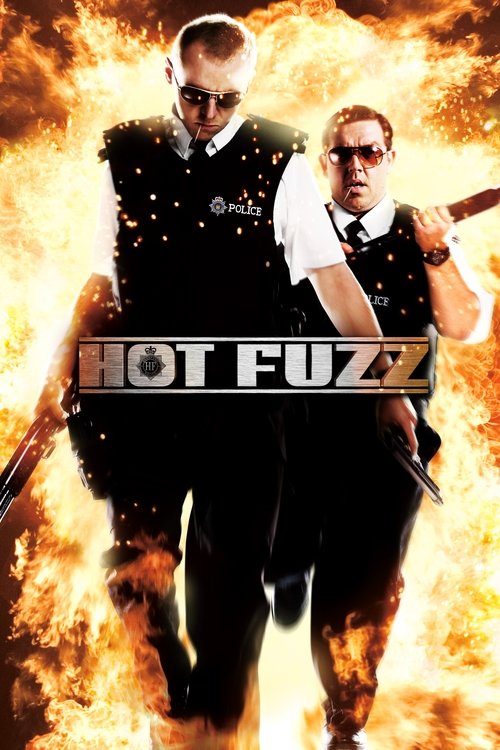
Hot Fuzz
2007 · Directed by Edgar Wright
Woke Score
CriticCritic Score
Audience
Ultra Based
Critics rated this 77 points above its woke score. Among Ultra Based films, this critic score ranks #338 of 1469.
Representation Casting
Score: 0/100
The cast is predominantly white and male, reflecting the genre being parodied rather than making any representational statement.
LGBTQ+ Themes
Score: 0/100
No LGBTQ+ themes, characters, or content appear in the film.
Feminist Agenda
Score: 0/100
No feminist agenda or commentary is present. Female characters exist minimally and are not central to the narrative.
Racial Consciousness
Score: 0/100
The film contains no exploration of racial themes or racial consciousness.
Climate Crusade
Score: 0/100
No climate-related messaging or environmental advocacy appears in the film.
Eat the Rich
Score: 0/100
The film contains no critique of capitalism or 'eat the rich' sentiment.
Body Positivity
Score: 0/100
No body positivity messaging or commentary on body image is present.
Neurodivergence
Score: 0/100
The film makes no attempt to represent or explore neurodivergence.
Revisionist History
Score: 0/100
No revisionist historical interpretation or reframing of historical events occurs.
Lecture Energy
Score: 8/100
The film delivers mild satirical commentary through visual and narrative absurdity rather than explicit exposition, giving it a light touch of comedic preachiness about genre conventions.


Synopsis
Former London constable Nicholas Angel finds it difficult to adapt to his new assignment in the sleepy British village of Sandford. Not only does he miss the excitement of the big city, but he also has a well-meaning oaf for a partner. However, when a series of grisly accidents rocks Sandford, Angel smells something rotten in the idyllic village.
Consciousness Assessment
Hot Fuzz is a 2007 British comedy that concerns itself entirely with the mechanics of action cinema and the absurdities of small-town English life. It is a film about genre, not about society. The narrative focuses on the friction between an overzealous London police sergeant and his new assignment in a pastoral village, where the aesthetic of countryside tranquility masks something far more sinister. This is competent satire, but it operates on the level of cinematic language rather than cultural commentary.
The film's cast is predominantly white and male, a reflection of the buddy cop genre it is deconstructing rather than any statement about representation. Olivia Colman appears in a supporting capacity, though her role is minor and peripheral to the central narrative. The village setting provides no opportunity for any meaningful exploration of diversity, nor does the film attempt such exploration. Its concerns are with overblown action sequences, bureaucratic inefficiency, and the collision between urban professionalism and rural indifference. These are legitimate satirical targets, but they bear no relation to the markers of contemporary progressive cultural consciousness.
The film contains no LGBTQ+ content, no racial consciousness, no feminist agenda, no climate advocacy, no anti-capitalist sentiment, no body positivity messaging, no neurodivergence representation, and no revisionist historical interpretation. It lectures neither through exposition nor through moral instruction. It simply presents absurdity and allows the audience to recognize the comedy in the gap between expectation and reality. This is a film from an era before such considerations became central to cultural discourse, and it makes no pretense of addressing them.
Analysis generated by our Consciousness Algorithm
Critic Reviews
“The good humor bubbles up from a deep reservoir of affection for Hollywood schlock.”
“The best, surely the smartest, English-language movie of the year to date.”
“Everything an action-comedy should be. It achieves through parody what most films in the genre can't accomplish straight.”
“All the action is staged with energy, but it gets relentless without anything really funny going on.”
Consciousness Markers
The cast is predominantly white and male, reflecting the genre being parodied rather than making any representational statement.
No LGBTQ+ themes, characters, or content appear in the film.
No feminist agenda or commentary is present. Female characters exist minimally and are not central to the narrative.
The film contains no exploration of racial themes or racial consciousness.
No climate-related messaging or environmental advocacy appears in the film.
The film contains no critique of capitalism or 'eat the rich' sentiment.
No body positivity messaging or commentary on body image is present.
The film makes no attempt to represent or explore neurodivergence.
No revisionist historical interpretation or reframing of historical events occurs.
The film delivers mild satirical commentary through visual and narrative absurdity rather than explicit exposition, giving it a light touch of comedic preachiness about genre conventions.