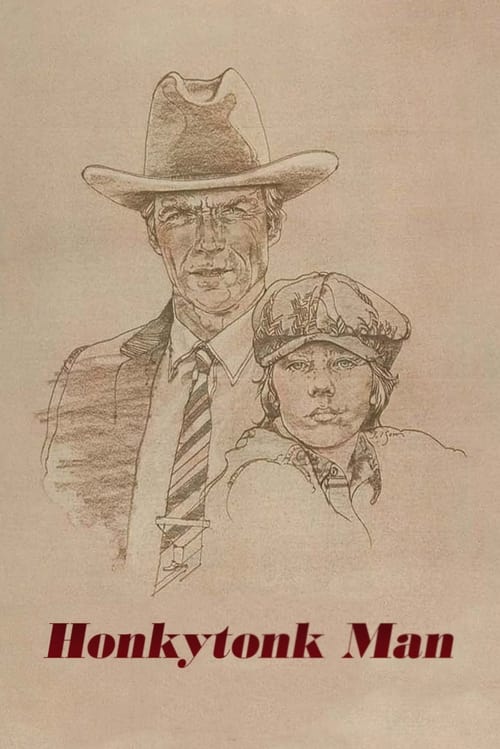
Honkytonk Man
1982 · Directed by Clint Eastwood
Woke Score
CriticCritic Score
Audience
Ultra Based
Critics rated this 48 points above its woke score. Among Ultra Based films, this critic score ranks #1170 of 1469.
Representation Casting
Score: 0/100
The cast is entirely white with no apparent effort toward demographic diversity or representation in lead or significant supporting roles.
LGBTQ+ Themes
Score: 0/100
No LGBTQ+ themes, characters, or representation are present in the film.
Feminist Agenda
Score: 0/100
Female characters appear only in minor supporting roles with no substantive agency or feminist perspectives embedded in the narrative.
Racial Consciousness
Score: 2/100
The film depicts the Depression era but does not engage with the distinct racial dimensions of economic hardship or systemic racism of the period.
Climate Crusade
Score: 0/100
No climate-related themes or environmental consciousness are present in this character-driven narrative.
Eat the Rich
Score: 3/100
While the film portrays economic hardship and the struggles of working-class individuals, it does not critique capitalism itself or present systemic critiques of economic structures.
Body Positivity
Score: 0/100
No body positivity messaging or commentary on body diversity is evident in the film.
Neurodivergence
Score: 0/100
No representation of neurodivergent characters or themes related to neurodiversity is present.
Revisionist History
Score: 0/100
The film depicts the Depression era straightforwardly without attempting to reframe historical events through contemporary social justice lenses.
Lecture Energy
Score: 0/100
The narrative unfolds without preachy speeches or explicit moral instruction regarding contemporary social issues.


Synopsis
During the Great Depression, a young boy leaves his family's Oklahoma farm to travel with his country musician uncle who is trying out for the Grand Ole Opry.
Consciousness Assessment
Honkytonk Man arrives as a modest Depression-era character study that treats its subject matter with the utmost earnestness, which is to say it has none of the markers we seek. Clint Eastwood's effort to capture the struggles of a failing musician and his young companion during America's economic collapse is executed with the kind of straightforward sincerity that characterized early 1980s cinema. The film presents working-class hardship as a lived reality rather than as a launching pad for contemporary social consciousness.
The cast is uniformly white, drawn entirely from the traditional Hollywood repertory. The narrative centers on male ambition and family bonds without any apparent consideration toward demographic representation or the construction of inclusive spaces. The uncle's pursuit of the Grand Ole Opry is portrayed as a personal dream rather than as an opportunity to interrogate systemic barriers or celebrate marginalized voices within country music history. Women appear in supporting roles, their agency confined to the margins of the narrative.
This is Depression cinema in its pre-critical form, before we learned to weaponize historical hardship as a vehicle for contemporary moral instruction. The film succeeds or fails on its own modest terms, which have nothing to do with the particular sensibilities this assessment measures. It is, in short, a relic of an era when filmmakers could tell a story about economic devastation without feeling obliged to perform their consciousness regarding it.
Analysis generated by our Consciousness Algorithm
Critic Reviews
“It's a pleasant, unprepossessing picture of gliding charm and buoyant silliness, a fragile craft unencumbered by the weighty sophistication of camp, and it's one of the nicest surprises of the season. [17 Dec 1982]”
“It is a guileless tribute not only to plain values of plain people in Depression America, but also to the sweet spirit of country-and-western music before it got all duded up for the urban cowboys. ”
“This is a sweet, whimsical, low-key movie, a movie that makes you feel good without pressing you too hard.”
“Honkytonk Man is Clint Eastwood's long, long ramble through the American Southwest in search of period, in search of character, in search of self-control. As a director, at least, he never finds the latter -- among the many things wrong with his latest film is that he apparently could not bring himself to slice away any of the flab. [22 Dec 1982, p.D18]”
Consciousness Markers
The cast is entirely white with no apparent effort toward demographic diversity or representation in lead or significant supporting roles.
No LGBTQ+ themes, characters, or representation are present in the film.
Female characters appear only in minor supporting roles with no substantive agency or feminist perspectives embedded in the narrative.
The film depicts the Depression era but does not engage with the distinct racial dimensions of economic hardship or systemic racism of the period.
No climate-related themes or environmental consciousness are present in this character-driven narrative.
While the film portrays economic hardship and the struggles of working-class individuals, it does not critique capitalism itself or present systemic critiques of economic structures.
No body positivity messaging or commentary on body diversity is evident in the film.
No representation of neurodivergent characters or themes related to neurodiversity is present.
The film depicts the Depression era straightforwardly without attempting to reframe historical events through contemporary social justice lenses.
The narrative unfolds without preachy speeches or explicit moral instruction regarding contemporary social issues.