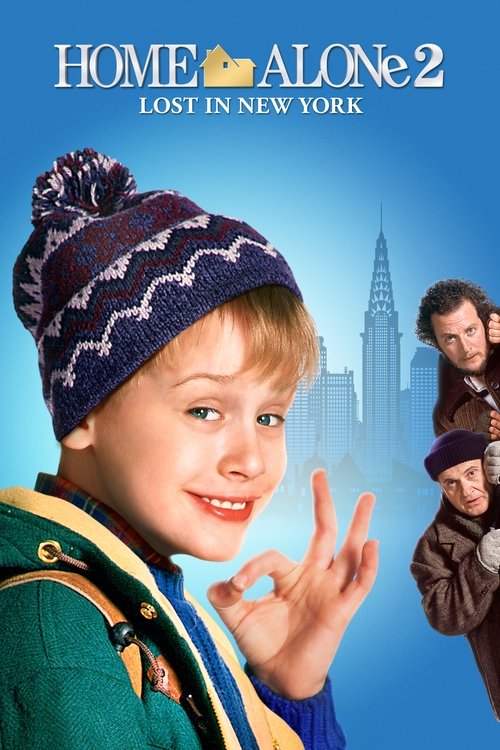
Home Alone 2: Lost in New York
1992 · Directed by Chris Columbus
Woke Score
CriticCritic Score
Audience
Ultra Based
Critics rated this 42 points above its woke score. Among Ultra Based films, this critic score ranks #1250 of 1469.
Representation Casting
Score: 5/100
The cast is predominantly white with one significant role for a Black actor (Brenda Fricker as the pigeon woman), though her character is coded as homeless and eccentric rather than presented with dignity. No meaningful representation beyond tokenism.
LGBTQ+ Themes
Score: 0/100
No LGBTQ+ themes, characters, or representation present. The film contains no engagement with sexual orientation or gender identity whatsoever.
Feminist Agenda
Score: 10/100
Catherine O'Hara plays Kevin's mother, but she is largely absent from the film and characterized primarily as concerned about her son. No feminist themes or female agency beyond maternal roles.
Racial Consciousness
Score: 3/100
The film makes no attempt to examine race or racial dynamics. The single Black character is presented as a curiosity and outsider. New York City's racial complexity is entirely absent from the narrative.
Climate Crusade
Score: 0/100
No environmental themes or climate consciousness present. The film is a Christmas comedy unconcerned with ecological matters.
Eat the Rich
Score: 2/100
The film celebrates conspicuous consumption and unlimited spending as entertainment. Kevin's credit card access and shopping sprees are presented as wish fulfillment with no ironic commentary on capitalism or wealth inequality.
Body Positivity
Score: 0/100
No body positivity themes present. The film contains no commentary on body diversity or acceptance.
Neurodivergence
Score: 0/100
No representation of neurodivergent characters or themes. No engagement with autism, ADHD, or other neurological diversity.
Revisionist History
Score: 0/100
The film is a comedy set in contemporary 1992 New York and makes no claims about historical events or revisionist interpretations of history.
Lecture Energy
Score: 2/100
While the film is primarily concerned with comedy and action sequences, it contains moments where adult characters attempt to teach Kevin lessons about responsibility, though these are minimal and not preachy.


Synopsis
Instead of flying to Florida with his folks, Kevin ends up alone in New York, where he gets a hotel room with his dad's credit card—despite problems from a clerk and meddling bellboy. But when Kevin runs into his old nemeses, the Wet Bandits, he's determined to foil their plans to rob a toy store on Christmas Eve.
Consciousness Assessment
Home Alone 2: Lost in New York stands as a monument to cultural obliviousness, which is to say it is a perfect artifact of 1992. The film plants a prepubescent boy with an unlimited credit card in the heart of recession-era New York City and asks us to find this scenario delightful. Kevin's adventures in the Plaza Hotel, his shopping sprees at FAO Schwarz, his casual destruction of property—all of this occurs against the backdrop of a city teeming with homeless people and economic desperation, which the film studiously ignores. This is not a failure of the film to engage with serious themes. Rather, it is the absence of any awareness that such engagement might be necessary.
The cast is almost entirely white, with the notable exception of Brenda Fricker, who plays a homeless pigeon woman and whose storyline suggests that homelessness is a quirky character trait rather than a systemic problem. The film's treatment of class is purely incidental. Kevin's wealth is presented not as something to examine but as a plot convenience, a narrative tool that allows him to stay at a fancy hotel. The Wet Bandits themselves are treated as comic relief villains, not as products of economic inequality or systemic failure. We are meant to laugh at them, not understand them.
By the metrics of 2020s progressive cultural consciousness, Home Alone 2 is nearly barren. It was made before the cultural markers we now scrutinize had become matters of serious critical attention. The film is not hostile to modern sensibilities, merely indifferent to them. It represents a baseline of cultural awareness from an era when such questions were not asked at all.
Analysis generated by our Consciousness Algorithm
Critic Reviews
“Writer-producer Hughes and director Chris Columbus have wrapped up the same winning story ornaments from 1990's holiday smash, repackaged them in gleaming array and topped them with a sparkling slapstick climax. While some Scrooge-ish adults may niggle that this sequel is merely a superimposition of the original, kids will be delighted by its keeping all their favorite goodies.”
“Let's face it: Culkin's self-reliant suburban warrior has entered a whole generations pop mythology. He's their Knight in Shining Parka, safely beyond criticism. ”
“Better would have been excellent. But, let's face it, better is pretty much irrelevant. Mac takes care of that. Mac takes care of everything. The kid's the biggest child actor since Shirley Temple. ”
“The John Hughes script must have taken him all of thirty minutes to write – simply a matter of a few name and location changes. It wasn't a good script the first time, either.”
Consciousness Markers
The cast is predominantly white with one significant role for a Black actor (Brenda Fricker as the pigeon woman), though her character is coded as homeless and eccentric rather than presented with dignity. No meaningful representation beyond tokenism.
No LGBTQ+ themes, characters, or representation present. The film contains no engagement with sexual orientation or gender identity whatsoever.
Catherine O'Hara plays Kevin's mother, but she is largely absent from the film and characterized primarily as concerned about her son. No feminist themes or female agency beyond maternal roles.
The film makes no attempt to examine race or racial dynamics. The single Black character is presented as a curiosity and outsider. New York City's racial complexity is entirely absent from the narrative.
No environmental themes or climate consciousness present. The film is a Christmas comedy unconcerned with ecological matters.
The film celebrates conspicuous consumption and unlimited spending as entertainment. Kevin's credit card access and shopping sprees are presented as wish fulfillment with no ironic commentary on capitalism or wealth inequality.
No body positivity themes present. The film contains no commentary on body diversity or acceptance.
No representation of neurodivergent characters or themes. No engagement with autism, ADHD, or other neurological diversity.
The film is a comedy set in contemporary 1992 New York and makes no claims about historical events or revisionist interpretations of history.
While the film is primarily concerned with comedy and action sequences, it contains moments where adult characters attempt to teach Kevin lessons about responsibility, though these are minimal and not preachy.