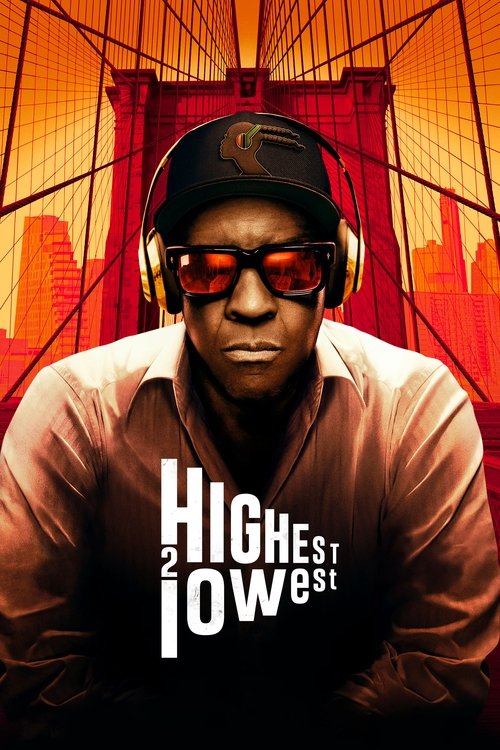
Highest 2 Lowest
2025 · Directed by Spike Lee
Woke Score
CriticCritic Score
Audience
Woke
Critics rated this 4 points below its woke score. Among Woke films, this critic score ranks #46 of 88.
Representation Casting
Score: 85/100
The entire central cast is Black, with Denzel Washington and Jeffrey Wright in leading roles. The film deliberately recasts a Kurosawa classic with an all-Black ensemble, making explicit the racial specificity of its moral drama.
LGBTQ+ Themes
Score: 0/100
No evidence of LGBTQ+ themes, representation, or narrative focus in the film's plot or character development.
Feminist Agenda
Score: 15/100
Ilfenesh Hadera appears in the cast, but reviews provide no indication that feminist themes or female-centered narrative concerns are central to the film's moral framework.
Racial Consciousness
Score: 80/100
The film explicitly engages with Black capitalism, the music industry's racial dynamics, and the moral complexities of Black wealth accumulation. The entire thematic recalibration of Kurosawa's work centers on racial specificity and the historical exclusion of Black entrepreneurs.
Climate Crusade
Score: 0/100
No evidence of climate-related themes, environmental consciousness, or ecological concerns in the film's narrative or thematic content.
Eat the Rich
Score: 65/100
The film engages with critiques of capitalist accumulation and self-interest, particularly within the context of Black entrepreneurship. The central moral dilemma involves questions about wealth, obligation, and the compromises demanded by capitalist systems.
Body Positivity
Score: 0/100
No evidence of body positivity themes, disability representation, or challenges to conventional beauty standards in the film's content.
Neurodivergence
Score: 0/100
No evidence of neurodivergent representation or themes related to autism, ADHD, mental health conditions, or neurodiversity in the film's narrative.
Revisionist History
Score: 35/100
Lee's preachy historical references and commentary on Black history and the music industry suggest engagement with alternative historical narratives, though reviews indicate this material is not always well-integrated into the thriller structure.
Lecture Energy
Score: 72/100
Critics explicitly note the presence of 'preachy downloads' and political commentary that sometimes feel imposed rather than organic. The film announces its values and historical references openly, occasionally at the expense of narrative flow.

Synopsis
When a titan music mogul, widely known as having the "best ears in the business", is targeted with a ransom plot, he is jammed up in a life-or-death moral dilemma.
Consciousness Assessment
Spike Lee's "Highest 2 Lowest" positions itself as a contemporary intervention on Akira Kurosawa's 1963 kidnapping drama, transplanting the moral dilemmas of the original into the landscape of modern Black capitalism and the music industry. The film centers on Denzel Washington as a music mogul confronted with a ransom scenario that tests his ethical commitments, while Jeffrey Wright delivers what reviewers describe as a magnetic, full-bodied performance. Lee layers the narrative with his characteristic blend of political commentary, cinematic references, and what critics have identified as preachy historical downloads, though the coherence of these elements varies considerably throughout the runtime. The result is a work that wears its social consciousness openly, perhaps too openly, creating a film that functions simultaneously as thriller, parable, and lecture.
The cultural specificity of repositioning Kurosawa's class drama within Black entrepreneurial spaces generates legitimate thematic interest. The film grapples with the internal contradictions of Black capitalism, the accumulation of wealth within systemic constraints, and the moral compromises that accompany ascent through industries historically closed to Black participation. This recalibration moves beyond mere racial casting and toward genuine thematic reconsideration, though reviewers note that execution remains uneven. Some moments lock into the inherent imbalance of the central dynamic; others feel imposed rather than organic to the narrative.
Yet here emerges a familiar tension in Lee's late-period work: the distance between ambition and realization. The film's progressive sensibilities coexist with what some critics characterize as erratic execution and occasional punch-pulling. The presence of preachy material, while intentional and aligned with Lee's artistic practice, can read as secondary to rather than integrated within the thriller framework. This is a film that announces its values clearly but trusts the audience's interpretive capacity less reliably than it might.
Analysis generated by our Consciousness Algorithm
Critic Reviews
“This is one of the year’s best films. It’s also one of Lee’s finest joints.”
“Both star and director are at the top of their game here, and that’s as good as movies get.”
“A rich feast for cinephiles, filled with love for the craft that makes movies like this possible.”
“The movie doesn’t just suffer by comparison to “High and Low” (itself adapted from Evan Hunter’s novel “King’s Ransom”); taken by itself, its pace drags, its tone staggers and its ideas are muddled. ”
Consciousness Markers
The entire central cast is Black, with Denzel Washington and Jeffrey Wright in leading roles. The film deliberately recasts a Kurosawa classic with an all-Black ensemble, making explicit the racial specificity of its moral drama.
No evidence of LGBTQ+ themes, representation, or narrative focus in the film's plot or character development.
Ilfenesh Hadera appears in the cast, but reviews provide no indication that feminist themes or female-centered narrative concerns are central to the film's moral framework.
The film explicitly engages with Black capitalism, the music industry's racial dynamics, and the moral complexities of Black wealth accumulation. The entire thematic recalibration of Kurosawa's work centers on racial specificity and the historical exclusion of Black entrepreneurs.
No evidence of climate-related themes, environmental consciousness, or ecological concerns in the film's narrative or thematic content.
The film engages with critiques of capitalist accumulation and self-interest, particularly within the context of Black entrepreneurship. The central moral dilemma involves questions about wealth, obligation, and the compromises demanded by capitalist systems.
No evidence of body positivity themes, disability representation, or challenges to conventional beauty standards in the film's content.
No evidence of neurodivergent representation or themes related to autism, ADHD, mental health conditions, or neurodiversity in the film's narrative.
Lee's preachy historical references and commentary on Black history and the music industry suggest engagement with alternative historical narratives, though reviews indicate this material is not always well-integrated into the thriller structure.
Critics explicitly note the presence of 'preachy downloads' and political commentary that sometimes feel imposed rather than organic. The film announces its values and historical references openly, occasionally at the expense of narrative flow.