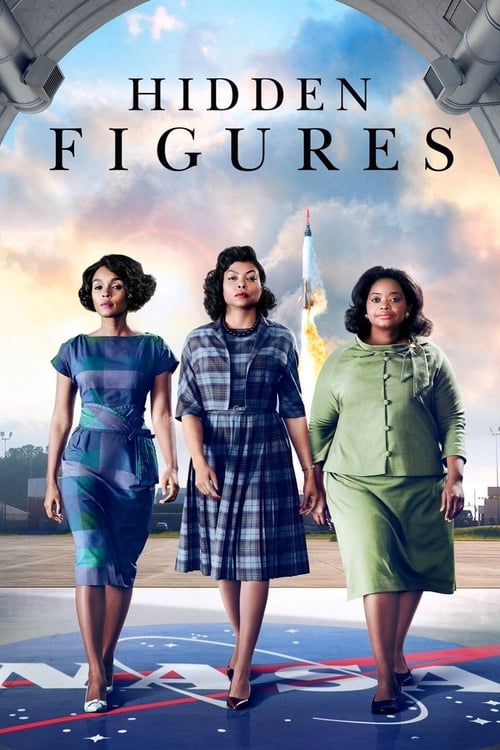
Hidden Figures
2016 · Directed by Theodore Melfi
Woke Score
CriticCritic Score
Audience
Woke
Critics rated this 6 points above its woke score. Among Woke films, this critic score ranks #48 of 88.
Representation Casting
Score: 75/100
Three Black women in lead roles with significant agency and screen time, representing deliberate casting choice for a prestige drama. White male characters included in prominent supporting roles.
LGBTQ+ Themes
Score: 0/100
No LGBTQ+ representation or themes present in the film.
Feminist Agenda
Score: 70/100
Explicitly centers women's professional achievements and barriers in male-dominated field. Three female protagonists drive plot through intellectual capability, though messaging remains relatively conventional.
Racial Consciousness
Score: 80/100
Jim Crow-era workplace segregation and racist barriers are central to narrative. Film directly depicts discrimination without evasion, though presentation remains mainstream and accessible.
Climate Crusade
Score: 0/100
No climate-related themes or messaging present in the film.
Eat the Rich
Score: 0/100
No anti-capitalist themes or critique of economic systems present in the film.
Body Positivity
Score: 0/100
No body positivity messaging or representation present in the film.
Neurodivergence
Score: 0/100
No representation of neurodivergent characters or neurodivergence-related themes present in the film.
Revisionist History
Score: 15/100
Film tells a historically overlooked story but does not engage in revisionist reinterpretation. Presents straightforward dramatized account of real events without fundamental historical rewriting.
Lecture Energy
Score: 40/100
Some expository dialogue explaining discrimination and mathematical concepts, though film generally avoids heavy-handed sermonizing. Certain scenes feel constructed for audience education.


Synopsis
The untold story of Katherine G. Johnson, Dorothy Vaughan and Mary Jackson – brilliant African-American women working at NASA and serving as the brains behind one of the greatest operations in history – the launch of astronaut John Glenn into orbit. The visionary trio crossed all gender and race lines to inspire generations to dream big.
Consciousness Assessment
Hidden Figures occupies an interesting position in the contemporary cultural moment. It is a historical drama that foregrounds the professional accomplishments and personal struggles of three Black women at NASA, centering their intellectual labor in a field where they were systematically excluded. The film does not pretend that racism and sexism were minor inconveniences, dedicating substantial narrative energy to depicting workplace segregation and the daily indignities of institutional discrimination. Yet it does so in a manner calculated to achieve broad commercial appeal, which means the edges have been sanded smooth. The film is earnest rather than incisive.
The casting of three Black actresses in lead roles alongside white male supporting characters represents a deliberate inversion of typical Hollywood hierarchies, though the film's narrative structure sometimes undermines this by positioning Kevin Costner's character as the enlightened white man who recognizes the injustice around him. This dynamic, while perhaps effective for mainstream audiences, reflects a certain conservatism in how the story chooses to validate its heroines through white male approval. The film's treatment of gender discrimination is similarly mainstream, emphasizing individual achievement and perseverance over structural critique.
What emerges is a film deeply committed to inspirational narrative beats and the triumph of individual talent over systemic barriers. The historical record is preserved, the achievements are celebrated, and audiences leave the theater feeling they have witnessed an important story. Whether the film fundamentally challenges viewers to reckon with ongoing institutional racism, or instead offers a comforting narrative of progress already achieved, depends largely on what one brings to the theater.
Analysis generated by our Consciousness Algorithm
Critic Reviews
“This bracing movie...gets off to a spirited start and rarely lets up, sharing with viewers a little-known chapter of history as inspiring as it is intriguing.”
“Hidden Figures, both a dazzling piece of entertainment and a window into history, bucks the trend of the boring-math-guy movie.”
“A triumphant and heartwarming film, not an angry and scolding one, that carefully maps how excellence and determination win over the doubters. ”
“Hidden Figures is a nice movie. At its head is a trio of good performances from Taraji P. Henson, Octavia Spencer, and Janelle Monae. But it is in essence a feature-length version of an inspiring social media image macro, or perhaps a Google Doodle. “Did you know that black women were important at NASA?” It has little else to offer.”
Consciousness Markers
Three Black women in lead roles with significant agency and screen time, representing deliberate casting choice for a prestige drama. White male characters included in prominent supporting roles.
No LGBTQ+ representation or themes present in the film.
Explicitly centers women's professional achievements and barriers in male-dominated field. Three female protagonists drive plot through intellectual capability, though messaging remains relatively conventional.
Jim Crow-era workplace segregation and racist barriers are central to narrative. Film directly depicts discrimination without evasion, though presentation remains mainstream and accessible.
No climate-related themes or messaging present in the film.
No anti-capitalist themes or critique of economic systems present in the film.
No body positivity messaging or representation present in the film.
No representation of neurodivergent characters or neurodivergence-related themes present in the film.
Film tells a historically overlooked story but does not engage in revisionist reinterpretation. Presents straightforward dramatized account of real events without fundamental historical rewriting.
Some expository dialogue explaining discrimination and mathematical concepts, though film generally avoids heavy-handed sermonizing. Certain scenes feel constructed for audience education.