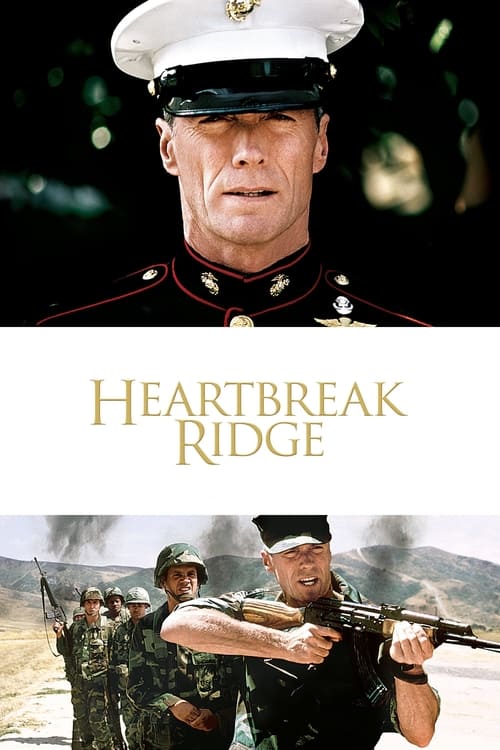
Heartbreak Ridge
1986 · Directed by Clint Eastwood
Woke Score
CriticCritic Score
Audience
Ultra Based
Critics rated this 49 points above its woke score. Among Ultra Based films, this critic score ranks #1095 of 1469.
Representation Casting
Score: 5/100
Mario Van Peebles appears in the ensemble cast, providing basic demographic diversity. However, the film makes no particular effort to examine his character's experience or position within military structures.
LGBTQ+ Themes
Score: 0/100
No LGBTQ+ themes, characters, or references are present in the film.
Feminist Agenda
Score: 0/100
The film contains no feminist themes or critique. Female characters serve primarily as romantic or domestic plot points.
Racial Consciousness
Score: 0/100
While the cast includes Black actors, the film does not address racial dynamics, discrimination, or systemic inequality within the military.
Climate Crusade
Score: 0/100
No climate or environmental themes are present in this military action film.
Eat the Rich
Score: 0/100
The film contains no critique of capitalism or economic systems. It affirms institutional military hierarchy.
Body Positivity
Score: 0/100
No body positivity themes are evident. The film celebrates military fitness and discipline as ideals.
Neurodivergence
Score: 0/100
No neurodivergence representation or themes are present in the film.
Revisionist History
Score: 0/100
The film presents a straightforward, celebratory narrative of the Grenada invasion without historical revisionism or recontextualization.
Lecture Energy
Score: 3/100
While Eastwood's character dispenses wisdom and instruction, the film's preachy moments are embedded in character action rather than explicit moralizing or commentary.


Synopsis
A hard-nosed, hard-living Marine gunnery sergeant clashes with his superiors and his ex-wife as he takes command of a spoiled recon platoon with a bad attitude.
Consciousness Assessment
Heartbreak Ridge represents the cultural confidence of 1980s military cinema, a film so thoroughly committed to traditional masculine virtue and institutional authority that it seems almost quaint in retrospect. Eastwood's gunnery sergeant barks orders, dispenses wisdom through profanity, and wins over his men through sheer force of will and military competence. The narrative presents no irony about this model of leadership, no suggestion that such methods might be counterproductive or emotionally stunting. The film is an unqualified celebration of military hierarchy and the redemptive power of discipline applied to undisciplined young men.
The presence of Mario Van Peebles in the cast provides a token of demographic representation, yet the film makes no particular effort to examine racial dynamics within the platoon or the military structure itself. Van Peebles' character exists as part of the ensemble without commentary on his position within these institutions. Similarly, Marsha Mason's ex-wife functions primarily as romantic subplot material. The film's attitude toward women remains rooted firmly in 1980s sensibilities, where female characters serve the narrative needs of the male protagonist.
The film proves entirely unconcerned with modern progressive sensibilities. There is no examination of colonialism in the Grenada invasion, no interrogation of American foreign policy, no suggestion that military solutions might be problematic. It asks us to accept the righteousness of its cause and the nobility of its protagonist's worldview without qualification. In this sense, Heartbreak Ridge functions as a period artifact, representing a particular constellation of values that would become increasingly contested in subsequent decades. It remains a film of its time, and that time was not particularly interested in the questions that would later come to define cultural discourse.
Analysis generated by our Consciousness Algorithm
Critic Reviews
“As an actor, Eastwood has created his most complex, fully dimensional characterization in Tom Highway; as a director, he has worked to put that characterization in a remarkably mature, self-critical context. Heartbreak Ridge is a film of genuine substance and courage.”
“The strengths and foibles of human beings are what this film--and all of Eastwood's directorial efforts--is all about, and his Tom Highway is one of the most vividly etched male characters seen onscreen in years.”
“Heartbreak Ridge has as much energy and color as any action picture this year, and it contains truly amazing dialogue.”
“This movie is offensive on just about every level.”
Consciousness Markers
Mario Van Peebles appears in the ensemble cast, providing basic demographic diversity. However, the film makes no particular effort to examine his character's experience or position within military structures.
No LGBTQ+ themes, characters, or references are present in the film.
The film contains no feminist themes or critique. Female characters serve primarily as romantic or domestic plot points.
While the cast includes Black actors, the film does not address racial dynamics, discrimination, or systemic inequality within the military.
No climate or environmental themes are present in this military action film.
The film contains no critique of capitalism or economic systems. It affirms institutional military hierarchy.
No body positivity themes are evident. The film celebrates military fitness and discipline as ideals.
No neurodivergence representation or themes are present in the film.
The film presents a straightforward, celebratory narrative of the Grenada invasion without historical revisionism or recontextualization.
While Eastwood's character dispenses wisdom and instruction, the film's preachy moments are embedded in character action rather than explicit moralizing or commentary.