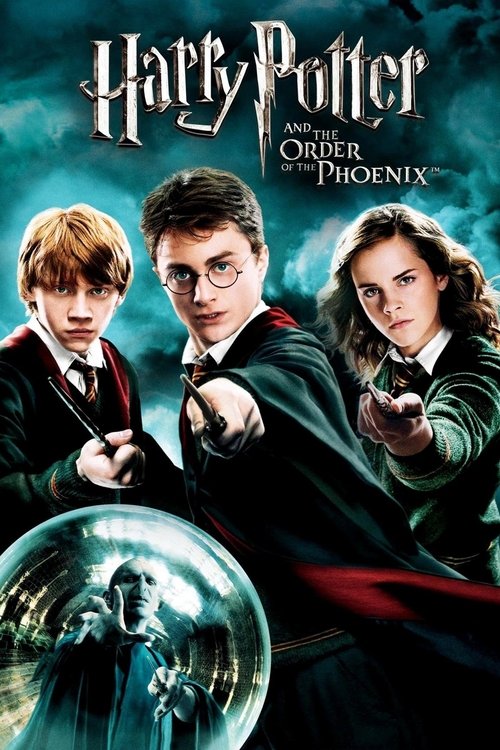
Harry Potter and the Order of the Phoenix
2007 · Directed by David Yates
Woke Score
CriticCritic Score
Audience
Ultra Based
Critics rated this 56 points above its woke score. Among Ultra Based films, this critic score ranks #592 of 1469.
Representation Casting
Score: 45/100
The ensemble cast includes actors of various backgrounds reflecting British demographics, but this appears circumstantial rather than a deliberate diversity initiative.
LGBTQ+ Themes
Score: 0/100
No LGBTQ themes or representation appear in the film, despite later authorial revelations about certain characters.
Feminist Agenda
Score: 15/100
Female characters are present and competent, but this is treated as unremarkable rather than as a subject of cultural awareness.
Racial Consciousness
Score: 10/100
The film contains actors of color in minor roles, but makes no explicit commentary on race or racism.
Climate Crusade
Score: 0/100
Climate consciousness is entirely absent from a fantasy film set in a magical boarding school.
Eat the Rich
Score: 0/100
No critique of capitalism or economic systems appears in the narrative.
Body Positivity
Score: 0/100
The film contains no commentary on body diversity or body acceptance.
Neurodivergence
Score: 0/100
Neurodivergence is not addressed or represented as a theme.
Revisionist History
Score: 5/100
The film presents its own fictional history but makes no attempt to reframe or reinterpret actual historical events.
Lecture Energy
Score: 10/100
While the film contains themes of institutional authoritarianism, it presents these as plot points rather than delivering explicit moral lectures to the audience.


Synopsis
Returning for his fifth year at Hogwarts, Harry is stunned to find that his warnings about the return of Lord Voldemort have been ignored. Left with no choice, Harry takes matters into his own hands, training a small group of motivated students to defend themselves against the Dark Arts.
Consciousness Assessment
Harry Potter and the Order of the Phoenix exists in that peculiar position of the franchise where it had accumulated sufficient cultural prominence to attract scrutiny yet remained fundamentally a children's fantasy adventure. The film's approach to social consciousness is incidental rather than intentional. The casting reflects a reasonably diverse British ensemble, though this appears to stem from the simple fact that Britain itself is diverse, not from any deliberate statement about representation. The narrative concerns the suppression of truth by authoritarian institutions, a theme that might be mistaken for progressive commentary if one squints hard enough, but the film treats this as basic plot mechanics rather than cultural critique.
The absence of LGBTQ representation in the text itself is notable, particularly given the later authorial revelations about Dumbledore's sexuality. Here, in 2007, such subtext remains entirely submerged. The film makes no particular gestures toward feminist consciousness beyond featuring female characters who happen to be competent, which is to say it treats them as normal human beings rather than making that normalcy a subject of celebration. Dolores Umbridge functions as a villain of institutional oppression, but her characterization trades more in gothic grotesquerie than in any sophisticated examination of power structures. Body positivity, neurodivergence, climate consciousness, anti-capitalist sentiment, and revisionist history all register at zero. The film lectures not, preferring instead the relatively straightforward business of moving its plot forward.
What we have is a film that belongs to 2007, when the concept of social consciousness in blockbuster entertainment had not yet crystallized into the particular constellation of markers that would define the 2020s discourse. It is neither ahead of its time nor aggressively retrograde. It simply exists in that pre-transformation moment when a film could be culturally significant without being culturally conscious in any contemporary sense.
Analysis generated by our Consciousness Algorithm
Critic Reviews
“For all its portentousness, this is the best Harry Potter picture yet. In some ways, it improves on J.K. Rowling’s novel, which is punishingly protracted and builds to a climactic wand-off better seen than read.”
“It's action-packed, darker, more epic and thankfully schmaltz-free. And it's the best "Harry Potter" film yet.”
“In narrative terms, not that much happens, but as for Harry's emotional journey--well, that's nearly epic.”
“Less magic also means less fun and discovery, as Harry battles depression and a hostile press; this is the bleakest Potter installment to date, and under David Yates's choppy direction, Maggie Smith, Emma Thompson, Brendan Gleeson, and David Thewlis have little more than walk-ons.”
Consciousness Markers
The ensemble cast includes actors of various backgrounds reflecting British demographics, but this appears circumstantial rather than a deliberate diversity initiative.
No LGBTQ themes or representation appear in the film, despite later authorial revelations about certain characters.
Female characters are present and competent, but this is treated as unremarkable rather than as a subject of cultural awareness.
The film contains actors of color in minor roles, but makes no explicit commentary on race or racism.
Climate consciousness is entirely absent from a fantasy film set in a magical boarding school.
No critique of capitalism or economic systems appears in the narrative.
The film contains no commentary on body diversity or body acceptance.
Neurodivergence is not addressed or represented as a theme.
The film presents its own fictional history but makes no attempt to reframe or reinterpret actual historical events.
While the film contains themes of institutional authoritarianism, it presents these as plot points rather than delivering explicit moral lectures to the audience.