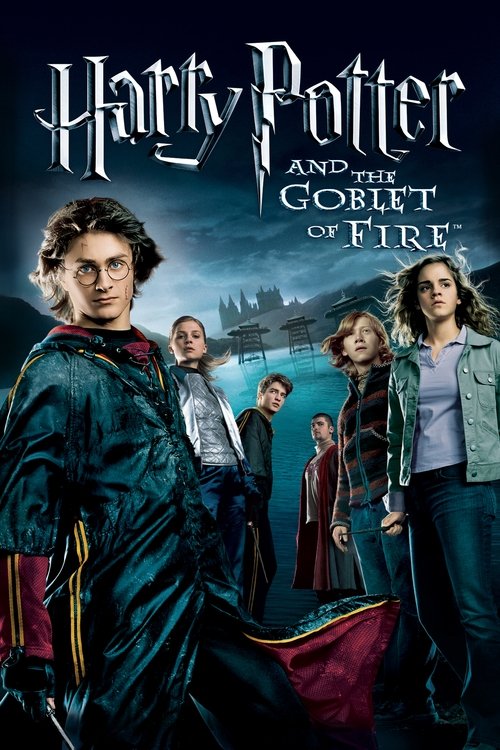
Harry Potter and the Goblet of Fire
2005 · Directed by Mike Newell
Woke Score
CriticCritic Score
Audience
Ultra Based
Critics rated this 63 points above its woke score. Among Ultra Based films, this critic score ranks #340 of 1469.
Representation Casting
Score: 15/100
The cast is predominantly white, reflecting the source material's British setting and publication era. Cedric Diggory, Cho Chang (Katie Leung), and Seamus Finnegan provide minimal diversity in principal roles, with most supporting characters also white.
LGBTQ+ Themes
Score: 0/100
No LGBTQ+ representation or themes are present in the film. The narrative contains no references to sexual orientation or gender identity as distinct from the source material.
Feminist Agenda
Score: 20/100
Emma Watson's Hermione is intellectually capable and occasionally challenges authority, but the film offers limited exploration of gender dynamics. The Yule Ball sequence emphasizes romantic availability rather than agency.
Racial Consciousness
Score: 10/100
The film contains no explicit racial commentary or consciousness. Cho Chang appears as a love interest without meaningful character development, and the broader wizarding world reflects the source material's lack of racial examination.
Climate Crusade
Score: 0/100
Climate concerns are entirely absent from the narrative. The environmental destruction caused by the tournament's tasks receives no thematic treatment.
Eat the Rich
Score: 25/100
The source material contains class critique through house elves and wizard-muggle hierarchies, but the film downplays these elements. The tournament's prestige-seeking and spectacle receive no satirical treatment.
Body Positivity
Score: 5/100
Conventional beauty standards dominate the film, particularly in the Yule Ball sequence. No counter-narrative to traditional attractiveness or body type hierarchy is present.
Neurodivergence
Score: 0/100
No representation of neurodivergence or neurodivergent characters exists in the film. The narrative contains no exploration of autism, ADHD, or other neurological conditions.
Revisionist History
Score: 0/100
The film is a fantasy narrative with no historical content to revise. It contains no alternate historical framing or contemporary reinterpretation of past events.
Lecture Energy
Score: 15/100
The film occasionally gestures toward moral seriousness, particularly regarding Voldemort's return, but avoids heavy-handed messaging. The tone remains consistent with earlier entries in the franchise.


Synopsis
When his name emerges from the Goblet of Fire, Harry Potter becomes a competitor in a grueling battle for glory among three wizarding schools—the Triwizard Tournament. But since Harry never submitted his name for the Tournament, who did? Now Harry must confront a deadly dragon, fierce water demons, and an enchanted maze only to find himself in the cruel grasp of He Who Must Not Be Named.
Consciousness Assessment
Harry Potter and the Goblet of Fire exists in a curious historical position: a 2005 studio production made before the cultural markers of contemporary progressive consciousness had calcified into standard narrative practice. The film concerns itself with spectacle, danger, and the seduction of power, but nowhere does it pause to consider whether its tournament represents problematic power structures, whether its overwhelmingly white casting reflects any intentional choice, or whether its young female characters deserve development beyond romantic interest. The source material contained seeds of class critique through the house elf subplot, yet the film dismisses these elements in favor of darker, more immediate threats. We observe a text that is earnest in its way but thoroughly innocent of the social consciousness that would later become expected in major studio productions.
The film's relationship to progressive sensibilities is one of benign neglect rather than active resistance. Hermione Granger remains intelligent and occasionally principled, though the narrative frames her concerns as secondary to the central male narrative. The casting reflects the book's British setting without apparent consideration for contemporary diversity standards, a choice that reads now as distinctly pre-2015. There is no gesture toward LGBTQ+ representation, no environmental consciousness, and no interrogation of capitalism despite the wealth-adjacent wizarding world. The film simply does not speak the language of these concerns.
What emerges most clearly is that Goblet of Fire belongs to an earlier moment in popular cinema, one where a major studio tentpole could focus on plot and spectacle without navigating the social consciousness that has become routine in contemporary blockbusters. The film is neither hostile to progressive values nor particularly animated by them. It is, rather, a product of its moment: competent, entertaining, and fundamentally indifferent to the cultural conversations that would define the next two decades.
Analysis generated by our Consciousness Algorithm
Critic Reviews
“Newell puts his own stamp on the franchise and delivers the best Potter movie yet filmed.”
“No, I couldn't be more pleased with what the screenwriter, Steven Kloves, and the director, Mike Newell, have wrought this time.”
“Came alive only in the presence of a supposed dead man -- specifically, the nefarious Lord Voldemort.”
Consciousness Markers
The cast is predominantly white, reflecting the source material's British setting and publication era. Cedric Diggory, Cho Chang (Katie Leung), and Seamus Finnegan provide minimal diversity in principal roles, with most supporting characters also white.
No LGBTQ+ representation or themes are present in the film. The narrative contains no references to sexual orientation or gender identity as distinct from the source material.
Emma Watson's Hermione is intellectually capable and occasionally challenges authority, but the film offers limited exploration of gender dynamics. The Yule Ball sequence emphasizes romantic availability rather than agency.
The film contains no explicit racial commentary or consciousness. Cho Chang appears as a love interest without meaningful character development, and the broader wizarding world reflects the source material's lack of racial examination.
Climate concerns are entirely absent from the narrative. The environmental destruction caused by the tournament's tasks receives no thematic treatment.
The source material contains class critique through house elves and wizard-muggle hierarchies, but the film downplays these elements. The tournament's prestige-seeking and spectacle receive no satirical treatment.
Conventional beauty standards dominate the film, particularly in the Yule Ball sequence. No counter-narrative to traditional attractiveness or body type hierarchy is present.
No representation of neurodivergence or neurodivergent characters exists in the film. The narrative contains no exploration of autism, ADHD, or other neurological conditions.
The film is a fantasy narrative with no historical content to revise. It contains no alternate historical framing or contemporary reinterpretation of past events.
The film occasionally gestures toward moral seriousness, particularly regarding Voldemort's return, but avoids heavy-handed messaging. The tone remains consistent with earlier entries in the franchise.