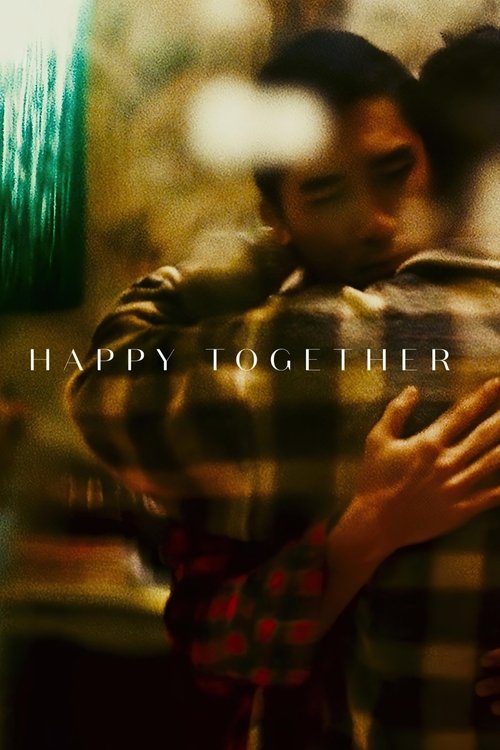
Happy Together
1997 · Directed by Wong Kar-Wai
Woke Score
CriticCritic Score
Audience
Woke
Critics rated this 5 points above its woke score. Among Woke films, this critic score ranks #61 of 88.
Representation Casting
Score: 0/100
While the film centers gay male characters, this is not representation in the modern sense of correcting historical underrepresentation. The casting reflects the story's requirements, not a deliberate diversification agenda.
LGBTQ+ Themes
Score: 75/100
The film's entire narrative concerns a gay relationship and was recognized as a landmark of New Queer Cinema. However, it avoids preachy or celebratory messaging about LGBTQ+ identity, instead depicting intimate human struggle.
Feminist Agenda
Score: 0/100
No evidence of feminist agenda or thematic engagement with gender politics. Female characters appear incidentally but are not central to the film's exploration of power dynamics or social structures.
Racial Consciousness
Score: 0/100
The film does not engage with race as a thematic concern, despite being a Hong Kong production with Asian leads. No interrogation of racial systems or colonial dynamics appears in the narrative.
Climate Crusade
Score: 0/100
No climate-related themes, environmental consciousness, or ecological messaging present in the film.
Eat the Rich
Score: 0/100
The film does not critique capitalism, wealth inequality, or economic systems. Characters exist within economic circumstances but without ideological commentary.
Body Positivity
Score: 0/100
No engagement with body positivity, disability representation, or non-normative physicality as thematic elements.
Neurodivergence
Score: 0/100
No representation of or commentary on neurodivergent conditions or mental health frameworks in contemporary progressive terms.
Revisionist History
Score: 0/100
The film does not engage in reexamination or reframing of historical events or narratives.
Lecture Energy
Score: 0/100
The film maintains artistic restraint and does not adopt a pedagogical tone. No characters deliver explicit moral lessons or social commentary to the audience.


Synopsis
A couple travels from Hong Kong to Argentina to revive their relationship but experience turbulence when both men's lives drift in separate directions.
Consciousness Assessment
Wong Kar-Wai's "Happy Together" occupies a peculiar position in the history of cultural assessment. It is undeniably a landmark work in LGBTQ+ cinema, the kind of film that wins Best Director at Cannes and spawns academic papers examining its relationship to queer utopia and postcolonial allegory. Yet by the standards of contemporary progressive sensibility, it is remarkably restrained. The film presents a gay couple not as a statement or a political gesture, but as people experiencing the mundane devastation of a failing relationship, complete with all the petty cruelties and emotional distance that heterosexual couples have been permitted to display on screen for decades.
This restraint is, paradoxically, both its virtue and the reason for its modest woke score. The film does not lecture. It does not announce its own progressivism. The two male leads are not secondary characters defined by their identity, nor are they aspirational representatives of the community. They are simply men behaving badly to one another, aging, lonely, and unable to communicate. The cinematography employs the visual language of melancholy and urban alienation rather than celebration or affirmation. There is no body positivity narrative, no discussion of systemic oppression, no climate consciousness, and no revisionist history. Even the feminist agenda, such as it is, emerges only through the incidental presence of female characters rather than through thematic commitment.
What we observe is the difference between a film that is culturally significant and a film that is culturally conscious in the manner we have come to recognize. "Happy Together" is the former: a serious artistic work that happens to center queer experience, made in 1997 when such a thing was genuinely transgressive. But it does not perform the contemporary work of explicitly aligning itself with progressive frameworks or offering the audience the comfort of moral clarity. For this reason, it remains a masterpiece of cinema and a minor entry in the annals of contemporary cultural consciousness.
Analysis generated by our Consciousness Algorithm
Critic Reviews
“Loose, buoyant and bracingly original.”
“Maverick director Wong Kar-wai manages to pour old wine into new jars with Happy Together, a fizzy chamber yarn about two gay Hong Kongers in Argentina that's as slim as a bamboo flute but is his most linear and mature work for some time.”
“The result is a take-no-prisoners movie from one of Hong Kong's most idiosyncratic, shoot-from-the-hip filmmakers that's the very antithesis of sentimental gay love stories. [31 Oct 1997]”
“An abundance of style and an almost total lack of substance make Wong Kar-wai's Happy Together a visually arresting but ultimately unrewarding excursion. [31 Oct 1997]”
Consciousness Markers
While the film centers gay male characters, this is not representation in the modern sense of correcting historical underrepresentation. The casting reflects the story's requirements, not a deliberate diversification agenda.
The film's entire narrative concerns a gay relationship and was recognized as a landmark of New Queer Cinema. However, it avoids preachy or celebratory messaging about LGBTQ+ identity, instead depicting intimate human struggle.
No evidence of feminist agenda or thematic engagement with gender politics. Female characters appear incidentally but are not central to the film's exploration of power dynamics or social structures.
The film does not engage with race as a thematic concern, despite being a Hong Kong production with Asian leads. No interrogation of racial systems or colonial dynamics appears in the narrative.
No climate-related themes, environmental consciousness, or ecological messaging present in the film.
The film does not critique capitalism, wealth inequality, or economic systems. Characters exist within economic circumstances but without ideological commentary.
No engagement with body positivity, disability representation, or non-normative physicality as thematic elements.
No representation of or commentary on neurodivergent conditions or mental health frameworks in contemporary progressive terms.
The film does not engage in reexamination or reframing of historical events or narratives.
The film maintains artistic restraint and does not adopt a pedagogical tone. No characters deliver explicit moral lessons or social commentary to the audience.