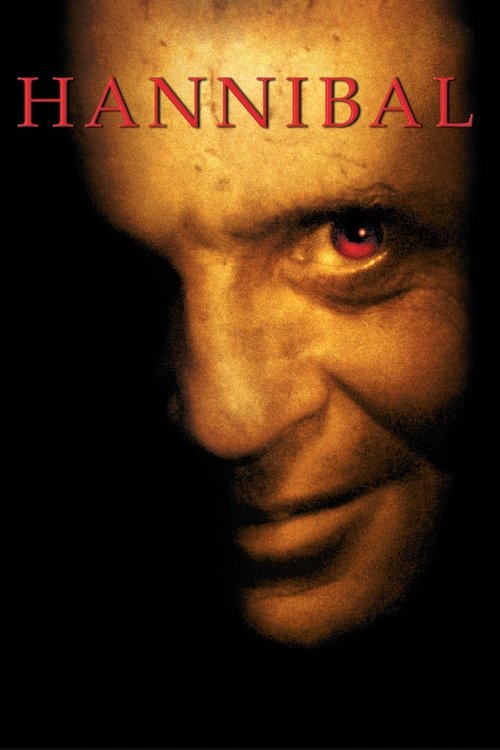
Hannibal
2001 · Directed by Ridley Scott
Woke Score
CriticCritic Score
Audience
Ultra Based
Critics rated this 49 points above its woke score. Among Ultra Based films, this critic score ranks #998 of 1469.
Representation Casting
Score: 25/100
Julianne Moore plays a female protagonist, but she is a continuation of an existing character rather than a progressive casting choice. Supporting roles include Black actors in functional bureaucratic positions without meaningful characterization.
LGBTQ+ Themes
Score: 0/100
No LGBTQ+ themes, representation, or engagement with queer identity. The villain's psychology is entirely disconnected from any queer identity or experience.
Feminist Agenda
Score: 15/100
Clarice Starling is a female lead but her characterization regresses from previous portrayals, showing diminished agency and a troubling romantic attraction to the villain. The film is not advancing feminist storytelling.
Racial Consciousness
Score: 10/100
Black actors appear in supporting roles as FBI bureaucrats and officials but are not given meaningful characterization or engagement with their identities or experiences.
Climate Crusade
Score: 0/100
No environmental themes, climate awareness, or ecological concerns are present in the narrative whatsoever.
Eat the Rich
Score: 5/100
Hannibal's wealth and cultured lifestyle are presented as markers of his sophistication rather than critiques of capitalism or economic inequality.
Body Positivity
Score: 0/100
The film's relationship to bodies is gothic and horrific, centered on dismemberment and cannibalism. This is antithetical to body positivity in any form.
Neurodivergence
Score: 5/100
Hannibal's psychopathy is portrayed as evil genius rather than neurodivergence to be understood or represented with nuance. His condition is purely a marker of villainy.
Revisionist History
Score: 0/100
The film is a contemporary thriller with no engagement with historical narratives or revisionist approaches to historical events.
Lecture Energy
Score: 10/100
While the film includes psychological exposition about Hannibal's character, it lacks the preachy, preachy tone typical of socially conscious cinema. It is not attempting to educate about social structures or issues.


Synopsis
After having successfully eluded the authorities for years, Hannibal peacefully lives in Italy in disguise as an art scholar. Trouble strikes again when he's discovered leaving a deserving few dead in the process. He returns to America to make contact with now disgraced Agent Clarice Starling, who is suffering the wrath of a malicious FBI rival as well as the media.
Consciousness Assessment
Ridley Scott's "Hannibal" is a film that regards progressive social consciousness the way its protagonist regards human organs: as something to be removed and discarded. Released in 2001, it exists in a cultural moment before the specific markers we now associate with contemporary social awareness had permeated mainstream cinema. The film is interested in precisely one thing: the psychological cat-and-mouse game between a brilliant serial killer and the FBI agent tasked with capturing him, with a troubling romantic subtext that the narrative treats as seductive instead of pathological.
The characterization of Clarice Starling in particular deserves attention as a case study in regressive storytelling. Where the source material and previous adaptation presented her as a capable professional overcoming institutional sexism, Scott's version gradually diminishes her agency and intellect. She becomes increasingly vulnerable, manipulated, and ultimately drawn into a perverse romantic entanglement with Hannibal Lecter. The film presents this not as a cautionary descent but as a kind of twisted destiny. This is not feminism of any era, let alone contemporary feminism. It is the opposite.
The supporting cast includes Black actors in bureaucratic roles, serving the plot machinery without engaging in any meaningful exploration of identity or experience. The film's sole interest in representation is cosmetic. There are no climate concerns, no examination of economic systems, no neurodivergent characters treated with nuance, no historical revisionism, and no attempt whatsoever to educate the audience about social structures. The result is a baroque thriller concerned exclusively with aesthetic excess, psychological manipulation, and the romance of evil. It is, in short, a film from a different cultural moment, and it shows.
Analysis generated by our Consciousness Algorithm
Critic Reviews
“A banquet of creepy, gory or grotesque incidents is on display in Hannibal. but this superior sequel has romance in its dark heart.”
“It's unmissable, flaws and all, because riveting suspense spiced with diabolical laughs and garnished with a sprig of kinky romance add up to the tastiest dish around.”
“Hannibal isn't art. But for filmgoers with a taste for the absurd and a tolerance for the blackest of black humor, it's one heck of a thrill ride.”
“Hannibal, which is very likely the worst film of this year and quite possibly the next, achieves what no movie I can recall ever even attempting: It somehow manages to be both repugnant and boring.”
Consciousness Markers
Julianne Moore plays a female protagonist, but she is a continuation of an existing character rather than a progressive casting choice. Supporting roles include Black actors in functional bureaucratic positions without meaningful characterization.
No LGBTQ+ themes, representation, or engagement with queer identity. The villain's psychology is entirely disconnected from any queer identity or experience.
Clarice Starling is a female lead but her characterization regresses from previous portrayals, showing diminished agency and a troubling romantic attraction to the villain. The film is not advancing feminist storytelling.
Black actors appear in supporting roles as FBI bureaucrats and officials but are not given meaningful characterization or engagement with their identities or experiences.
No environmental themes, climate awareness, or ecological concerns are present in the narrative whatsoever.
Hannibal's wealth and cultured lifestyle are presented as markers of his sophistication rather than critiques of capitalism or economic inequality.
The film's relationship to bodies is gothic and horrific, centered on dismemberment and cannibalism. This is antithetical to body positivity in any form.
Hannibal's psychopathy is portrayed as evil genius rather than neurodivergence to be understood or represented with nuance. His condition is purely a marker of villainy.
The film is a contemporary thriller with no engagement with historical narratives or revisionist approaches to historical events.
While the film includes psychological exposition about Hannibal's character, it lacks the preachy, preachy tone typical of socially conscious cinema. It is not attempting to educate about social structures or issues.