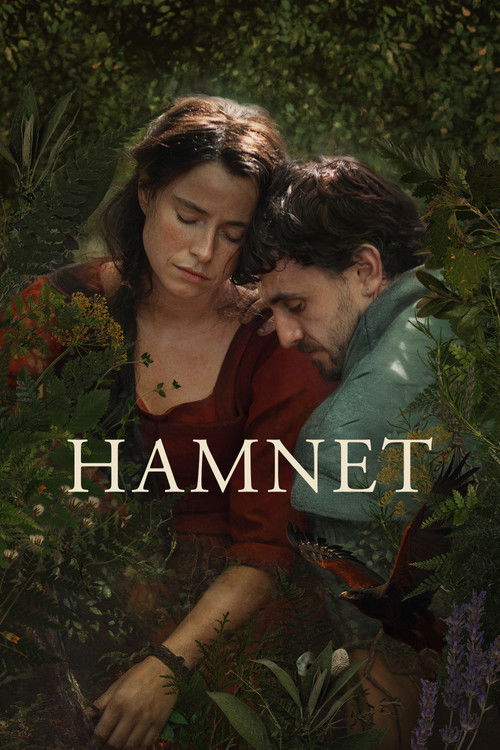
Hamnet
2025 · Directed by Chloé Zhao
Woke Score
CriticCritic Score
Audience
Based
Critics rated this 56 points above its woke score. Among Based films, this critic score ranks #45 of 345.
Representation Casting
Score: 35/100
The cast reflects contemporary diversity in casting practices, with actors of various backgrounds in roles. However, this appears to reflect standard modern casting rather than a deliberate statement about representation.
LGBTQ+ Themes
Score: 0/100
No LGBTQ+ themes, characters, or subtext identified in the film or its historical setting.
Feminist Agenda
Score: 42/100
Agnes is centered as a complex, active protagonist with agency and her own narrative arc as a healer. This represents a revisionist approach to the historical record, elevating a marginalized female figure, though it emerges from the source material rather than heavy-handed modern imposition.
Racial Consciousness
Score: 0/100
The film does not engage with racial consciousness or commentary. It is a period drama set in 16th-century England with no explicit racial themes or discussions.
Climate Crusade
Score: 0/100
No climate crusade or environmental themes present in the film.
Eat the Rich
Score: 0/100
The film contains no anti-capitalist messaging or critique of economic systems.
Body Positivity
Score: 0/100
Body positivity is not a theme in this historical drama about grief and family.
Neurodivergence
Score: 0/100
No representation of or engagement with neurodivergence in the film.
Revisionist History
Score: 45/100
The film reimagines Shakespeare's family life and particularly Agnes's role, giving her agency and complexity beyond the historical record. This represents a modest revisionist approach to well-known history.
Lecture Energy
Score: 0/100
The film maintains a naturalistic, understated tone focused on emotional experience rather than preachy messaging or explicit social commentary.


Synopsis
The powerful story of love and loss that inspired the creation of Shakespeare's timeless masterpiece, Hamlet.
Consciousness Assessment
Hamnet arrives as a meditation on grief and artistic creation, dressed in the austere garments of historical drama. Chloé Zhao's film, adapted from Maggie O'Farrell's novel by O'Farrell herself, concerns Shakespeare and his wife Agnes as they navigate the death of their young son. The picture's primary gesture toward contemporary sensibilities lies in its centering of Agnes as an active, complex protagonist, a healer with agency and interiority, rather than a peripheral figure in Shakespeare's story. This represents a modest feminist reorientation of the historical record, though one that emerges from the novel's own architecture rather than from Zhao imposing modern ideology onto period material.
Beyond this gentle recalibration of perspective, Hamnet resists the contemporary impulse to layer social consciousness throughout its narrative. The film concerns itself with the universal and the particular: the devastation of parental loss, the mystery of how personal tragedy becomes art, the resilience required to survive unimaginable sorrow. Jessie Buckley and Paul Mescal move through the film's naturalistic aesthetic with the kind of restraint that suggests Zhao remains more interested in capturing the texture of grief than in scoring points. There is no climate crusade, no anti-capitalist messaging, no lecture energy. The representation present in the cast simply reflects contemporary casting practices rather than a deliberate statement about diversity.
What emerges is a film that occupies a curious middle ground: thoughtfully made, emotionally substantial, yet largely indifferent to the markers that define modern progressive cultural consciousness. It is a period piece that behaves like a period piece, concerned with feeling and meaning rather than with signaling alignment with current social preoccupations. In this sense, Hamnet represents a kind of restraint that has become almost radical in contemporary cinema, a choice to let human experience speak without mediation.
Analysis generated by our Consciousness Algorithm
Critic Reviews
“Hamnet is devastating, maybe the most emotionally shattering movie I’ve seen in years. ”
“Ultimately, the filmmaker invites the world to feel loss in a new way, and in letting go, liberates something fundamental in all of us.”
“The film serves as a lovely reminder of why art is important, how watching something can make you feel, make you understand, make you consider.”
“As dry and matter-of-fact as Ms. Zhao was in Nomadland, which won her Oscars for best director and best picture (as she was one of its producers), she is the opposite here, driving her actors to maximal emoting. The movie purports to dip into the deep well of Shakespearean magnificence but emerges only with a ladle full of greasy schmaltz.”
Consciousness Markers
The cast reflects contemporary diversity in casting practices, with actors of various backgrounds in roles. However, this appears to reflect standard modern casting rather than a deliberate statement about representation.
No LGBTQ+ themes, characters, or subtext identified in the film or its historical setting.
Agnes is centered as a complex, active protagonist with agency and her own narrative arc as a healer. This represents a revisionist approach to the historical record, elevating a marginalized female figure, though it emerges from the source material rather than heavy-handed modern imposition.
The film does not engage with racial consciousness or commentary. It is a period drama set in 16th-century England with no explicit racial themes or discussions.
No climate crusade or environmental themes present in the film.
The film contains no anti-capitalist messaging or critique of economic systems.
Body positivity is not a theme in this historical drama about grief and family.
No representation of or engagement with neurodivergence in the film.
The film reimagines Shakespeare's family life and particularly Agnes's role, giving her agency and complexity beyond the historical record. This represents a modest revisionist approach to well-known history.
The film maintains a naturalistic, understated tone focused on emotional experience rather than preachy messaging or explicit social commentary.